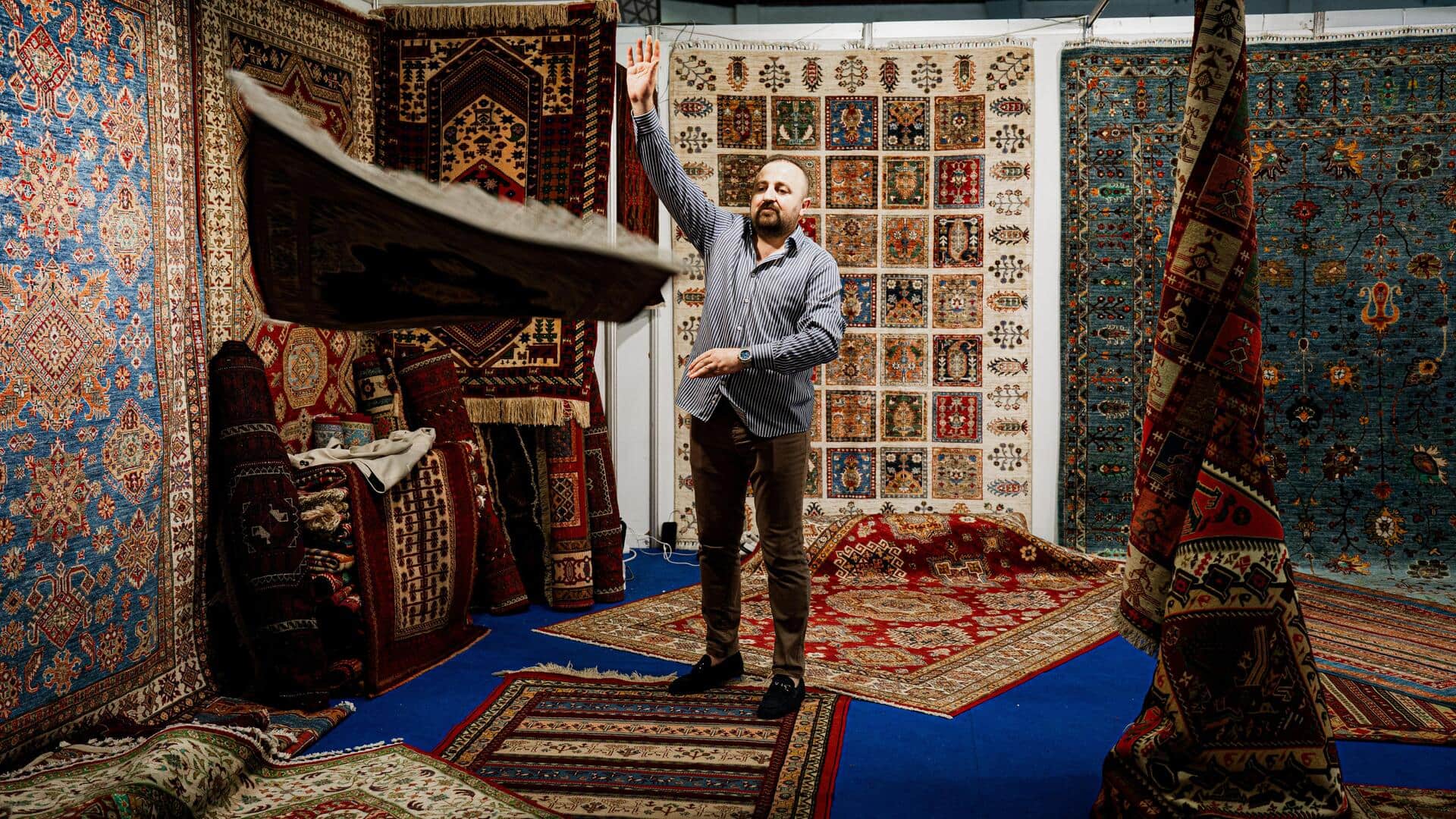
The art and history behind Persian carpets
What's the story
Persian carpets are a timeless testament to the art of weaving. These carpets, which have been around for centuries, are famous for their intricate designs and durable craftsmanship. Each carpet tells a story, reflecting the culture and history of its region. The art of weaving these carpets is passed down through generations, making them not just decorative pieces but also valuable cultural artifacts.
#1
The history behind Persian carpets
The history of Persian carpets dates back to ancient Persia (now Iran). They were used in royal courts and homes of the wealthy.
The earliest known Persian carpet is said to be the Pazyryk Carpet, which was discovered in Siberian tombs and dates back to the fifth century BC.
Over the years, different regions developed their own unique styles and techniques.
#2
Techniques used in weaving
Weaving a Persian carpet is an intricate process that requires a lot of skill.
Most carpets are hand-knotted on looms with wool or silk threads.
The knotting technique varies from region to region, with some using the Turkish knot and others using the Persian knot.
The quality of a carpet is determined by its knot density, with higher density indicating finer craftsmanship.
#3
Patterns and designs in Persian carpets
Persian carpets are famous for their intricate patterns and designs, which are steeped in cultural symbolism.
Floral motifs, geometric shapes, and medallions are commonly used, each carrying a unique meaning.
These designs are a reflection of the rich cultural heritage of the regions they belong to, making every carpet a unique piece of art that tells a story through its patterns.
#4
Caring for your Persian carpet
Proper care is essential to maintain the beauty of your Persian carpet over time.
Regular vacuuming helps remove dirt without damaging fibers.
Avoid direct sunlight exposure as it may fade colors over time.
For stains or spills, immediate blotting with a clean cloth is recommended instead of rubbing, which could damage fibers or spread stains further across the surface area.