The story of India's famous pichwai art
What's the story
Pichwai art is a traditional Indian art form that originated in the town of Nathdwara, Rajasthan. Famous for its intricate designs and vibrant colors, this art form depicts the life and teachings of Lord Krishna. The word "pichwai" literally means "hanging at the back," as these paintings were originally hung behind the deities in temples. Over time, pichwai has evolved into a celebrated cultural heritage, showcasing the rich artistic traditions of India.
#1
Historical roots of Pichwai
The history of pichwai dates back to the 16th century when it was first developed in the temples of Nathdwara.
The paintings were created to enhance religious ceremonies and festivals, depicting various episodes from Krishna's life.
As the popularity of pichwai grew, it spread across different regions of India, each adding its own unique style and interpretation to the art form.
#2
Techniques used in Pichwai painting
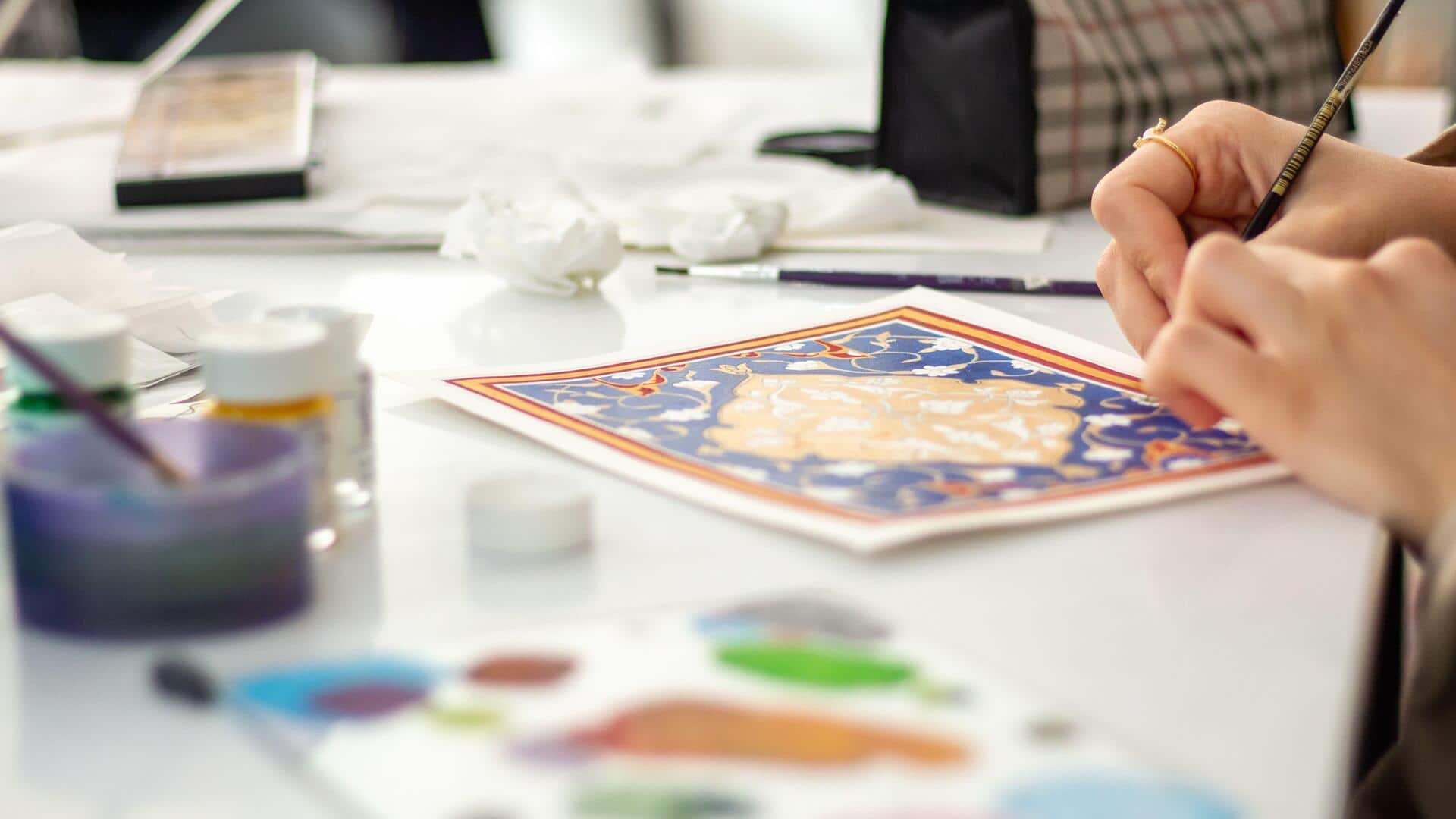
Pichwai paintings are characterized by their meticulous detail and vibrant colors.
Artists use natural dyes made from minerals and plant extracts to achieve the vivid hues seen in these artworks.
The paintings are usually done on cloth or silk with fine brushes that allow for intricate line work.
This technique ensures that every piece is not only visually stunning but also retains its cultural significance.
#3
Themes depicted in Pichwai art
The themes of pichwai art are mostly centered around Krishna's life events, like his childhood pranks or divine dances with Radha and other gopis.
Other common themes include seasonal changes like monsoon or springtime festivities celebrated by Krishna devotees.
These themes not only highlight religious narratives but also seasonal beauty, making them timeless masterpieces.
#4
Modern adaptations of Pichwai art
In recent years, there has been a resurgence in interest in pichwai art, owing to its unique aesthetic appeal.
Contemporary artists have begun experimenting with modern media while still preserving traditional techniques.
This has led to innovative adaptations, such as using digital platforms for wider reach without compromising authenticity.