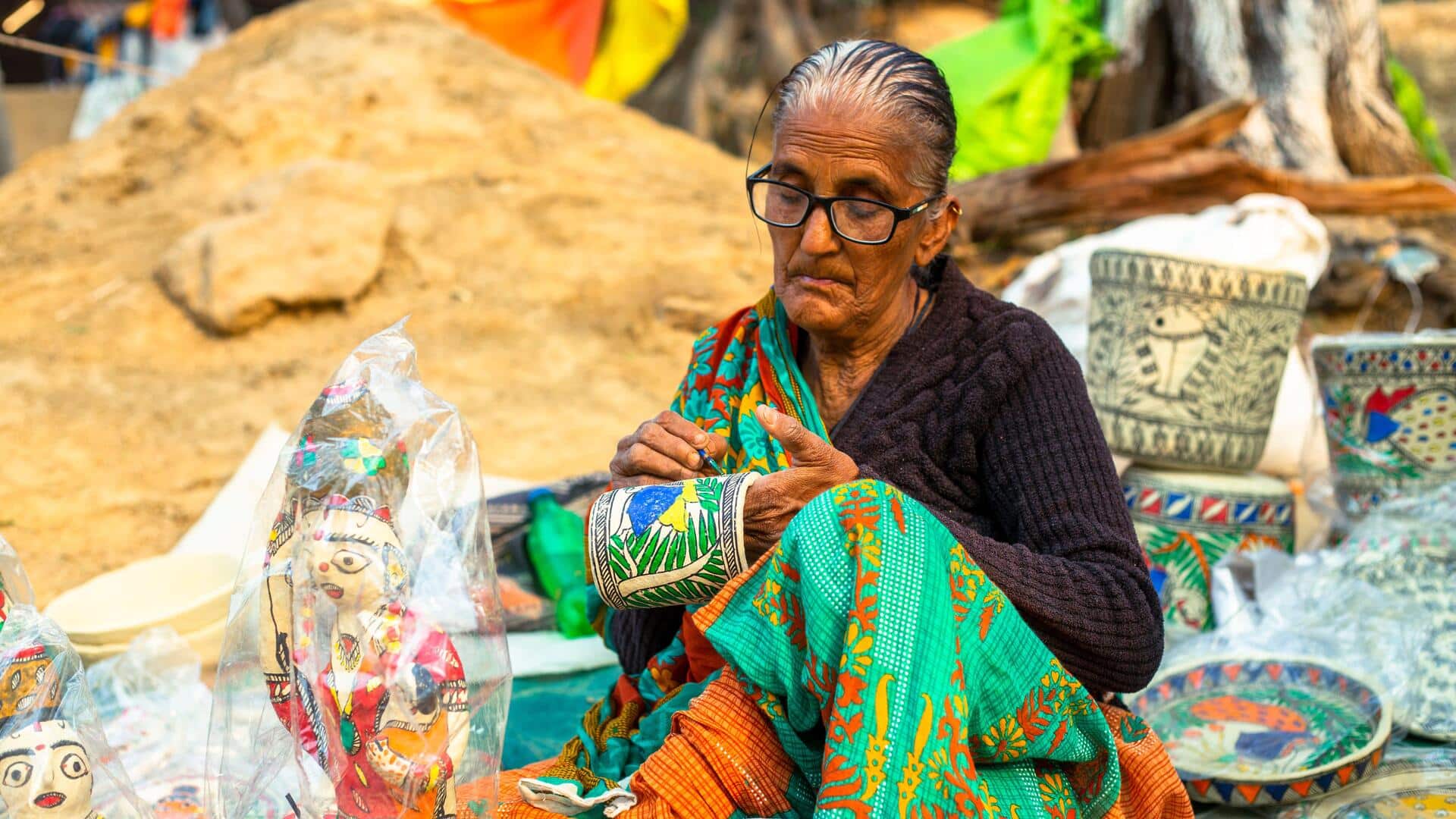
The story behind India's colorful Pithora paintings
What's the story
Pithora paintings are colorful, traditional artworks from the tribal communities of India. The art form, which is mostly practiced by the Rathwa and Bhil tribes of Gujarat, is characterized by its vivid colors and intricate patterns. The paintings are usually made on walls of homes and depict scenes from mythology, nature, and daily life. They are not just decorative but also carry cultural significance.
#1
The vibrant colors used
Pithora paintings are known for their bright colors, which are made from natural pigments.
Red, yellow, green, and blue are some of the most common colors used in these artworks.
Each color has its own meaning in tribal culture. For example, red may symbolize strength or power, while green could represent fertility or growth.
The use of these colors adds depth and vibrancy to the paintings.
#2
Symbolism in Pithora art
Every element in Pithora paintings has a symbolic meaning.
Animals like elephants or horses may represent strength or loyalty, while geometric shapes may signify different aspects of life or nature.
These symbols tell stories or convey messages important to the community's beliefs and traditions.
#3
Techniques employed by artists
Artists use traditional techniques passed down through generations to create Pithora paintings.
The process starts with preparing the surface with a mixture of cow dung and clay to ensure longevity and vibrancy of colors.
Brushes made from bamboo sticks with bristles from plant fibers are used for painting intricate details.
#4
Cultural significance of Pithora paintings
Pithora paintings hold immense cultural importance as they are often created during rituals or ceremonies to invite blessings into homes.
They also serve as a medium for storytelling within communities, preserving history through visual representation over time.
This art form continues to be a part of cultural identity among tribal groups in India today.