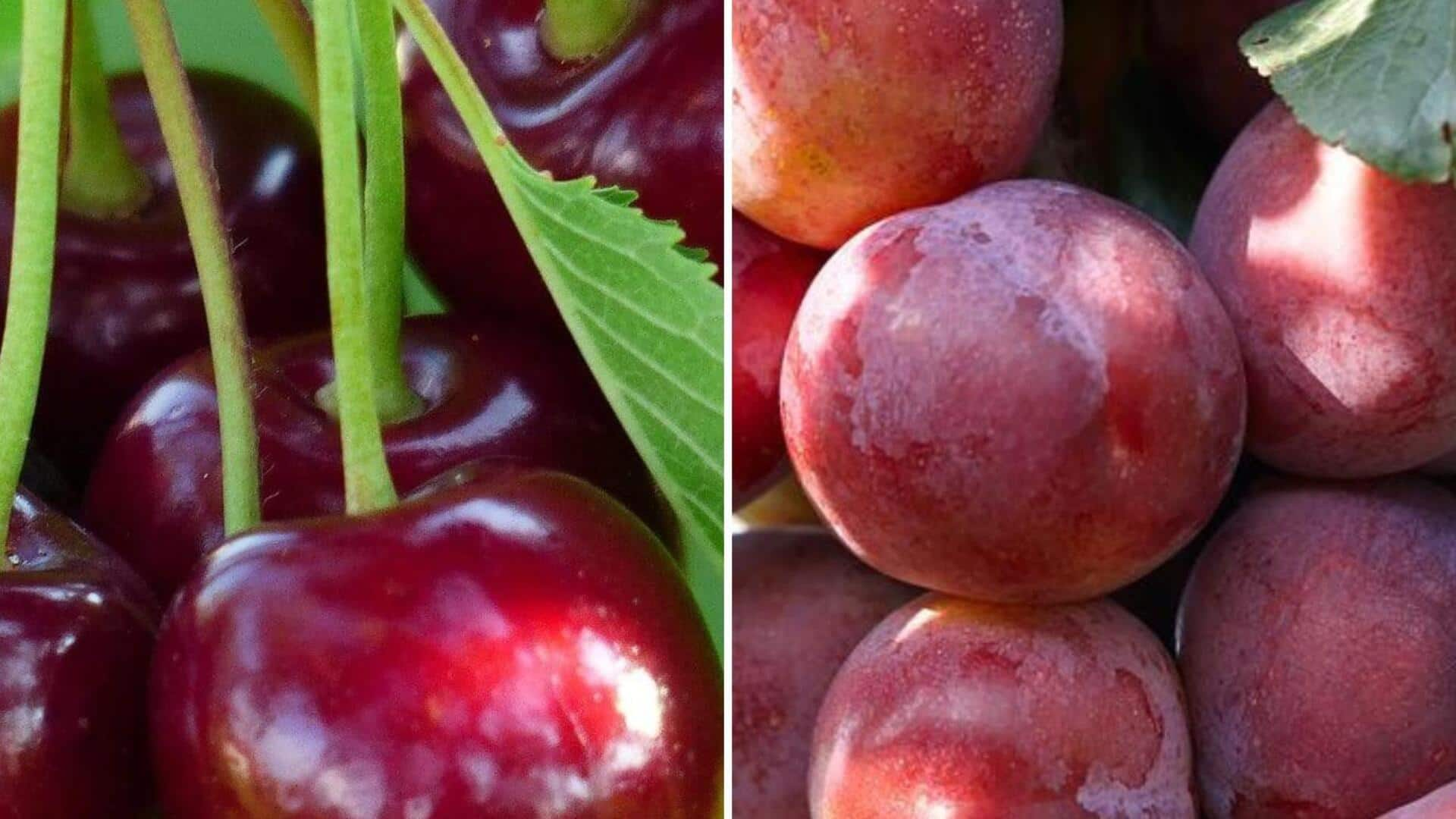
Plums v/s cherries: Which is better for your gut?
What's the story
Plums and cherries are two of the most popular fruits, loved for their taste and health benefits. They are also packed with fiber, which is essential for digestive health. While both fruits have their own nutritional profiles, knowing how they affect gut health can help you make better dietary choices. Here's a look at the fiber content in plums and cherries, and how they help with digestion.
#1
Fiber content in plums
Plums are a great source of dietary fiber, with one medium-sized plum providing around 1.5 grams of fiber. This fiber helps in promoting regular bowel movements by adding bulk to the stool. The soluble fiber in plums can also help in lowering cholesterol levels by binding to bile acids in the digestive system. Eating plums regularly can keep your digestive system healthy and prevent constipation.
#2
Fiber content in cherries
Cherries also provide a good amount of dietary fiber, with one cup of raw cherries providing around three grams of fiber. This makes them an excellent choice for anyone looking to increase their daily fiber intake. The insoluble fiber present in cherries promotes the movement of food through the intestines, preventing constipation and promoting overall gut health.
#3
Comparing digestive benefits
While both plums and cherries are great for gut health due to their fiber content, they do offer different benefits. Plums are particularly good for those looking to lower cholesterol levels due to their soluble fiber content. Cherries, on the other hand, are great for promoting regular bowel movements because of their insoluble fiber content.
Tip 1
Tips for incorporating into diet
To reap the benefits of these fruits, include them in your daily diet as snacks or add them to your breakfast cereals or yogurt bowls. You can also blend them into smoothies or use them as toppings on desserts like cakes or puddings for added flavor and nutrition without compromising on taste.