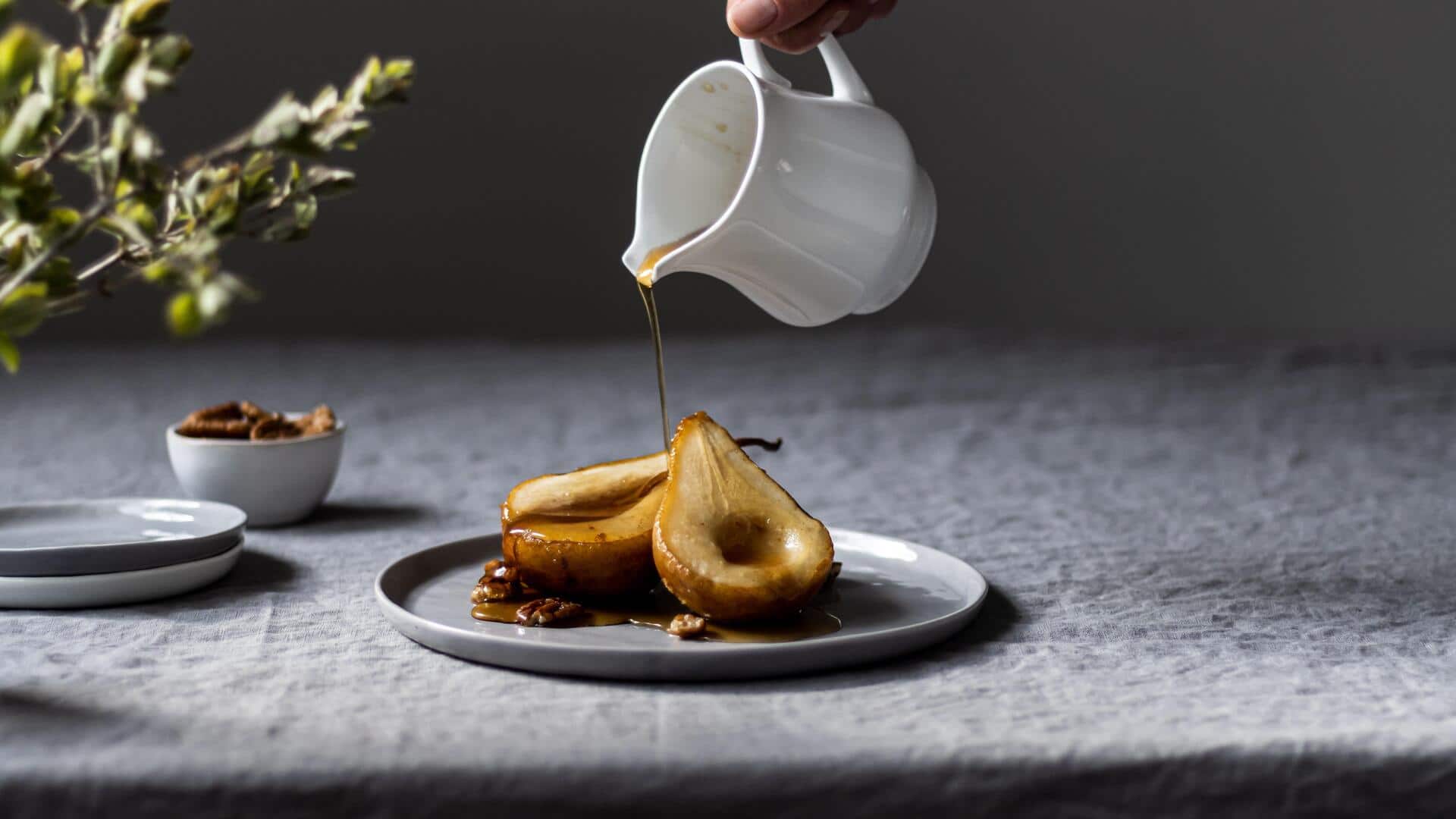
How to poach fruits perfectly
What's the story
Poaching fruits is a simple yet effective way to elevate their natural flavors. The technique involves simmering fruits in a flavored liquid, making them tender and infused with the taste of the liquid. Not only does this method enhance the fruit's sweetness, but it also adds a depth of flavor that can turn simple dishes into something special. Here are five expert tips to help you master the art of poaching fruits.
Tip 1
Choose the right liquid
Choosing the right poaching liquid is essential for flavor enhancement.
Water mixed with sugar and lemon juice is a classic choice.
For a more complex flavor, consider using herbal infusions like mint or basil.
The key is to select a liquid that complements the fruit's natural taste without overpowering it.
Tip 2
Control temperature carefully
Keeping the temperature low is important while poaching fruits.
The idea is to keep the liquid just below boiling so that the fruit cooks slowly and evenly.
A gentle simmer ensures that the fruit becomes tender without falling apart or becoming mushy.
A thermometer can help maintain this delicate balance.
Tip 3
Add spices for extra flavor
Spices can take your poached fruits to a whole new level by adding layers of complexity to their taste.
Cinnamon sticks, star anise, and vanilla pods are some popular options that go well with most fruits.
Adding these spices to your poaching liquid will give an aromatic touch to every bite.
Tip 4
Experiment with different fruits
While apples and pears are commonly poached fruits, don't hesitate to experiment with others like peaches, plums, or even citrus fruits like oranges or lemons.
Each fruit offers its own unique texture and flavor profile that can be beautifully enhanced through poaching techniques.
Tip 5
Use poached fruits creatively
Poached fruits aren't just desserts; they make for versatile ingredients across various culinary applications.
Use them as toppings on pancakes or waffles for breakfast indulgence; incorporate them into salads for lunch; or serve them alongside cheese platters at dinner parties for sophisticated appetizers.
Their versatility makes them an excellent addition beyond traditional dessert settings.