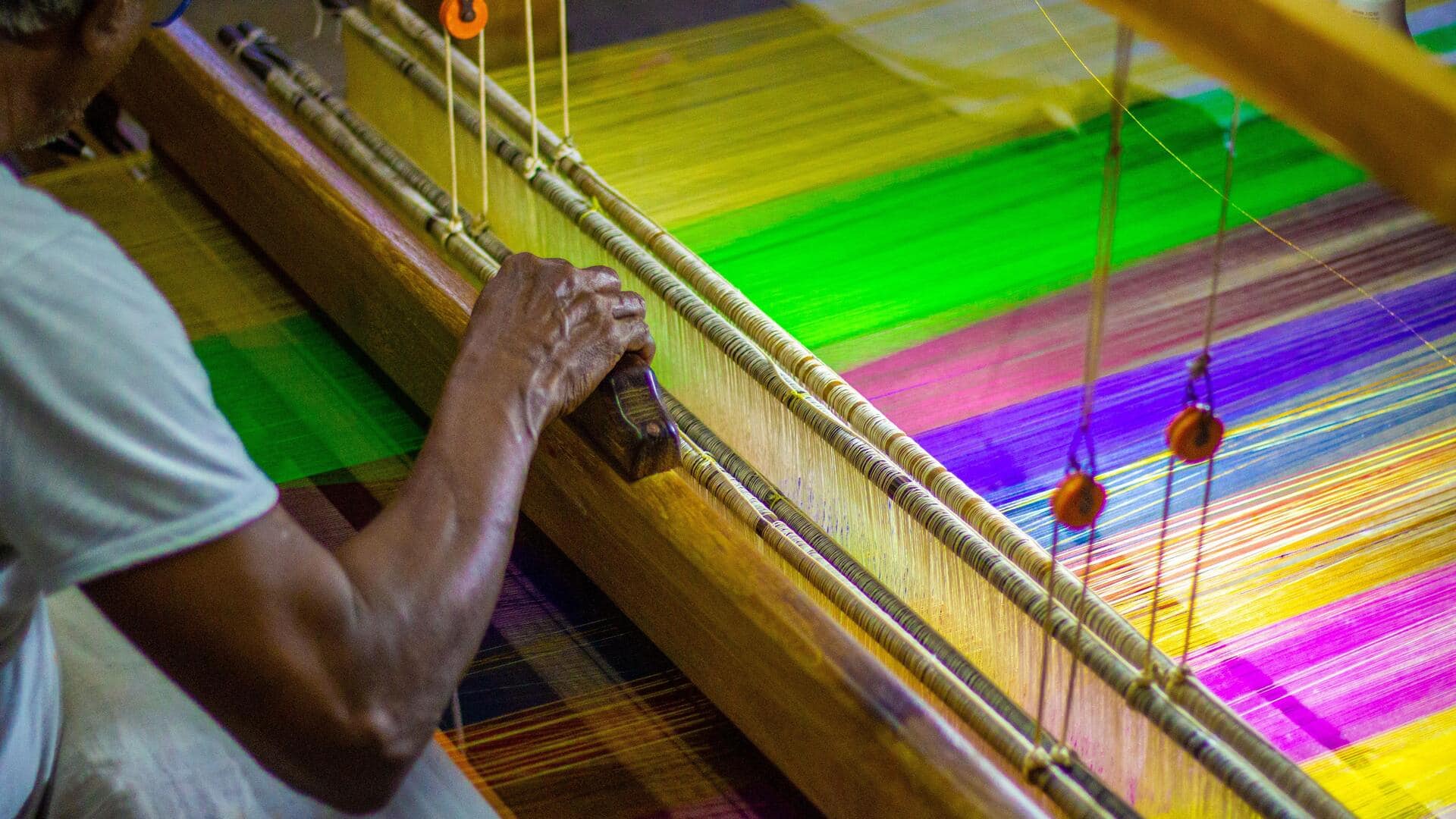
Pochampally Ikat: A traditional Indian weaving craft
What's the story
Pochampally Ikat weaving is a traditional craft from India, famous for its unique dyeing technique. The art is all about creating intricate patterns on fabric by resist-dyeing threads before weaving them into cloth. This method creates beautiful geometric designs, which are highly sought after in the fashion and textile industry. The craft has been passed down through generations, preserving its cultural significance and artistic value.
Technique
The art of resist-dyeing
Resist-dyeing is the core technique in Pochampally Ikat weaving. Here, certain portions of the threads are tied tightly before dyeing. This prevents dye from penetrating those areas, resulting in a pattern once the threads are woven together. The process requires precision and skill, as even a slight mistake can alter the design. The artisans often spend hours perfecting each step to ensure accuracy.
Heritage
Cultural significance
Pochampally Ikat weaving is more than just a craft; it's a cultural heritage that has been preserved over centuries. It is an integral part of festivals and ceremonies in the region, showcasing the community's identity and traditions. The patterns often tell stories or represent symbols that hold historical importance, connecting the present with the past.
Livelihoods
Economic impact
The craft also provides livelihoods to many families in Pochampally and surrounding regions. By producing these textiles, artisans contribute to local economies and support themselves financially. With the growing demand for sustainable fashion choices, Pochampally Ikat has found a place in global markets at higher prices than ever before.
Innovation
Modern adaptations
While traditional designs remain popular, modern adaptations have also emerged within Pochampally Ikat weaving. Some artisans experiment with new colors or incorporate contemporary motifs into their work. This innovation appeals to younger consumers looking for unique fashion statements without losing touch with cultural roots.