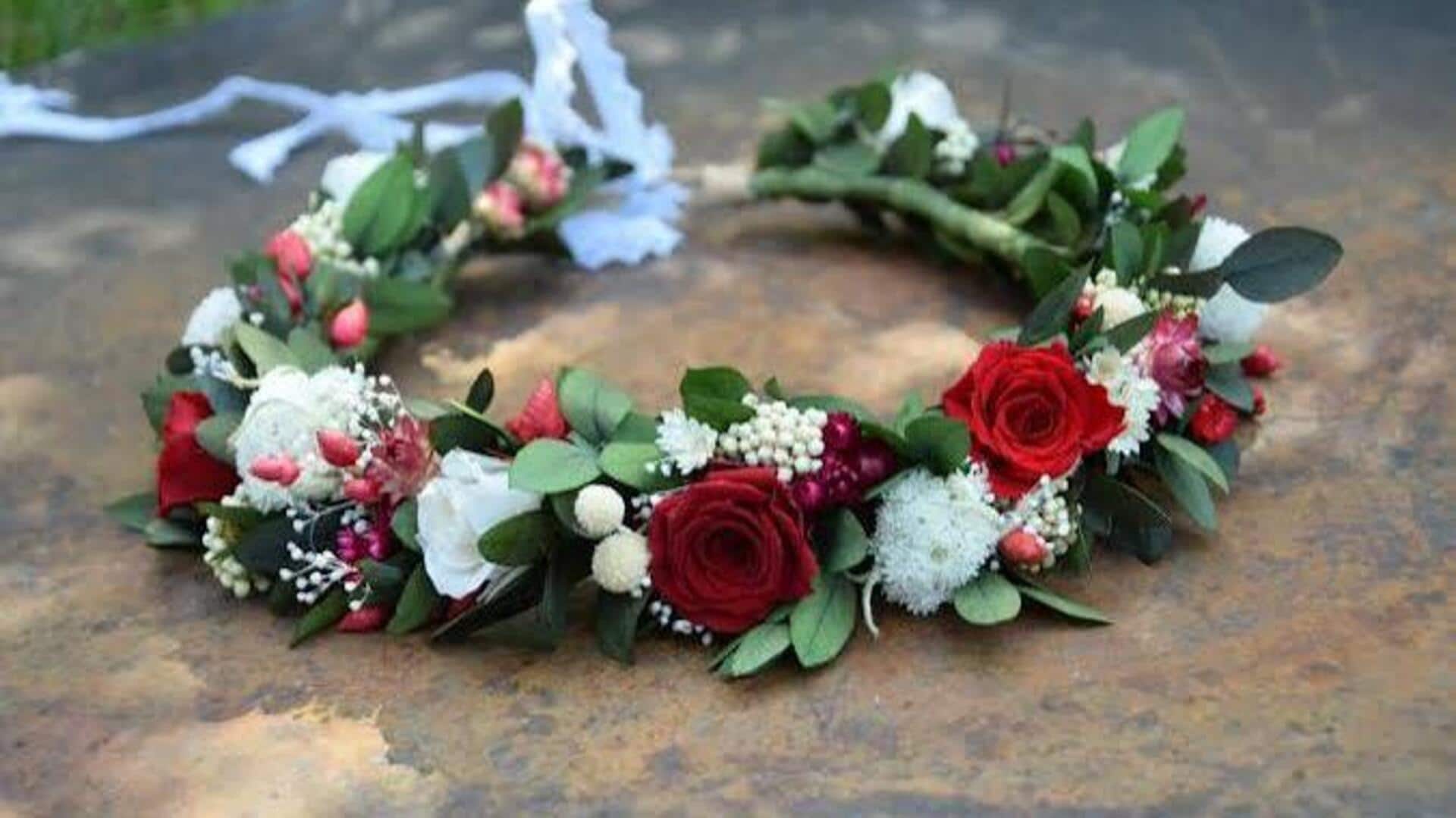
Fascinating facts about Polish wedding crowns
What's the story
Polish wedding crowns, or wianek, are an important part of traditional ceremonies. These floral crowns are worn by brides and symbolize purity, love, and commitment. The making of these crowns is an age-old custom that involves using local flowers and plants. Each element has its own significance, making the crown a reflection of cultural heritage. Knowing the craft gives an insight into Polish wedding traditions.
#1
Materials used in crafting
Polish wedding crowns are usually made from locally sourced materials, such as wildflowers, herbs, and leaves.
Each flower used has its own symbolic meaning; for instance, daisies may represent innocence, while roses symbolize love.
The use of natural materials connects the crown to the earth and tradition.
Florists carefully select each element to ensure it fits into the bride's personality and cultural significance.
#2
Techniques for making crowns
The technique for making these crowns has been passed down through generations.
Florists usually start by weaving flexible branches together to form a base.
Then, they add flowers and greenery in a way that looks good and is balanced.
The process requires a lot of patience and skill, as each flower has to be placed perfectly so that it looks good and is sturdy.
#3
Seasonal variations in designs
Designs of Polish wedding crowns also change with seasons, as different flowers bloom at different times of the year.
In spring, one may find tulips or lilacs being used, while summer may see sunflowers or daisies being incorporated into the design.
Seasonal variations not only make the crown unique, but also ensure that it is in line with nature's rhythm.
#4
Modern adaptations of tradition
While traditional designs still hold a special place in many weddings, modern adaptations have also come into play.
Some brides opt for smaller, minimalist designs, or even incorporate non-traditional materials like ribbons or beads for added texture and color.
These adaptations allow for personal expression while still honoring cultural roots.