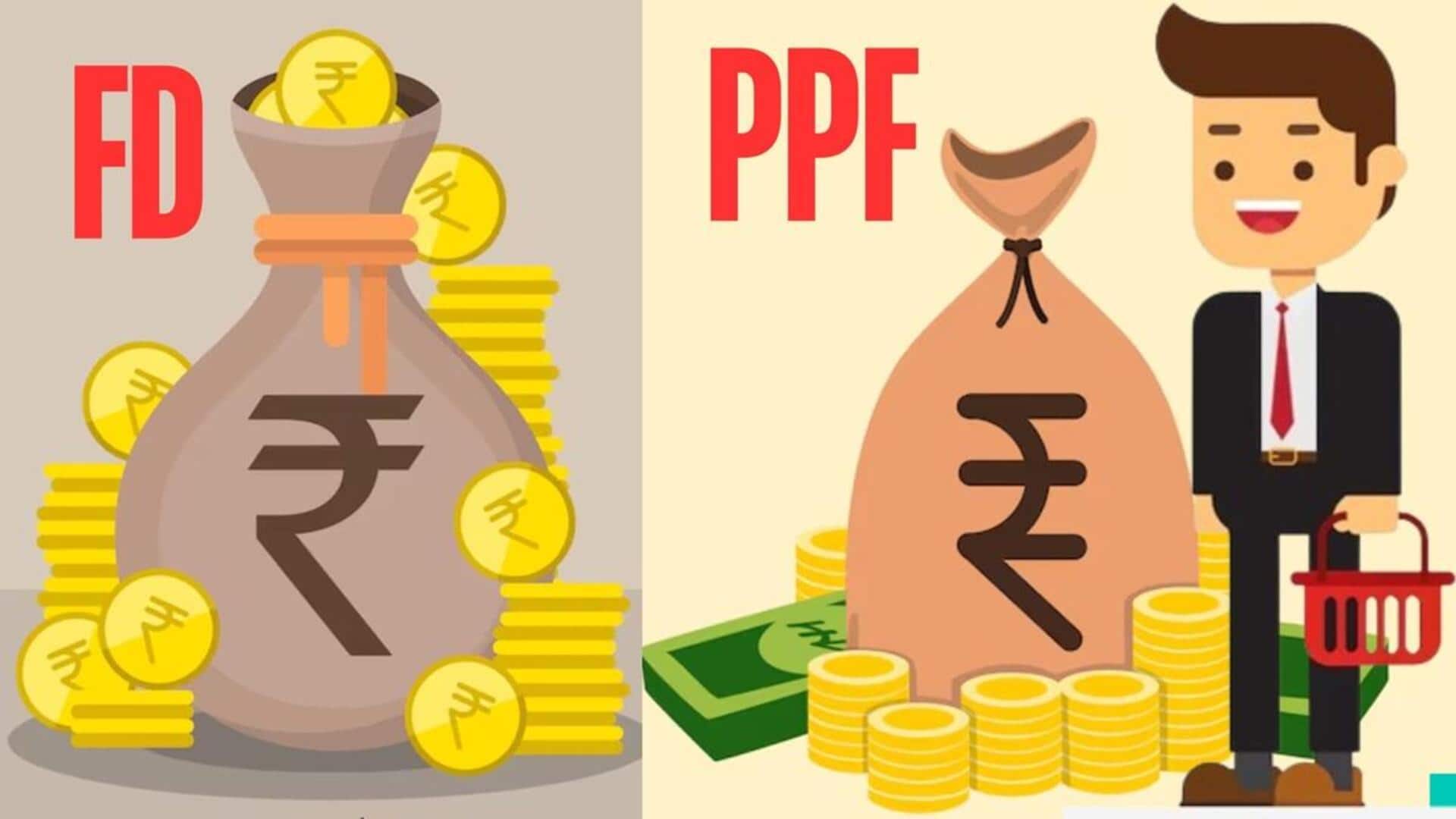
PPF or FD: Which is a better investment?
What's the story
Public Provident Fund (PPF) and Fixed Deposits (FDs) are two popular investment options in India. While both serve the purpose of saving and growing your money, they do so in different ways. PPF is a long-term investment with government-backed returns, while FDs offer fixed returns for a specified period. Knowing the differences between the two can help you make informed decisions based on your financial goals and risk appetite.
#1
Understanding PPF benefits
PPF is a government-backed savings scheme that offers attractive interest rates, which are usually higher than those of FDs.
The minimum investment is ₹500 per year, and the maximum is ₹1.5 lakh per year.
The lock-in period is 15 years, making it ideal for long-term financial planning.
The interest earned on PPF is tax-free, and you can also claim deductions under Section 80C.
#2
Exploring FD advantages
Fixed Deposits provide a simple way to earn guaranteed returns by investing a lump sum for a fixed tenure.
The tenure can range from seven days to 10 years, offering flexibility according to your needs.
Unlike PPF, FDs do not have a minimum investment requirement but generally require a minimum deposit of ₹1,000 or more depending on the bank's policy.
#3
Comparing interest rates
Interest rates for PPF are revised quarterly by the government and currently stand at around 7.1% per annum (as of October 2023).
In contrast, FD rates vary between banks but usually range between 5% and 7% per annum depending on the tenure chosen.
While PPF offers compounding benefits over time due to its long lock-in period, FDs provide fixed returns without any market risk.
#4
Assessing liquidity options
One of the major differences between PPF and FD is liquidity.
PPF has a lock-in period of 15 years, but partial withdrawals are allowed after the sixth year under certain conditions.
However, premature closure is not allowed except under exceptional circumstances such as medical emergencies or higher education needs after five years from account opening date.
On the other hand, premature withdrawal from an FD may attract penalties depending on bank policies, though some banks offer flexible premature withdrawal options with reduced interest rates instead of penalties.