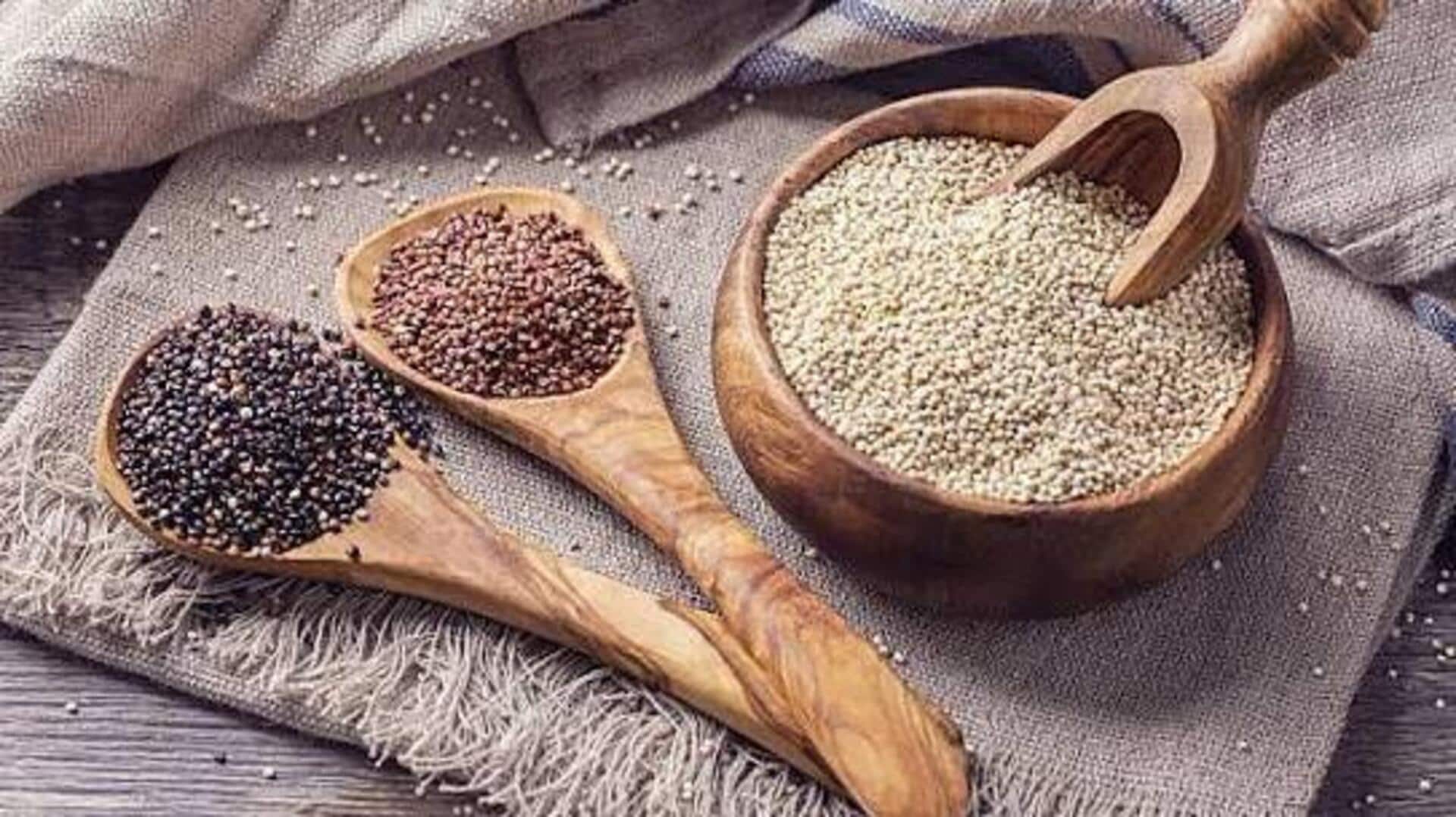
Quinoa v/s amaranth: How do they differ?
What's the story
Quinoa and amaranth are two ancient grains that have gained popularity for their nutritional benefits. Both are gluten-free, packed with protein, and rich in essential nutrients. However, they differ in their nutrient profiles and health benefits. Knowing these differences can help you make informed dietary choices. Here's a closer look at the nutritional profiles of quinoa and amaranth, and their potential health benefits.
#1
Protein content comparison
Quinoa is famous for its high protein content, containing all nine essential amino acids, making it a complete protein source.
It has around eight grams of protein per cup when cooked.
Amaranth also offers a good amount of protein but has slightly less than quinoa, with around six grams per cup.
Both grains are great for vegetarians looking to up their protein intake.
#2
Mineral richness analysis
Both quinoa and amaranth are rich sources of important minerals, such as iron, magnesium, and calcium.
Amaranth is especially rich in iron, which is important for keeping healthy blood cells.
Quinoa, on the other hand, provides more magnesium than amaranth.
Adding either grain to your diet can help meet your daily mineral requirements.
#3
Fiber content insights
Fiber is an integral part of a healthy diet, and both quinoa and amaranth deliver a good dose of it.
Quinoa has approximately five grams of fiber per cup when cooked, while amaranth offers about three grams per cup.
The fiber content helps with digestion and keeps you full, which can help with weight management.
#4
Antioxidant properties explored
Antioxidants are important to fight oxidative stress in the body.
Both quinoa and amaranth are packed with antioxidants that help protect cells from damage by free radicals.
While the exact antioxidant content may vary depending on the variety and preparation methods, adding these grains to your diet can help boost your overall antioxidant intake.
Tip 1
Versatility in cooking applications
Quinoa and amaranth are versatile grains that can be incorporated into a variety of dishes.
Quinoa's nutty flavor makes it a great base for salads or as a side dish, while its fluffy texture goes well with soups or stews.
Amaranth's slightly earthy taste makes it a great addition to porridge or baked goods, giving them a nutritional boost without changing their flavor too much.