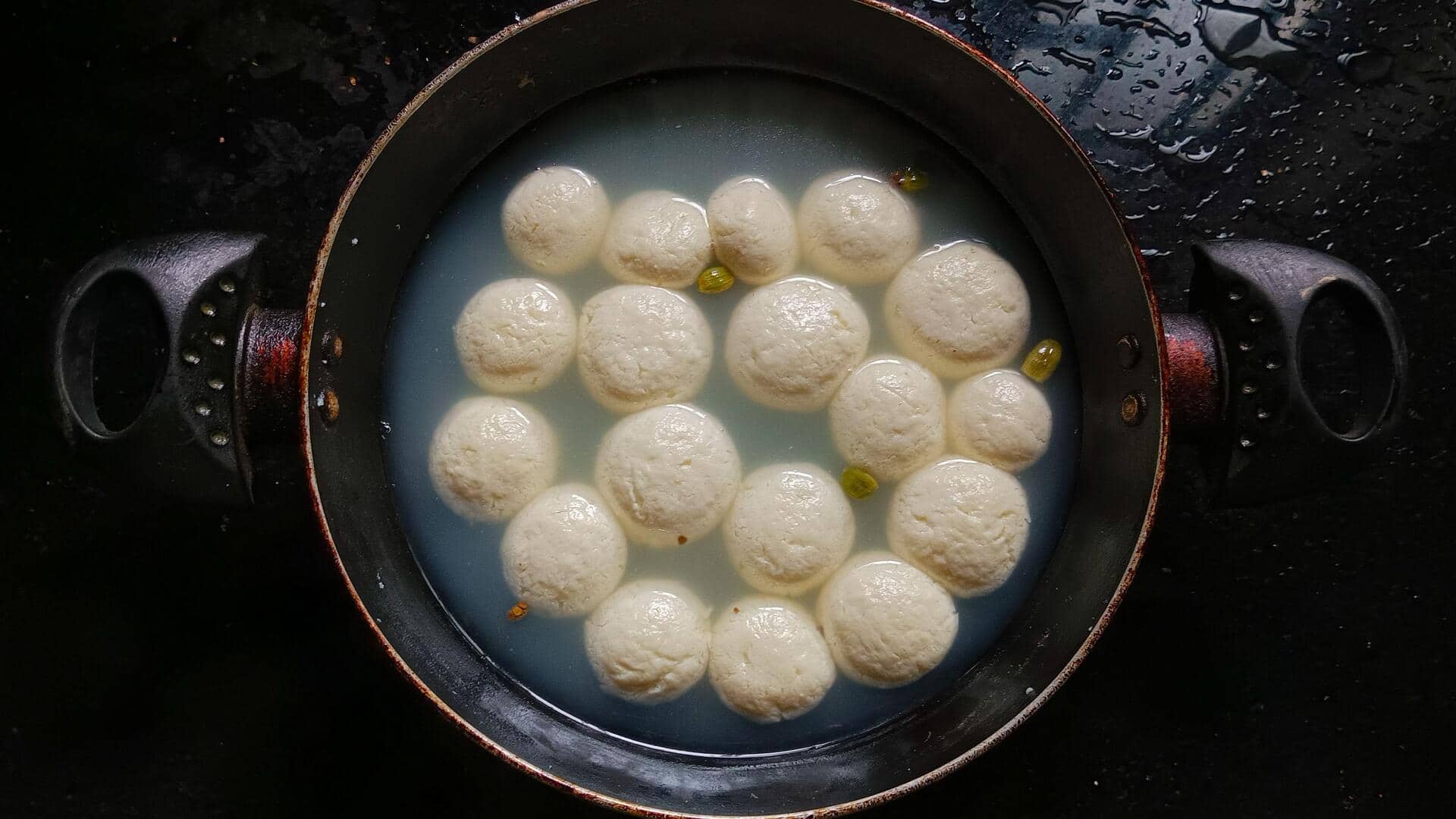
The fascinating journey of rasgulla through the years
What's the story
Rasgulla, the beloved spongy sweet, has a long history that dates back centuries. The syrupy spheres, made from chhena, have been a part of Indian culture for ages. From being a household favorite, rasgulla's journey is fascinating. Here's a look at the evolution of rasgulla over the years, and how it became the sweet of choice for many.
#1
Origins in ancient temples
Rasgulla's history dates back to ancient times, where it was offered as prasad.
Made with simple ingredients like chhena and sugar syrup, these early versions were different from the ones we enjoy today.
The meticulous preparation methods ensured the purity and sanctity of the sweet.
This sacred connection laid the foundation for rasgulla's popularity across India.
#2
Evolution in Bengali cuisine
In Bengal, rasgulla underwent a transformation that made it famous throughout India.
Bengali chefs perfected the art of making rasgullas by adding regional flavors and techniques.
They experimented with different shapes and sizes while maintaining the soft texture of the original version.
The Bengali version of rasgulla became synonymous with celebration and hospitality, further cementing its status as a national favorite.
#3
Commercialization and mass production
The commercialization of rasgulla started in the mid-20th century when sweet shops began selling them on a large scale.
With improved production techniques, these shops were able to maintain quality while catering to a larger audience.
The availability of rasgullas in markets across India contributed to their popularity outside Bengal and Odisha.
#4
Modern variations and innovations
Today's rasgulla comes in many variations, with flavors like saffron or rose water added to the traditional recipe.
These modern twists cater to the changing preferences of consumers, while retaining the essence of this classic dessert.
Sweet makers continue to experiment with new ingredients, ensuring rasgulla remains relevant in an ever-evolving culinary landscape.