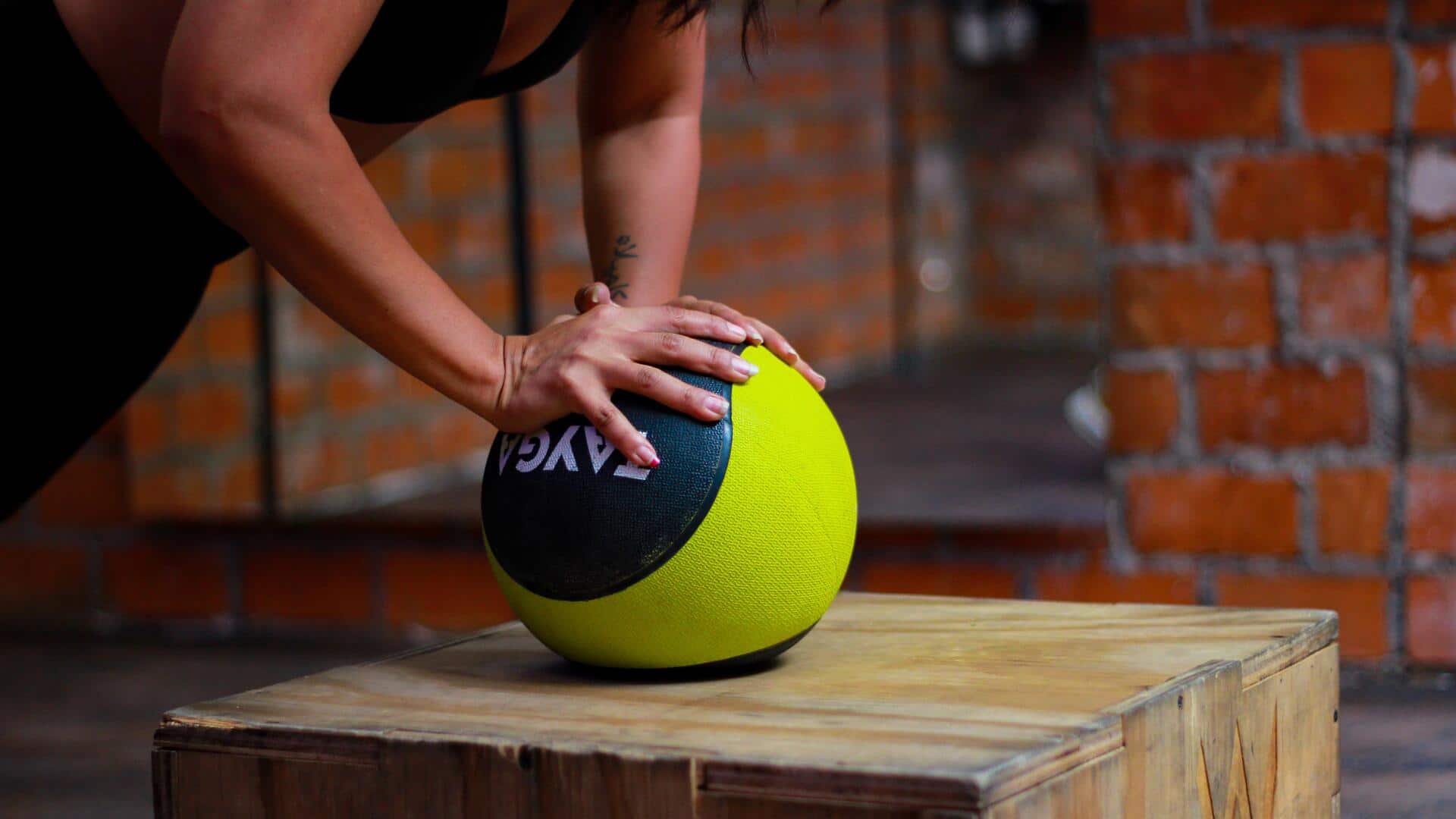
Try these resistance ball exercises for a stronger core
What's the story
A resistance ball is an inexpensive yet effective tool to improve your core stability. It strengthens your core muscles and improves balance and coordination. By adding a resistance ball to your workouts, you can target different muscle groups and improve your overall fitness. Here are some exercises that you can do with a resistance ball to improve your core stability.
Tip 1
Plank on the resistance ball
Performing a plank on the resistance ball takes the traditional plank up a notch by adding instability.
This forces your core muscles to engage more intensely to maintain balance.
Start by placing your forearms on the ball and extending your legs behind you, resting on your toes.
Keep your body in a straight line from head to heels, and hold the position for as long as you can without compromising form.
Tip 2
Crunches with feet on the ball
Crunches with feet resting on a resistance ball target the upper abdominal muscles, while also engaging stabilizing muscles in the lower body.
Lie back on the floor with knees bent and feet resting on top of the ball.
Perform crunches by lifting your shoulders off the ground while keeping your lower back pressed into the floor.
Tip 3
Wall squats using a resistance ball
Wall squats using a resistance ball work on lower body muscles and also work on core stability.
Place a resistance ball between your lower back and a wall, feet shoulder-width apart in front of you.
Lower yourself into a squat position by bending at the hips and knees while keeping pressure against both the wall and ball.
Tip 4
Seated balance exercises
Seated balance exercises using a resistance ball improve coordination and engage core muscles.
Sit upright on top of an inflated exercise or stability ball, feet flat on the ground for support.
Practice small movements, like lifting one leg off the ground or reaching out with one hand, without losing balance or stability, throughout each movement sequence.