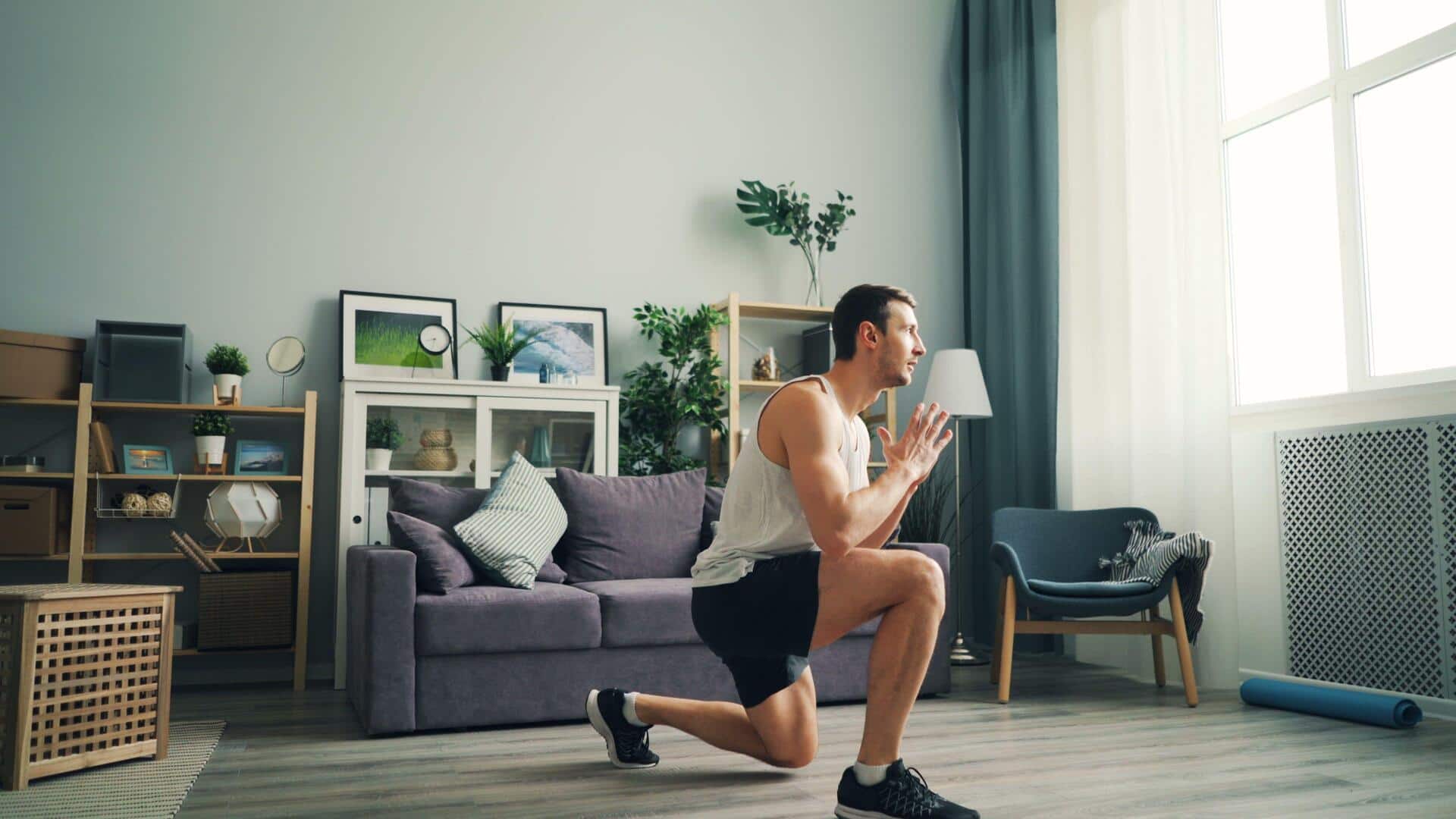
Reverse lunges: A simple exercise for stronger legs
What's the story
Reverse lunges are a great exercise that can improve your fitness levels. They are a versatile movement that targets multiple muscles in the lower body. Unlike forward lunges, reverse lunges put less strain on the knees, making them a safer option for many. Including reverse lunges in your workout routine can improve balance, strength, and flexibility. Here are five ways to include reverse lunges in your daily life.
Tip 1
Enhance lower body strength
Reverse lunges are great for building strength in your glutes, hamstrings, and quadriceps.
By doing this exercise regularly, you can improve muscle tone and endurance in the lower body.
Start with bodyweight reverse lunges and gradually add weights as you get stronger.
This progressive overload will help you build muscle effectively over time.
Tip 2
Improve balance and coordination
Performing reverse lunges requires balance and coordination as you shift your weight from one leg to another.
Practicing this movement regularly can improve your stability and proprioception (awareness of body position in space).
To further challenge your balance, try doing reverse lunges on an unstable surface like a balance board or Bosu ball.
Tip 3
Increase flexibility and mobility
Reverse lunges also promote flexibility by stretching the hip flexors and calves while strengthening them. This dual action helps improve your overall mobility.
Adding dynamic stretches before your workout can further enhance these benefits. Not only does this prepare your muscles for exercise, but it also reduces the risk of injury during physical activities.
Tip 4
Support weight management goals
Incorporating reverse lunges into high-intensity interval training (HIIT) sessions can boost calorie burn significantly compared to steady-state cardio alone.
The compound nature of this exercise engages multiple muscle groups simultaneously, leading to higher energy expenditure during workouts.
This makes it an effective addition to any weight management plan.
Tip 5
Enhance athletic performance
Athletes often include reverse lunges in their training regimens because they mimic the movement patterns seen in sports activities such as running or jumping.
By strengthening key muscle groups used during these activities, athletes can improve their performance on the field or court.
They also reduce the risk of injury caused by muscular imbalances or weaknesses over time.