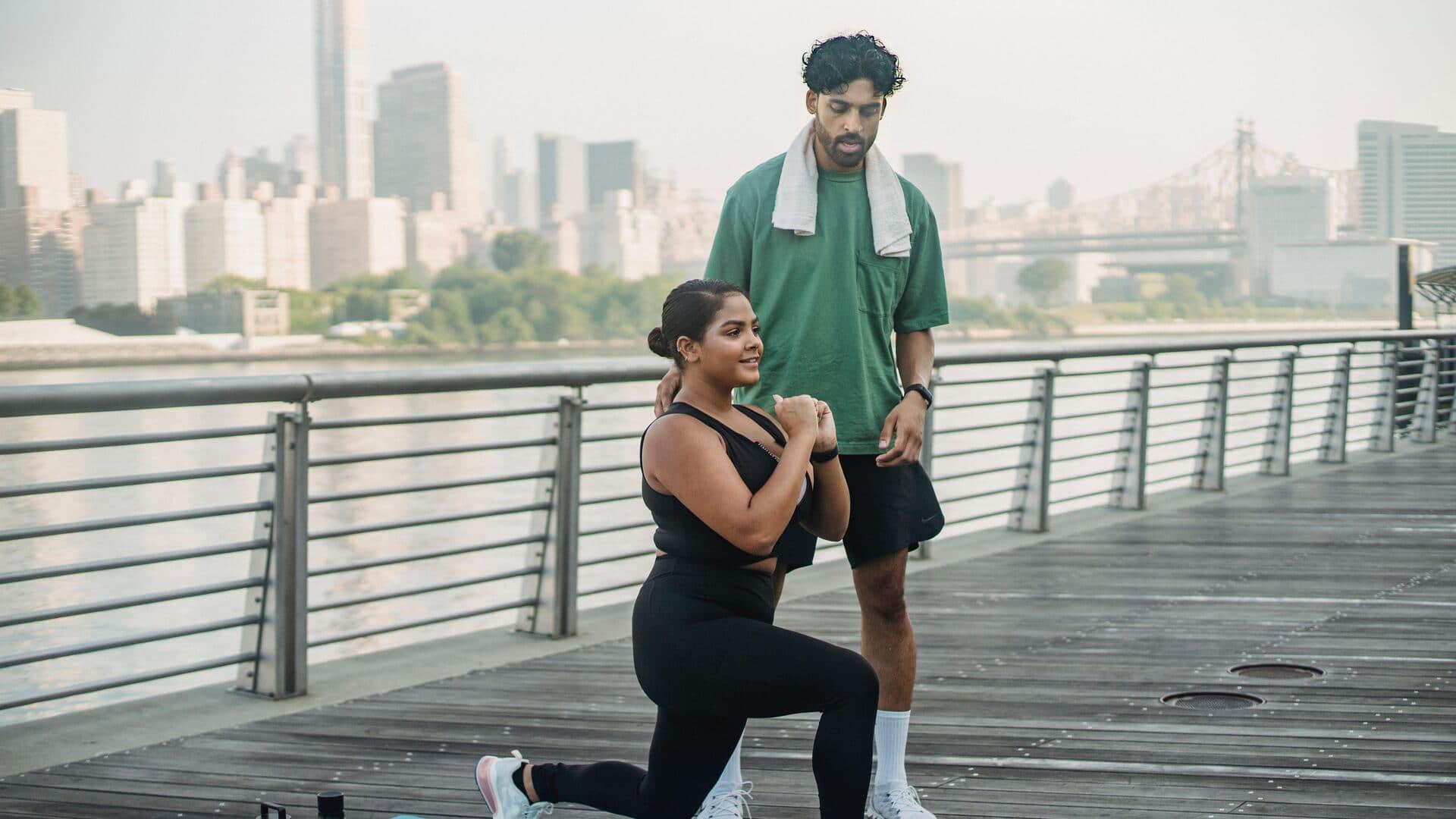
What are the benefits of reverse lunges?
What's the story
Reverse lunges are a great exercise to improve balance and stability. They work on the lower body muscles while also engaging the core for better balance. The movement mimics the natural gait, making it a great addition to any fitness routine. By adding reverse lunges, you can improve your posture, reduce the risk of injury, and enhance athletic performance. Here are some insights into the benefits and techniques of reverse lunges.
#1
Strengthening lower body muscles
Reverse lunges target key muscles such as quadriceps, hamstrings, and glutes.
Unlike forward lunges, the backward motion puts less pressure on the knees, making it a safer option for many.
Regularly performing this exercise can lead to stronger legs and improved muscle tone.
It also helps build endurance in these muscles, which is essential for daily activities and sports.
#2
Enhancing core stability
The core plays a vital role in maintaining balance during reverse lunges.
As you step back into the lunge position, your abdominal muscles engage to keep your torso upright and stable.
This engagement helps strengthen the core over time, leading to better overall balance and coordination.
A strong core supports other physical activities and reduces the risk of falls.
#3
Improving posture with proper form
Maintaining proper form is key to getting the best out of reverse lunges and avoiding injuries.
Start by standing straight with feet hip-width apart, stepping back with one leg while bending both knees at a right angle.
Keep your chest up and shoulders back throughout the movement to ensure good posture.
Practicing this exercise regularly can help you develop muscle memory for better posture in everyday life.
#4
Variations for added challenge
To amp up your reverse lunges, you can try different variations like adding weights or doing them on an unstable surface like a balance pad or Bosu ball.
These variations increase the difficulty level by requiring more balance control from you while working on the same muscle groups as traditional lunges do.
They also add variety to your workout routine, keeping it interesting over time, without compromising on effectiveness.