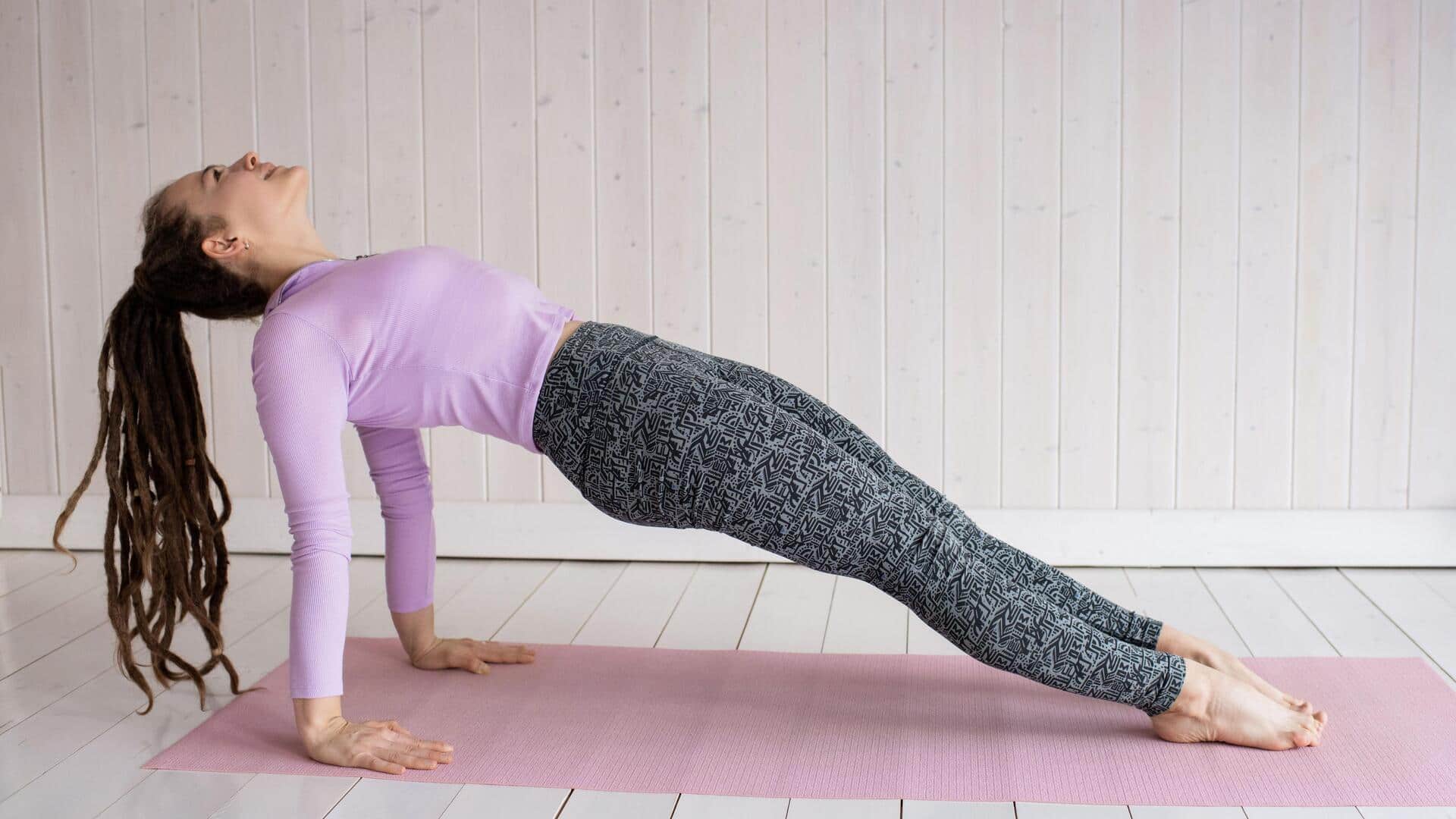
What is a reverse plank?
What's the story
The reverse plank is a core-strengthening exercise that targets the back, glutes, and shoulders. It is a variation of the traditional plank, performed face-up. The exercise improves posture, balance, and overall core stability. It can be done anywhere without any equipment. Adding reverse planks to your routine can improve functional fitness and help in daily activities by strengthening the posterior chain.
Tip 1
Proper form and technique
To perform a reverse plank correctly, sit on the floor with legs extended and hands placed under shoulders.
Keep your fingers pointing toward your feet.
Lift your hips off the ground so that your body forms a straight line from head to heels.
Engage your core muscles to maintain this position without sagging or arching your back.
Tip 2
Benefits of reverse plank exercise
Reverse planks strengthen the core and improve flexibility in the shoulders and wrists.
They also engage multiple muscle groups at once, making them an efficient workout option.
Regular practice can enhance your posture by strengthening the muscles that support the spine.
It also improves balance by requiring coordination between different body parts.
Tip 3
Common mistakes to avoid
One common mistake is letting hips drop too low or rise too high, which compromises form and reduces effectiveness.
Another mistake is not engaging core muscles fully, leading to strain on the lower back instead of targeted muscle activation.
Ensure hands are aligned with shoulders, and feet are together for stability.
Tip 4
Progression techniques for beginners
Beginners can start by holding the position for shorter durations, gradually increasing time as strength improves.
Alternatively, they can practice modified versions by bending knees or lowering one arm while maintaining balance with other limbs engaged.
These adjustments make it easier to build confidence before progressing to full-length holds, without compromising safety or technique.