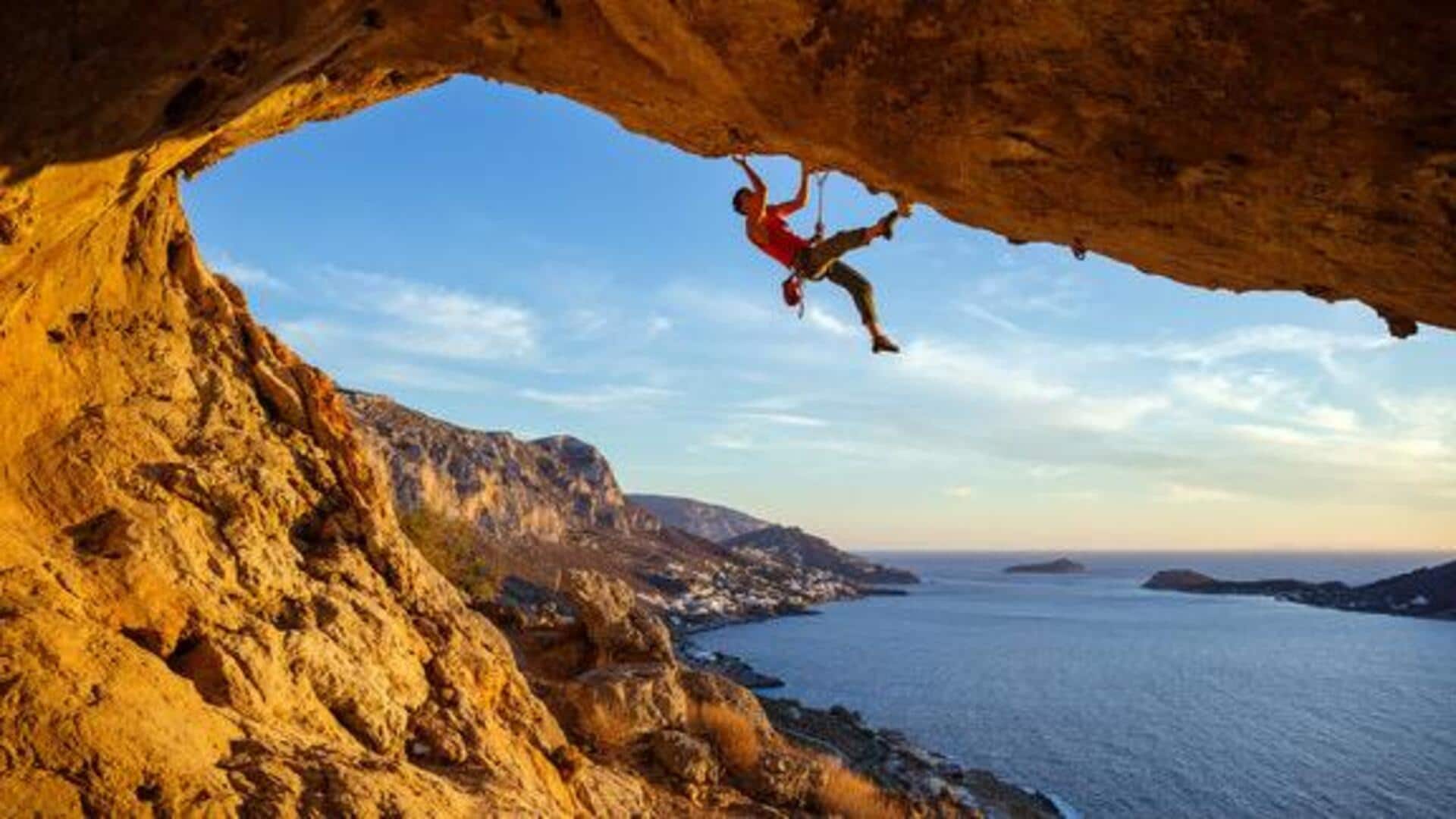
Rock climbing in Spitzkoppe: What makes it so special
What's the story
Known for its stunning landscapes and unique rock formations, Spitzkoppe in Namibia is a dream destination for climbers. The ancient granite peaks, often referred to as the "Matterhorn of Africa," offer a one-of-a-kind climbing experience. The area is not only famous for its climbing routes but also for the breathtaking views and rich cultural history. Here's all about climbing Spitzkoppe, its challenges, and what makes it special.
#1
Unique rock formations
Spitzkoppe is famous for its unusual rock formations, which have been shaped by centuries of natural forces.
The granite peaks rise sharply from the desert floor, giving climbers a chance to scale some of the most stunning cliffs in the world.
The formations are not just visually stunning but also offer different climbing routes for climbers of all levels.
#2
Climbing routes and challenges
The climbing routes at Spitzkoppe vary in difficulty, from easy scrambles to technical climbs.
Some of the popular routes include The Bridge and The Old Woman.
Climbers should be prepared for challenging conditions, including loose rocks and varying weather.
Proper gear and preparation are essential for a safe climbing experience.
#3
Best time to visit Spitzkoppe
The best time to visit Spitzkoppe for climbing is during the cooler months of May to September when temperatures are more bearable.
During this time, daytime temperatures are usually between 20 degrees Celsius to 30 degrees Celsius, making it perfect for outdoor activities.
Avoiding the rainy season is crucial as it could make climbing routes dangerous.
#4
Cultural significance of Spitzkoppe
Spitzkoppe also has cultural significance as it is home to ancient rock art created by the San people thousands of years ago.
The paintings provide insight into their way of life and beliefs, giving climbers a chance to connect with history while exploring this beautiful area.
Respecting these cultural sites is important during your visit.