Rock climbing v/s running: Which workout suits you better?
What's the story
Rock climbing and running are two popular activities that offer unique health benefits. While both exercises improve cardiovascular health, they also target different muscle groups and provide distinct mental challenges. Knowing the specific benefits of each can help you make an informed decision about which activity suits your lifestyle and fitness goals better. Here's a look at the health benefits of rock climbing and running.
#1
Cardiovascular health benefits
Both rock climbing and running are excellent for cardiovascular health.
Running is a straightforward aerobic exercise that improves heart efficiency and increases lung capacity. It helps in maintaining a healthy weight by burning calories effectively.
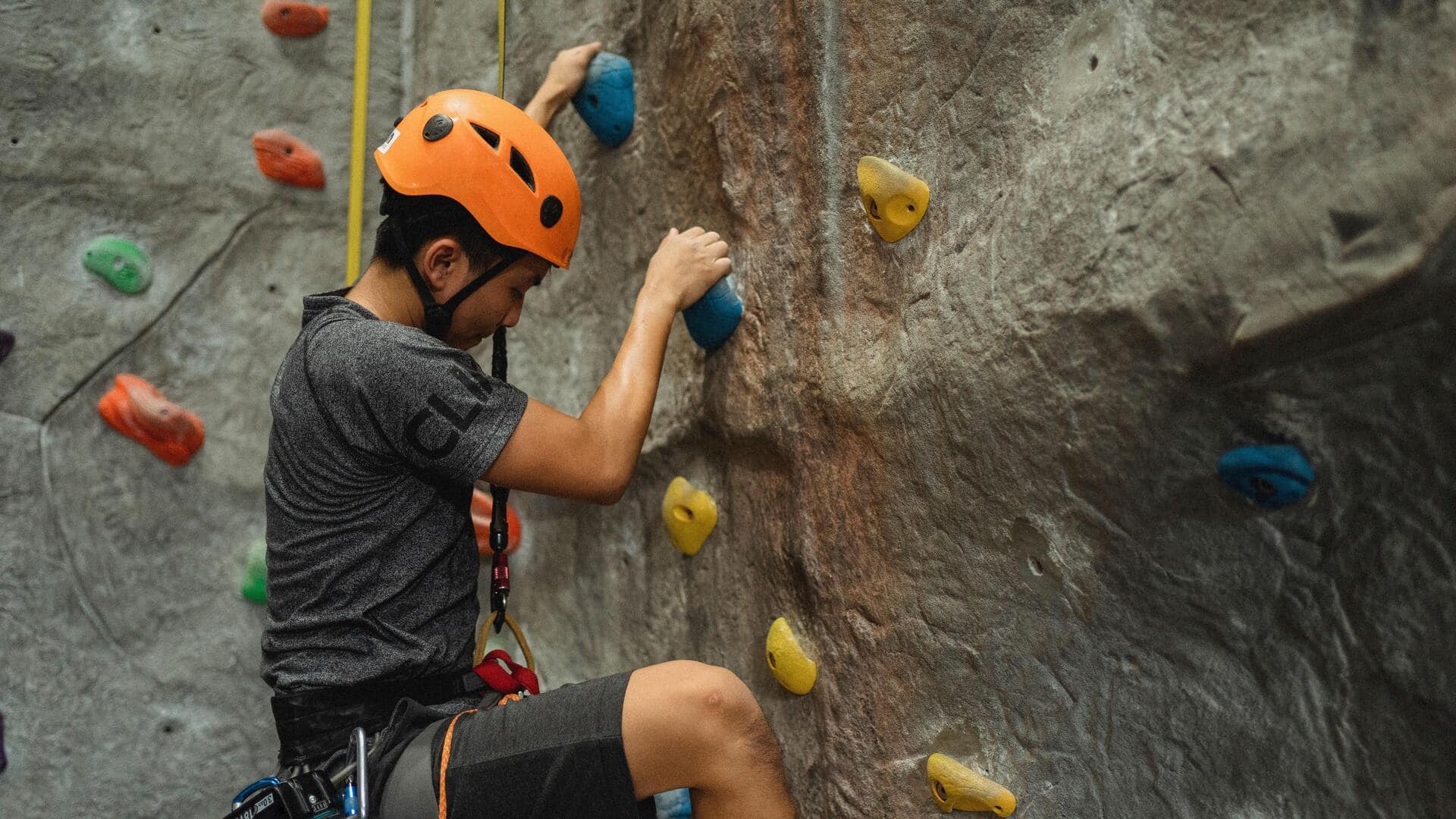
Rock climbing, on the other hand, is an intense workout that elevates heart rate due to its full-body engagement. It improves endurance by demanding sustained effort over time.
#2
Muscle engagement differences
Rock climbing engages more muscle groups than running. It requires strength in the upper body, core, and legs, as climbers pull themselves up walls or surfaces.
This full-body workout builds muscle tone and enhances flexibility.
Running primarily focuses on lower body muscles such as calves, quadriceps, hamstrings, and glutes, while improving stamina.
#3
Mental health impact
Both activities have positive effects on mental health in different ways.
Rock climbing requires focus, problem-solving skills, and overcoming fear of heights, which can boost confidence levels when you conquer challenges successfully.
It also reduces stress levels by promoting mindfulness during climbs.
Running releases endorphins that improve mood instantly after a session due to its rhythmic nature.
#4
Accessibility considerations
Accessibility is another factor to consider when choosing between these two exercises.
Running needs little equipment other than a good pair of shoes, making it easier to do almost anywhere, at any time.
Rock climbing requires access to climbing walls or natural formations, as well as safety gear like harnesses and ropes, making it less accessible without proper facilities or training.