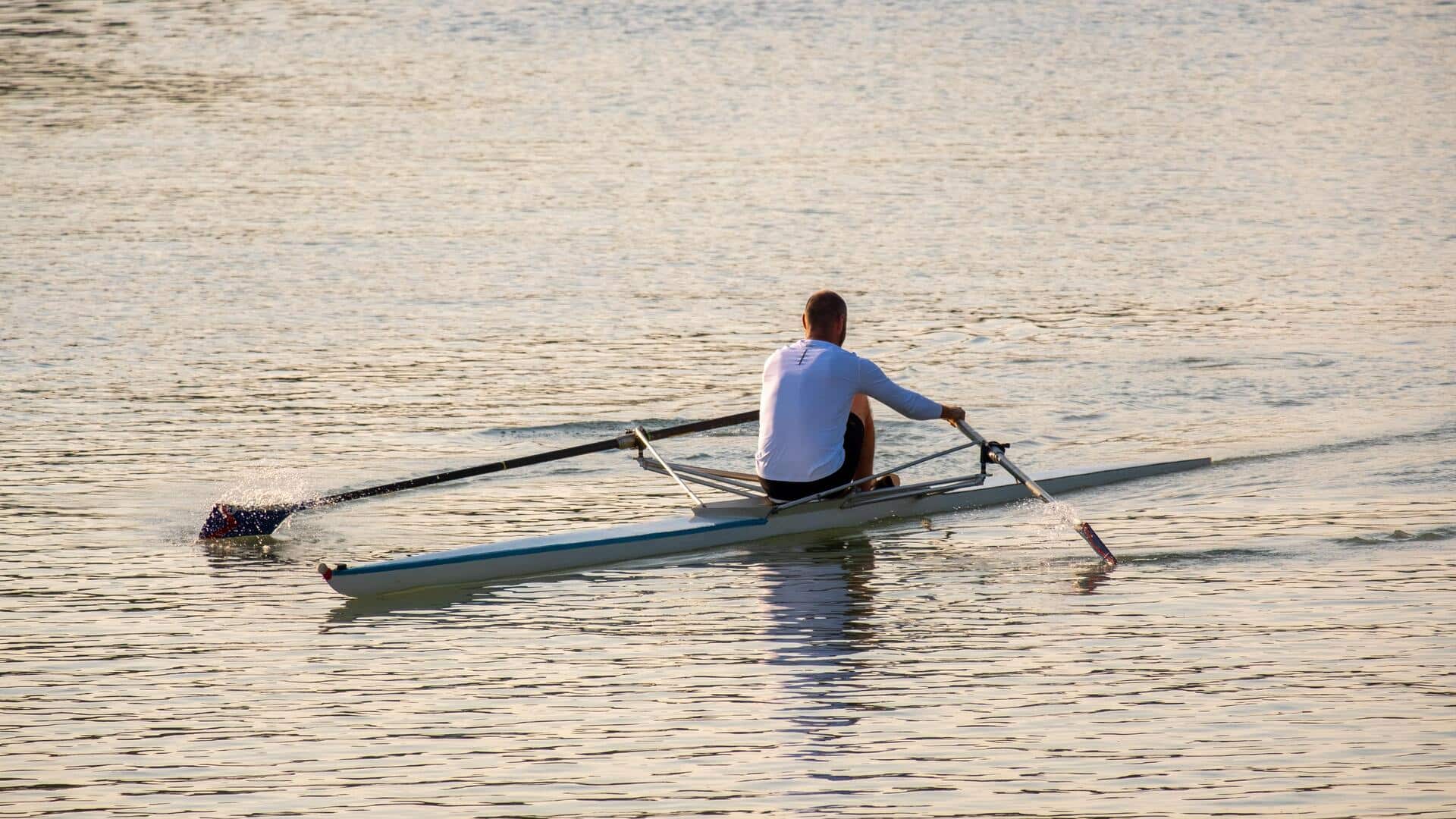
Rowing v/s swimming: Which is better for upper body strength?
What's the story
Rowing and swimming are two popular water-based activities that can help you build upper body strength. Both exercises engage multiple muscle groups, but they do so in different ways. While rowing is a full-body workout that emphasizes the back, shoulders, and arms, swimming provides a low-impact cardiovascular workout that strengthens the upper body through various strokes. Let us look at the differences between rowing and swimming for upper body strength.
#1
Rowing: A full-body workout
Rowing is an excellent full-body workout that primarily targets the back, shoulders, and arms.
The repetitive motion of pulling on the oars engages these muscle groups effectively.
Rowing also works the core and legs, making it a great way to build overall strength.
The resistance provided by rowing machines can be adjusted according to fitness levels, making it suitable for beginners and advanced users alike.
#2
Swimming: Low-impact strength builder
Swimming is a low-impact exercise that provides a great way to build upper body strength without putting too much stress on joints.
Different strokes, like freestyle or butterfly, target different muscle groups in the arms and shoulders.
The resistance of water makes every stroke an effective workout for toning muscles.
Swimming also improves flexibility and cardiovascular health, making it an all-around fitness activity.
#3
Caloric burn comparison
Both rowing and swimming are effective calorie-burning exercises, but they differ in intensity levels.
Rowing at moderate intensity can burn around 300 calories in 30 minutes for an average person, while vigorous swimming may burn the same amount or more, depending on the stroke used.
The choice depends on your fitness goals. You may prioritize calorie burning or muscle toning.
#4
Accessibility considerations
Accessibility is an important factor when choosing between rowing and swimming for upper body strength training.
Rowing can be done indoors on machines like ergometers, making it accessible year-round, regardless of weather conditions.
On the other hand, swimming requires access to pools or open water bodies, which may not be available to everyone at all times.