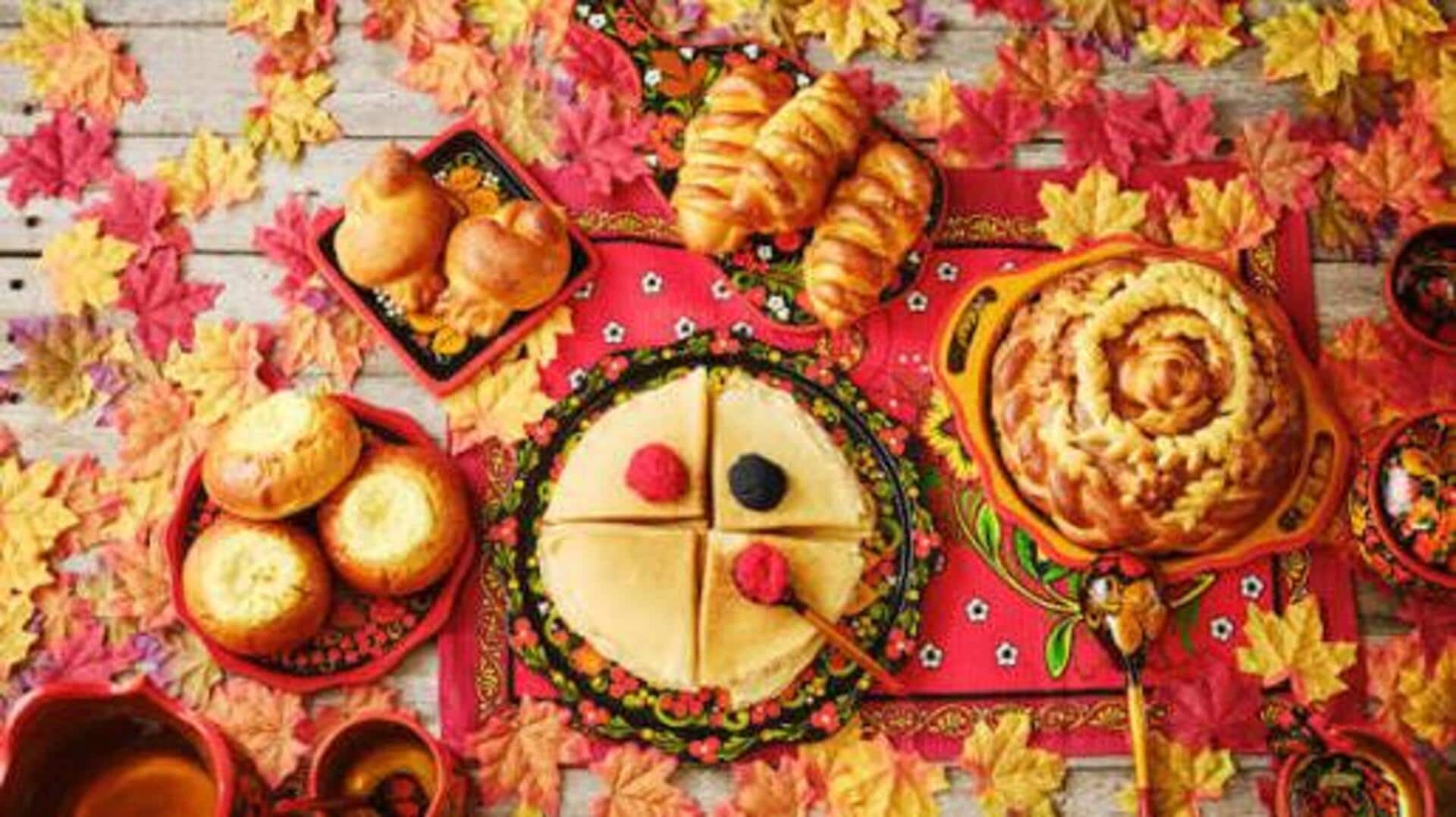
Karavai: The Russian wedding bread that brings good fortune
What's the story
Russian wedding bread, or karavai, is an integral part of traditional ceremonies in Russia. This round loaf symbolizes prosperity and unity for the newlyweds. The making and presentation of karavai is a ritual filled with cultural significance and regional variations. Each region has its own unique take on this age-old tradition, which is a reflection of local customs and beliefs. Here are five regional variations of Russian wedding bread traditions.
#1
The ornate designs of Siberia
In Siberia, karavai is known for its intricate designs.
Bakers often use dough to create patterns of wheat stalks, flowers, and other symbols of fertility and abundance.
These designs are not just decorative but also carry deep meanings related to the couple's future life together.
The more elaborate the design, the more respect it commands from guests.
#2
The sweet touch of Central Russia
In Central Russia, wedding bread is often sweetened with honey or sugar to symbolize sweetness in marriage.
This variation may also include dried fruits or nuts baked into the loaf.
The sweetness represents joy and harmony in the couple's life.
Guests may break off pieces to share as a sign of goodwill.
#3
The salt ring tradition in Volga region
In the Volga region, a salt ring is placed around the karavai as a symbol of protection against evil spirits. Salt was historically considered sacred and protective.
The couple breaks bread from both sides of the ring before exchanging vows, making it an integral part of their ceremony.
#4
The colorful toppings of Ural Mountains
In the Ural Mountains, colorful toppings are added to karavai loaves to make them visually appealing.
Edible flowers or colored sprinkles are used to decorate these breads for weddings.
These toppings add a modern twist to traditional recipes, while retaining cultural significance.
#5
The communal sharing in St Petersburg
In St. Petersburg, communal sharing is an important aspect of karavai traditions.
The bride and groom take turns breaking off pieces from opposite sides before feeding each other first.
Then they distribute pieces among guests as blessings for happiness in their new life together.
This act promotes unity within families attending the ceremony.