How to prepare for desert sand kiting
What's the story
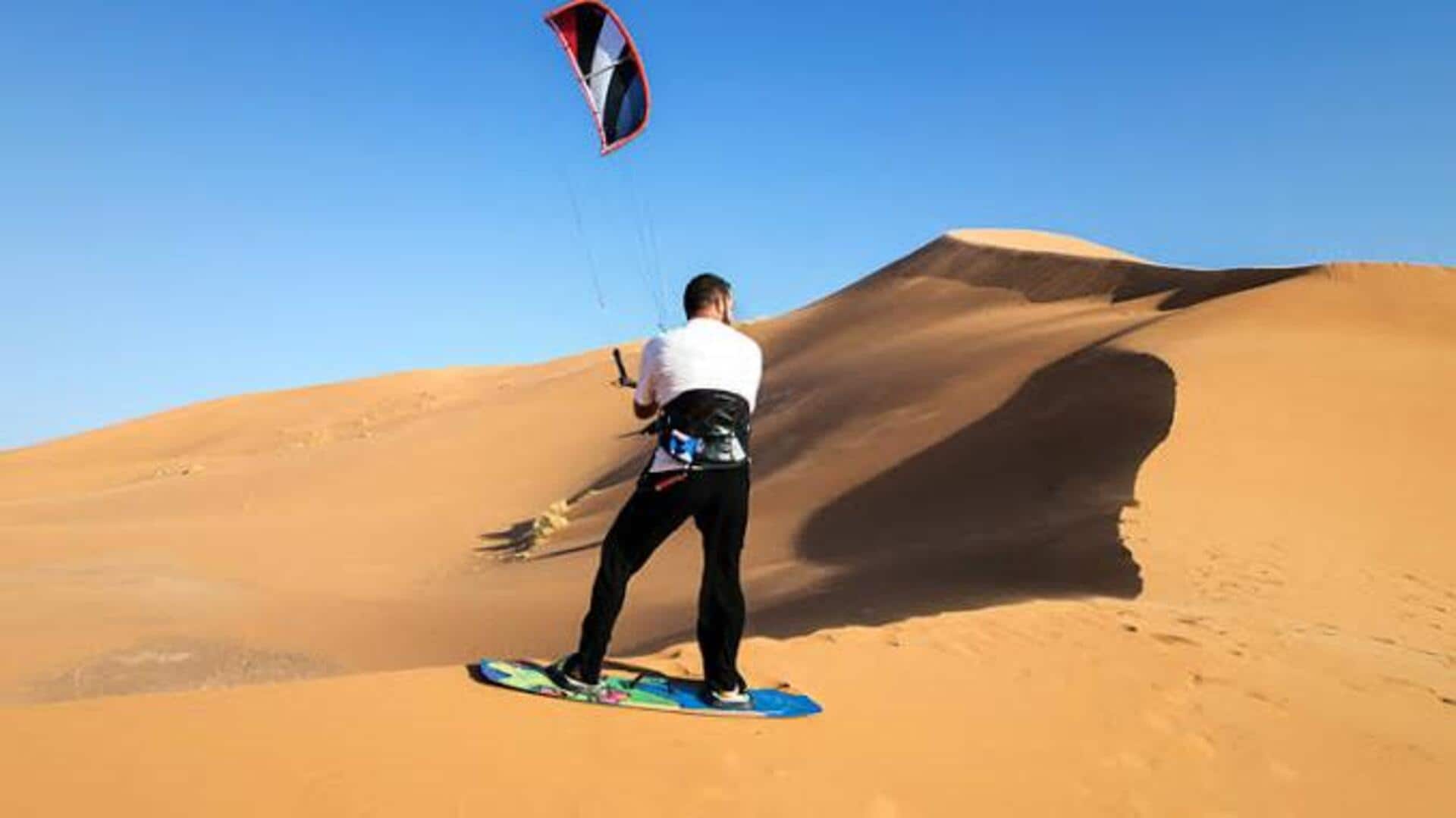
Sand kiting in the Sahara is an extreme sport that combines the thrill of kiteboarding with the vast, sandy landscapes of the desert. This unique activity allows adventurers to glide over dunes, harnessing wind power for speed and agility. As participants navigate shifting sands and unpredictable winds, they experience an exhilarating blend of skill and endurance. The sport offers breathtaking views and a challenging environment for those seeking adventure beyond traditional water sports.
Equipment
Essential gear for sand kiting
To sand kite, you need a proper kiteboard, which is specially designed for sandy terrains.
A sturdy board with good grip is essential to handle the desert's uneven surfaces.
Safety gear, such as helmets and knee pads, are a must to protect against falls on hard ground.
Wind conditions dictate the size of the kite; larger kites are ideal for light winds, while smaller ones suit stronger gusts.
Terrain
Choosing the right location
Selecting an appropriate location is key to having a successful sand kiting experience.
Look for areas with consistent wind patterns and expansive dunes, which allow for long runs and plenty of space to maneuver.
Some popular spots include Morocco's Erg Chebbi dunes, or Egypt's Great Sand Sea. These places offer not just ideal conditions but also stunning landscapes that enhance the adventure.
Wind dynamics
Understanding wind patterns
Wind patterns are critical to sand kiting success.
Knowing how wind flows over dunes will help you choose the best spots and times for your runs.
Early mornings or late afternoons usually have calmer winds, while midday may see stronger gusts.
Learning how to read these changes will help you make quick decisions while riding.
Precautions
Safety tips for sand kiting
Safety should always be the priority when trying out extreme sports like sand kiting.
Always check weather forecasts before heading out, as sudden changes can affect visibility and control.
Stay hydrated by carrying enough water, since the desert sun can dehydrate you quickly.
Finally, always have a buddy system in place, and never go alone in remote areas where help may not be immediately available in case of emergencies.