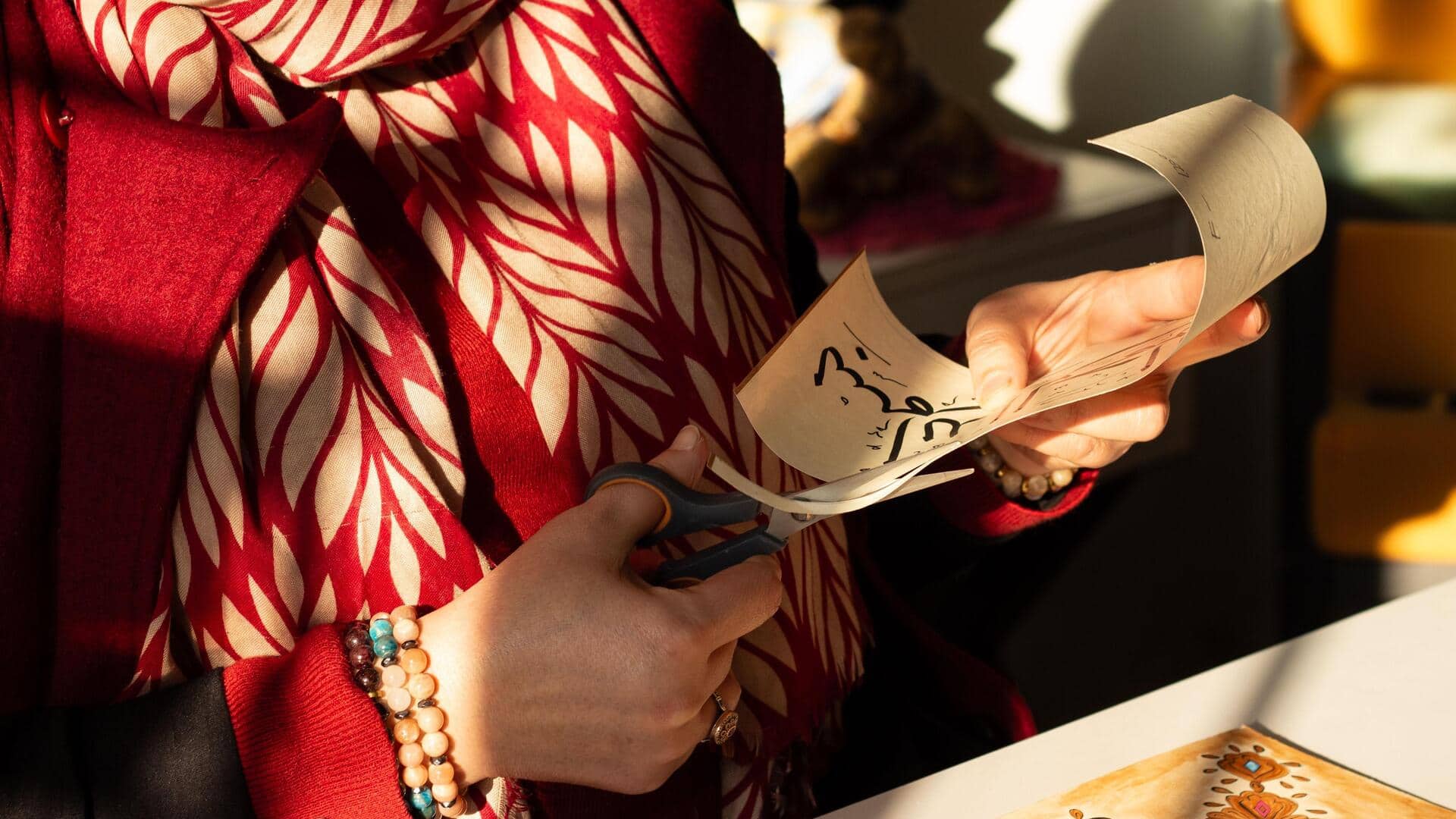
Sanjhi art: India's intricate paper-cutting tradition
What's the story
Sanjhi art is a traditional Indian craft that involves intricate paper cutting. Originating from the Indian subcontinent, it has been practiced for centuries. The art form is known for its delicate designs and precision, making it a unique cultural heritage. Sanjhi art is often used in celebrations, showcasing the creativity and skill of artisans. This article explores the fascinating world of Sanjhi art, its history, techniques, and cultural significance.
#1
Historical roots of Sanjhi art
The history of Sanjhi art dates back to ancient India.
It is said that the craft was first used in ceremonies where paper cutouts were used to decorate homes.
Over the years, the art form evolved, but the core principles of precision and symmetry remained the same.
Today, Sanjhi art is not just a craft but a representation of India's rich cultural heritage.
#2
Techniques involved in Sanjhi art
Sanjhi art demands exceptional skill and patience. Artisans use sharp blades or scissors to cut intricate patterns on sheets of paper.
The designs often include geometric shapes, floral motifs, or mythological figures. Each piece requires meticulous attention to detail, as even a slight mistake can ruin the entire design.
The process is time-consuming but rewarding for those who appreciate this delicate craft.
#3
Cultural significance of Sanjhi art
Sanjhi art holds immense cultural significance in India.
It is commonly associated with festivals like Diwali, where elaborate paper cuttings are used as decorations at homes and public spaces.
The craft also symbolizes purity and devotion when used during rituals at home or during prayers.
#4
Modern adaptations of Sanjhi art
In recent years, Sanjhi art has seen modern adaptations while still preserving its traditional essence.
Artists have started experimenting with new materials like fabric or plastic while retaining traditional techniques on paper cuttings themselves.
These adaptations have made this age-old craft accessible beyond its traditional contexts, appealing to younger generations who appreciate both its aesthetic beauty and cultural significance.