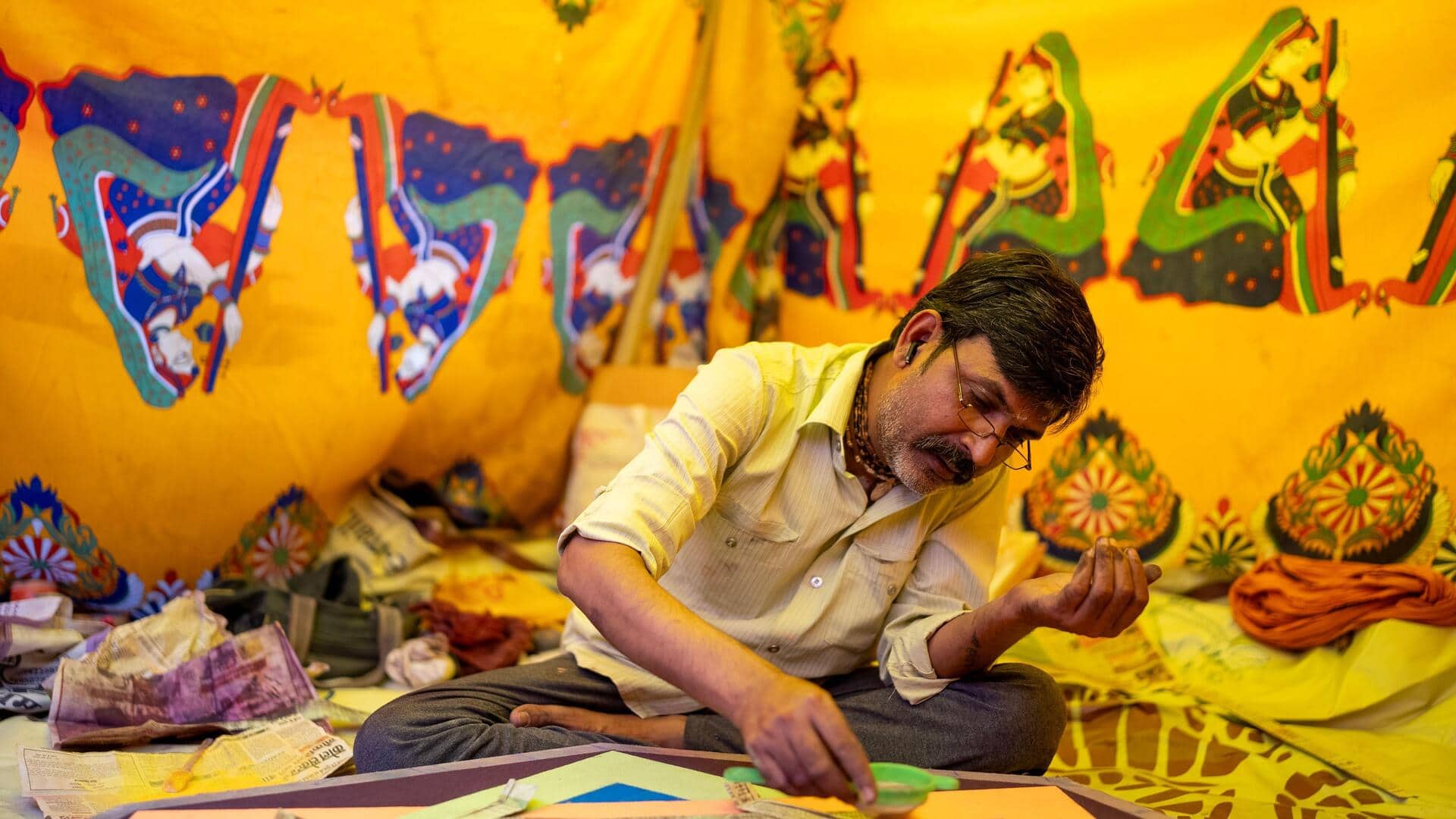
Sanjhi art: The ancient paper-cutting craft of India
What's the story
Sanjhi art is an ancient Indian craft that involves intricate paper-cutting. Originating from the northern parts of India, the art form is known for its delicate designs and cultural significance. Traditionally used in cultural events, Sanjhi art has a unique charm that reflects the rich heritage of Indian craftsmanship. The meticulous process requires precision and patience, making it a revered skill among artisans.
#1
Historical roots of Sanjhi art
Sanjhi art dates back several centuries and is believed to have been practiced during ancient times.
It was initially employed to create patterns for ceremonial purposes, adorning homes during festivals.
Over time, this craft evolved into an artistic expression, showcasing the creativity and cultural narratives of its practitioners.
The historical roots highlight the enduring legacy of Sanjhi art in the artistic landscape.
#2
Techniques involved in Sanjhi art
The creation of Sanjhi art requires a lot of skill and precision. Artisans use a sharp blade or knife to cut intricate designs on paper sheets.
Each design is meticulously planned before being executed on the paper.
The cuts are so precise that they create delicate patterns resembling lacework when held against light.
This technique requires immense concentration and steady hands.
#3
Cultural significance of Sanjhi art
Sanjhi art also holds immense cultural importance as it is closely associated with various rituals and traditions in India.
It is often used during ceremonies to symbolize purity and devotion.
The patterns created through this craft are not just aesthetically pleasing but also carry deep spiritual meanings for those who practice them.
#4
Modern adaptations of Sanjhi art
In recent years, there has been a resurgence in interest in traditional crafts like Sanjhi art, thanks to efforts by artisans who are adapting these techniques for contemporary use.
Modern adaptations include using different materials such as cloth or plastic while maintaining the essence of traditional designs.
This evolution allows the preservation of cultural heritage while appealing to modern aesthetics.