How to grow sea buckthorn at home
What's the story
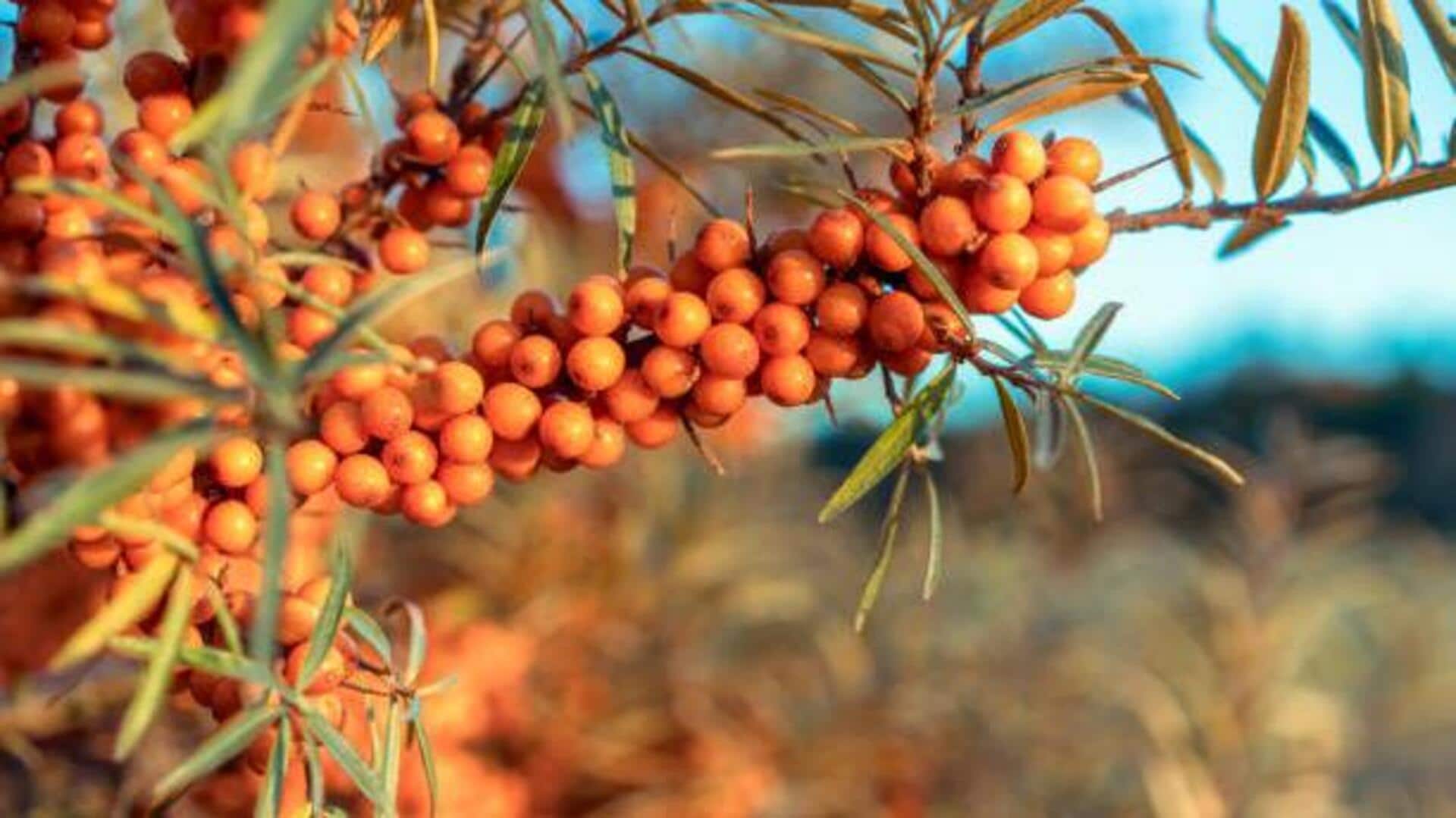
Sea buckthorn is a hardy shrub that can flourish in a range of climates, making it an ideal choice for gardeners looking for a low-maintenance plant. Known for its bright orange berries and nutrient-rich profile, this plant can be grown in different soil types and withstands drought conditions. Here is a guide to growing sea buckthorn in various climates, including tips on soil preparation, watering, and maintenance.
Tip 1
Soil preparation for sea buckthorn
Sea buckthorn flourishes in well-drained soil with a pH of 6.0 to 7.5.
Before planting, test your soil's pH, and amend it accordingly with lime or sulfur if needed.
The plant also does well in sandy or loamy soils, but avoid waterlogged areas as they can damage the roots.
Adding organic matter like compost can improve soil fertility without affecting drainage.
Tip 2
Watering requirements
Once established, sea buckthorn is drought tolerant and requires little watering.
However, during the first year after planting, regular watering is essential to help the roots establish.
Water the plants deeply once a week during dry spells to keep the soil moist, but not soggy.
Mulching around the base of the plant helps retain moisture and suppress weeds.
Tip 3
Pruning techniques for healthy growth
Pruning is important to keep sea buckthorn healthy and productive.
Do light pruning every year to remove dead or damaged branches, and promote airflow within the plant.
The best time to prune is late winter or early spring before new growth begins.
Avoid heavy pruning, as it can reduce berry yield.
Tip 4
Pest management strategies
Sea buckthorn is naturally resistant to many pests, but you may encounter aphids or spider mites from time to time.
Monitor your plants regularly for signs of infestation, like discolored leaves or webbing on branches.
If necessary, use insecticidal soap or neem oil as organic control measures, while avoiding harmful chemicals that could affect beneficial insects in your garden.