History buffs, you must explore Senegal's ancient stones
What's the story
Senegal is a country in West Africa that is famous for its rich culture and history. Among its many treasures are ancient stones that tell stories of the past. These stones, scattered across the country, offer a glimpse into Senegal's historical landscape. They are not just geological formations, but also hold cultural significance for many communities. Exploring these ancient stones can be an enlightening experience for those interested in history and geology.
#1
The mystical stone circles of Senegal
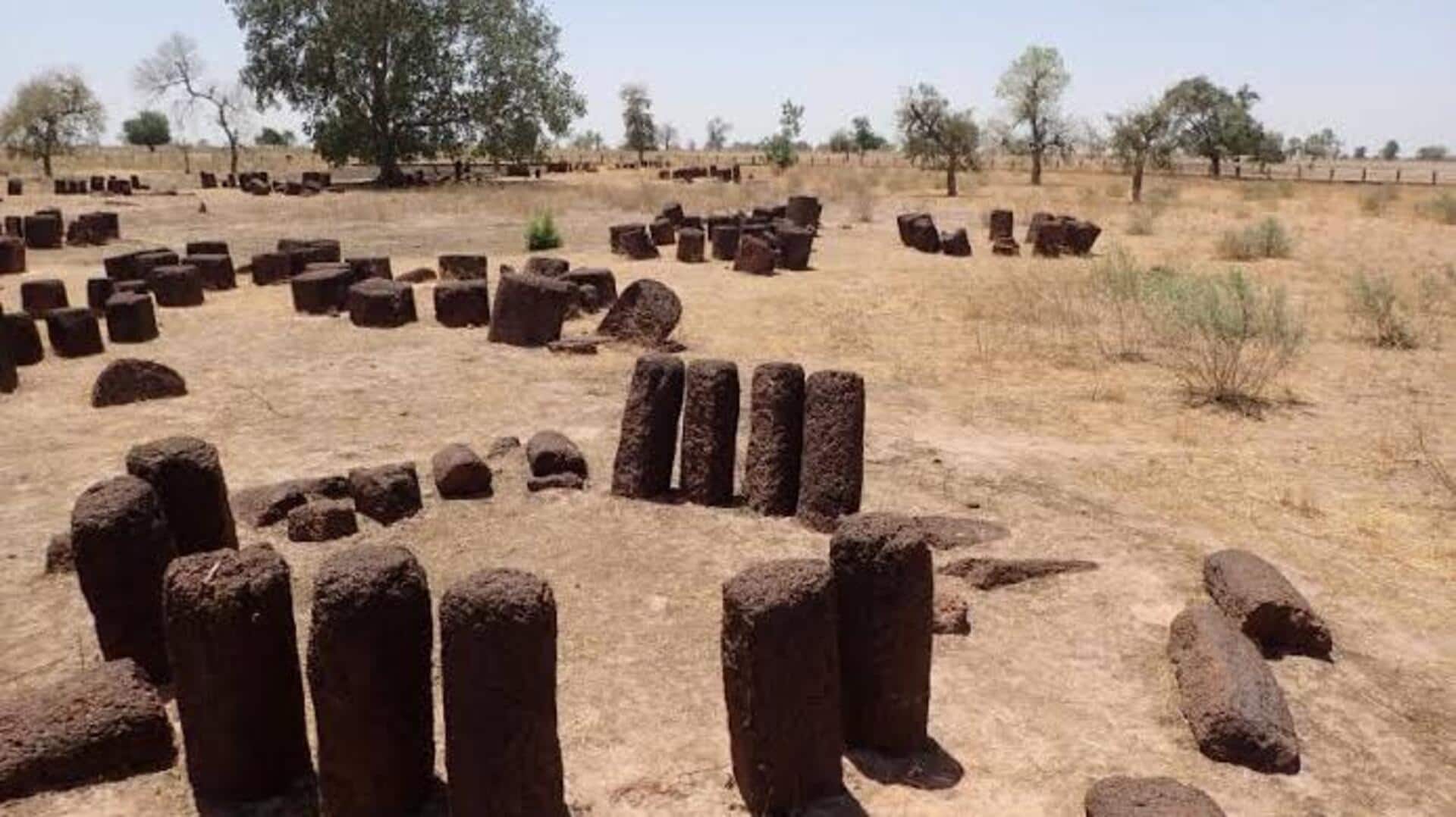
The stone circles of Senegal are a mystery that has fascinated researchers and tourists alike.
Located in the region of Casamance, these circles are made up of hundreds of standing stones arranged in circular patterns.
The purpose of these circles is still unknown, but some believe they were used as burial sites or ceremonial grounds.
The largest circle is said to have over 1,000 stones, making it an awe-inspiring sight.
#2
The enigmatic stones of Wanar
Wanar is famous for its strange stone formations that have been standing for centuries.
These rocks are said to have been shaped by natural forces over time, but some locals believe they have a supernatural origin.
The site draws geologists and tourists alike, who are interested in its unique geological features and folklore.
Guided tours are available to give visitors a deeper understanding of the site's history and significance.
#3
The sacred stones of Tivaouane
Tivaouane is famous for its sacred stones, which hold immense spiritual importance for many Senegalese people.
These stones are believed to have healing powers and are often visited by pilgrims seeking blessings or cures for ailments.
The site is also a popular destination during religious festivals, when devotees gather to pay homage at these revered formations.
#4
The historical significance of Gambia River stones
The Gambia River also has ancient stones on its banks that have historical importance.
These rocks are said to have witnessed important events in Senegal's history, acting as silent witnesses to the country's past.
They are often the subject of research, as historians and archaeologists try to decipher their secrets and understand their role in shaping Senegalese history.