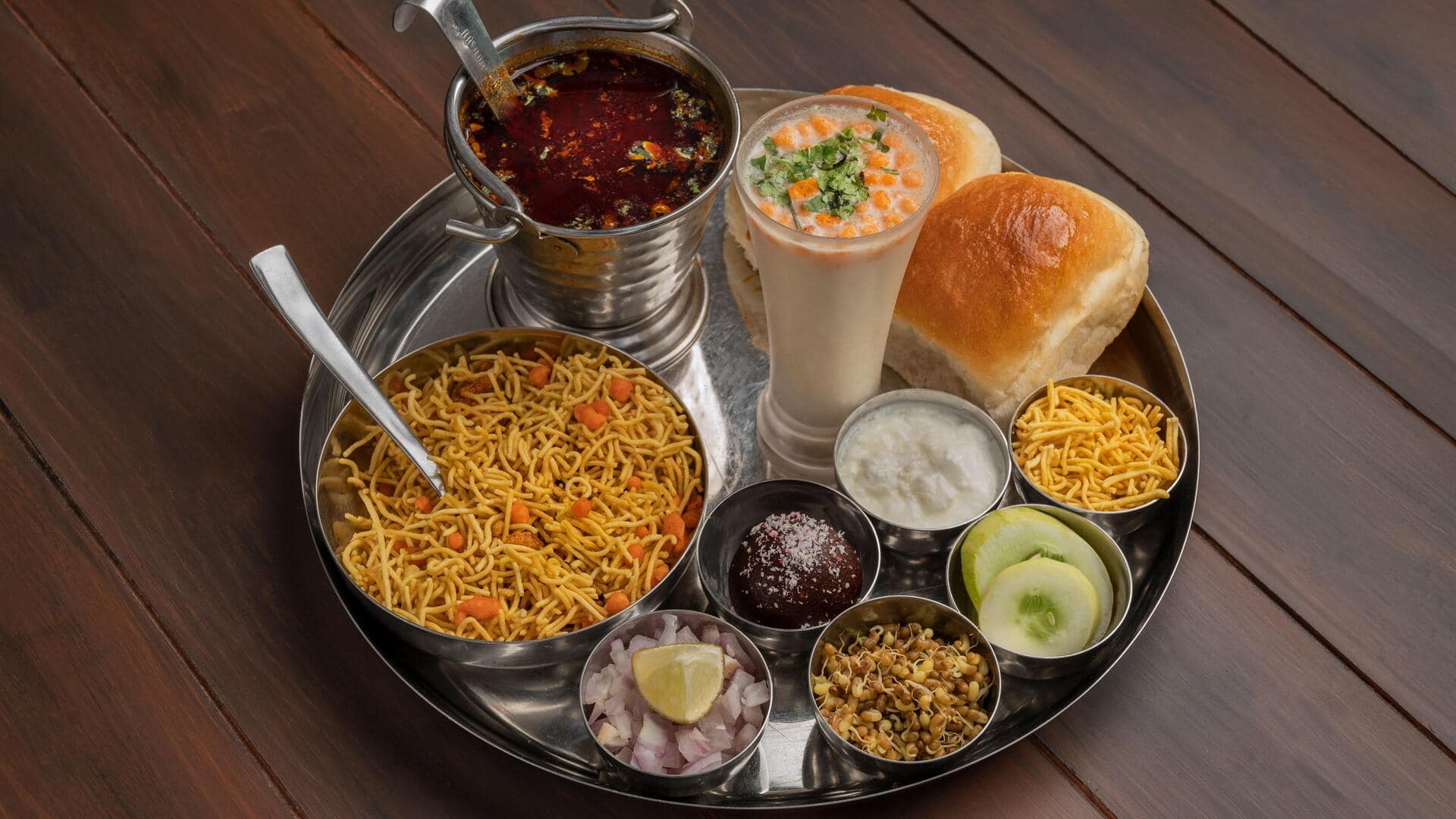
The fascinating history of India's favorite sev
What's the story
Sev, a popular snack from India, has a rich history that dates back centuries. Originally made as a simple snack, sev has evolved into an integral part of Indian cuisine. From its humble beginnings, sev has traveled to become a versatile ingredient used in various dishes across the country. Its journey reflects the changing culinary landscape of India and its adaptability to regional tastes.
#1
Ancient origins of Sev
The history of sev goes back to ancient India, where it was first prepared as a simple snack with gram flour and spices.
These early versions were primarily used as a quick snack or an accompaniment with meals.
Over time, the preparation methods evolved, and sev became popular across different regions of India.
Its simplicity and ease of preparation made it a staple in many households.
#2
Sev's role in regional cuisines
As sev traveled across India, it adapted to different regional cuisines.
In Western India, for example, sev became an integral part of chaats and other street foods.
In Northern India, it is often used as a garnish for curries and rice dishes.
This adaptability has made sev a beloved ingredient in many regional specialties.
#3
Evolution into modern snacks
In recent years, sev has evolved into modern snacks that cater to changing consumer preferences.
With the advent of packaged snacks and ready-to-eat options, sev has found its way into various modern avatars like flavored sev mixes and baked varieties.
These innovations maintain the essence of traditional sev while catering to contemporary tastes.
#4
Cultural significance of sev
Beyond its culinary uses, sev also holds cultural significance in India.
It is often associated with festivals and celebrations where it features prominently in traditional recipes or as part of festive spreads.
Its presence at such occasions highlights its importance within Indian culture as more than just a snack but rather an enduring symbol of hospitality and celebration.