How to wash fruits and vegetables the right way
What's the story
Washing fruits and vegetables is an important step to ensure they are safe and healthy to eat. It helps remove dirt, pesticides, and bacteria that may be present on the surface. By following some simple washing techniques, you can enjoy fresh produce without the worry of contamination. Here are five effective ways to wash fruits and vegetables at home, ensuring they are clean and ready for consumption.
Tip 1
Rinse under cold water
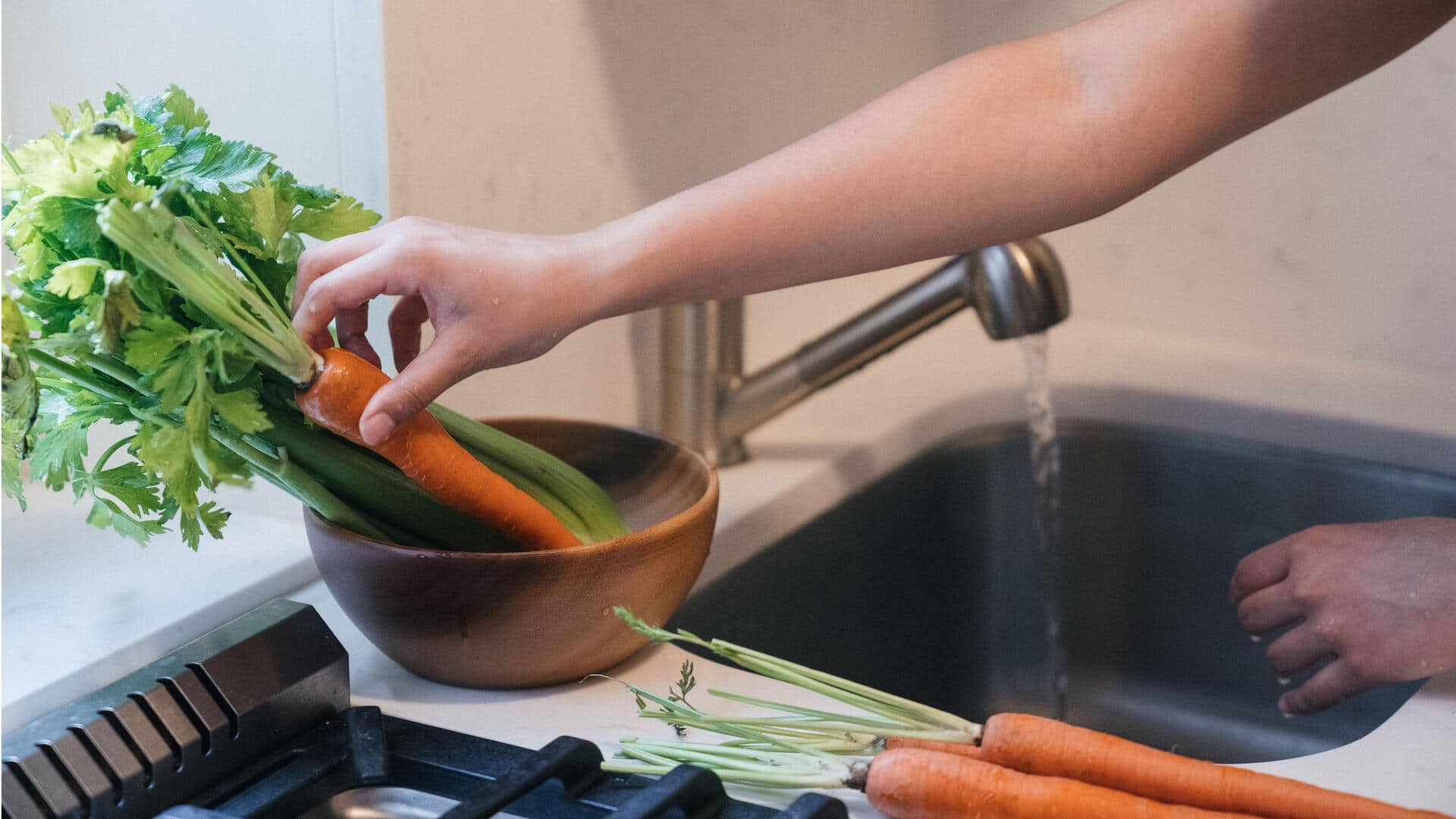
The simplest way to wash fruits and vegetables is by rinsing them under cold running water. This method helps remove surface dirt and residues without using any chemicals.
Make sure to hold the produce under a steady stream of water for at least 30 seconds.
This technique works well for firm-skinned items like apples, cucumbers, and carrots.
Tip 2
Use a vegetable brush
For root vegetables or those with thicker skins, using a vegetable brush can be quite effective.
The brush helps scrub away dirt and bacteria that may be lodged in the crevices of the skin.
Make sure to use a separate brush only for vegetables to avoid cross-contamination with other kitchen items.
Tip 3
Soak in vinegar solution
A vinegar solution can also help remove pesticide residues from produce.
To prepare the solution, mix one part vinegar with three parts water in a bowl or sink.
Soak the fruits or vegetables for about five minutes before rinsing thoroughly under cold water.
This method is especially useful for leafy greens like lettuce or spinach.
Tip 4
Peel when necessary
Peeling certain fruits and vegetables can also help reduce exposure to pesticides and contaminants on their skin.
While it may remove some nutrients found just below the surface, it ensures safety when washing isn't enough or if you're unsure about pesticide use on non-organic produce.
Tip 5
Dry with a clean cloth or paper towel
After washing your produce thoroughly, drying it with a clean cloth or paper towel prevents moisture from promoting bacterial growth during storage.
Pat dry gently instead of rubbing too hard, as this could damage delicate skins, like those found on berries or tomatoes, while still removing excess moisture effectively.