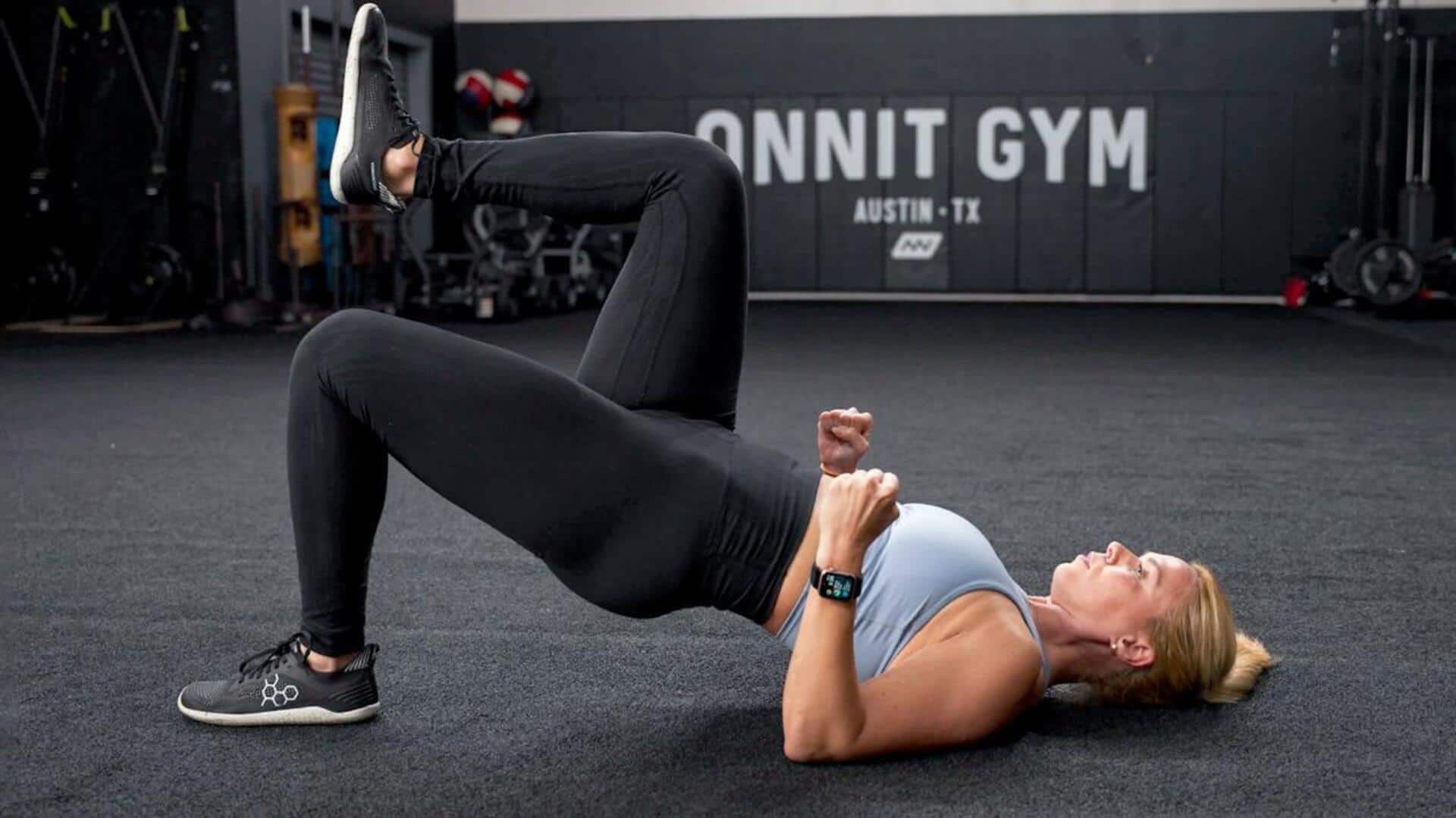
Why single-leg glute bridge must be in your regimen
What's the story
The single-leg glute bridge is an underrated exercise that can do wonders for your fitness. It focuses on the glutes, hamstrings, and core muscles, providing a host of benefits that can improve your overall strength and stability. By adding this exercise to your routine, you can improve muscle tone, enhance balance, and even reduce the risk of injury. Here are five surprising benefits of the single-leg glute bridge.
Core strength
Improves core stability
Performing single-leg glute bridges requires a lot of core engagement to maintain balance and form.
This constant engagement helps strengthen the core muscles over time, leading to better stability and posture.
A strong core is essential for performing daily activities as well as other exercises efficiently.
Balance boost
Enhances balance and coordination
Balancing on one leg while performing this exercise challenges your coordination skills.
This improved balance translates into better performance in sports and physical activities that require agility and precision.
Regular practice can help you become more aware of your body's positioning in space.
Muscle engagement
Increases muscle activation
The single-leg variation of the glute bridge activates more muscle fibers than its two-legged counterpart.
This increased activation leads to more effective muscle building and toning over time.
By focusing on one side at a time, you also address any muscular imbalances that may exist.
Injury prevention
Supports injury prevention
Strengthening the muscles around the hips and lower back with single-leg glute bridges can help prevent injuries related to these areas.
By improving muscular support around joints, this exercise reduces strain during movement activities such as running or jumping.
Athletic Edge
Boosts athletic performance
Incorporating single-leg glute bridges into training regimens can enhance athletic performance by improving power output from the hips.
This is crucial for explosive movements like sprinting or jumping higher.
The exercise also contributes towards greater endurance levels by enhancing overall lower body strength without adding bulkiness.