
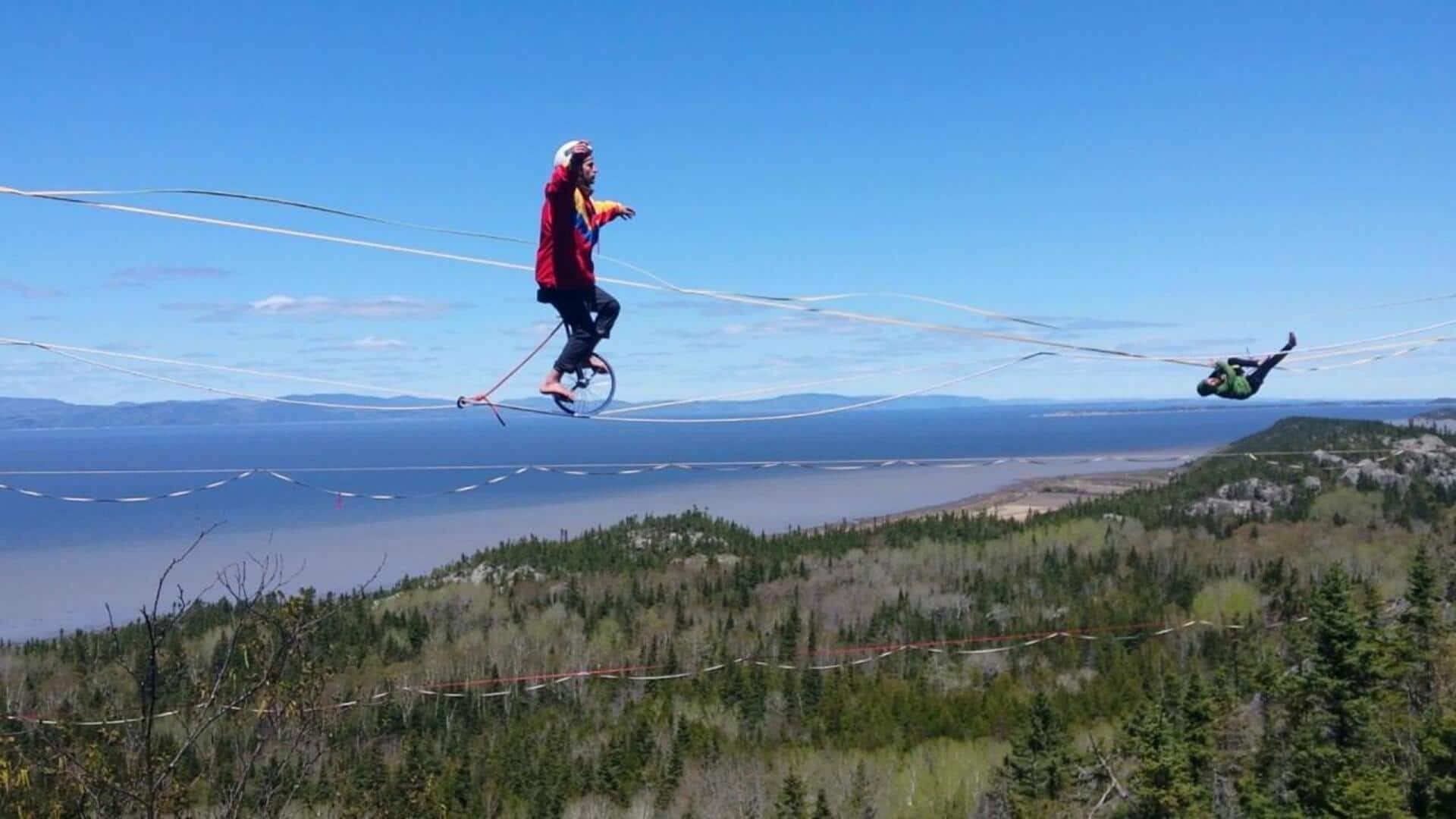
Slacklining v/s unicycling: Which improves balance better?
What's the story
Slacklining and unicycling are two popular activities that promise to improve your balance and coordination. While both of them require a good sense of balance, they do it in different ways. Slacklining involves walking on a narrow, flexible line stretched between two points, while unicycling is riding a single-wheeled bicycle. Here's how each activity affects your balance and coordination.
#1
Slacklining: A test of focus
Slacklining requires extreme focus, as the line moves with every step. This instability forces the body to engage core muscles more, improving balance over time. The activity also improves proprioception, which is the body's ability to sense movement and position. Practicing slacklining regularly can improve your ability to make quick adjustments when losing balance.
#2
Unicycling: A dynamic challenge
Unicycling is all about constant motion and requires you to maintain balance while pedaling forward. The need to coordinate pedaling with steering makes it a full-body workout. As you learn to ride a unicycle, your coordination improves as you learn how to shift your weight to stay upright. This dynamic challenge also improves your reflexes as you learn how to respond to changes in terrain.
#3
Mental focus in slacklining
Slacklining isn't just a physical challenge, it's a mental one too. Concentrating on staying on the line without falling off improves your mental focus and concentration skills. This mental aspect is what makes slacklining different from other balance activities. It requires you to be aware of every move you make, which is what makes it a great way to improve your overall concentration.
#4
Physical endurance in unicycling
Unicycling demands physical endurance as it involves continuous pedaling and steering. The activity builds muscular endurance in the legs while also enhancing cardiovascular fitness. Over time, regular unicyclists develop greater stamina, allowing them to ride for longer distances without fatigue. This increased endurance contributes significantly to overall physical health and well-being.