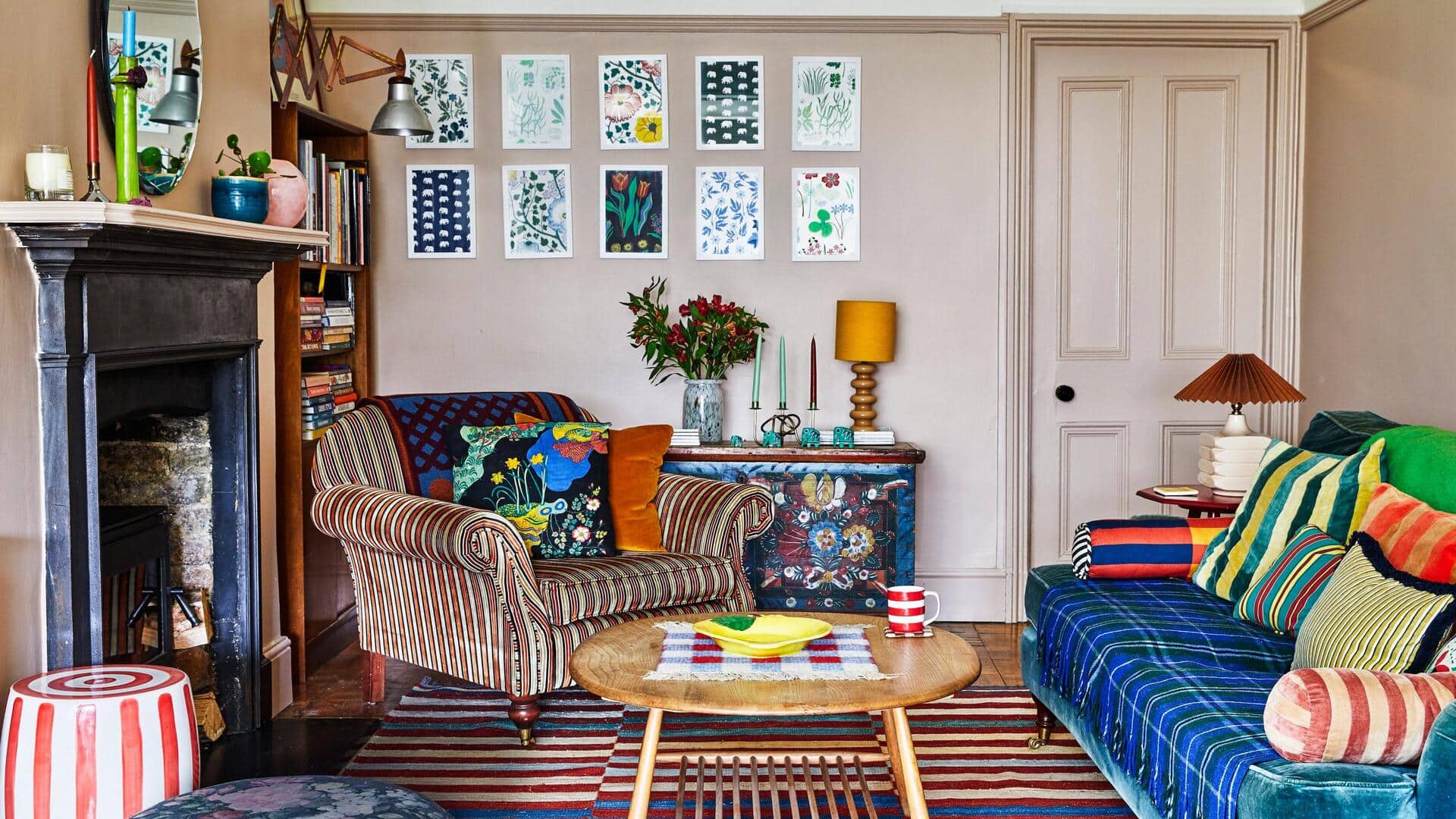
Small living room? Try these furniture layouts
What's the story
Designing a small living room can be tricky, but with the right furniture layout, you can make the most of your space. A well-planned layout not only maximizes space but also creates a cozy, functional environment. Here are five practical furniture layouts that can help you transform your small living room into an inviting area without compromising on style or comfort.
Tip 1
Open space with floating furniture
Floating furniture is all about placing pieces away from walls, creating an open space feel.
This layout works well for small rooms where you want to avoid a cramped look.
By centering your seating around a focal point, such as a coffee table or an entertainment unit, you can promote conversation and movement.
This layout also allows for better flow of natural light, making the room feel larger.
Tip 2
Multi-functional furniture arrangement
In small spaces, multi-functional furniture is a lifesaver.
Think of using sofas with storage options, foldable tables, or ottomans that double up as seating and storage.
Arranging these pieces in a way that they are easily accessible, yet don't crowd the room, is key.
For instance, placing a storage ottoman near the sofa gives you extra seating and space to store blankets or magazines.
Tip 3
Corner seating solution
Utilizing corners effectively can free up a lot of floor space in small living rooms.
Corner sofas or L-shaped sectionals can fit snugly into corners while providing ample seating.
This way, you make use of otherwise wasted space, and leave room for other elements, like bookshelves or decorative pieces, without making it look cluttered.
Tip 4
Symmetrical layout for balance
A symmetrical layout brings balance and harmony to any room, including small ones.
By placing identical chairs opposite each other, with a central table in between, you create an orderly look that is aesthetically pleasing, as well as functional.
This arrangement works well when you want to maintain visual symmetry while allowing enough room for movement around the area.
Tip 5
Zoning with rugs and partitions
Zoning involves defining different areas within one room using rugs or partitions like screens or bookshelves.
This technique is especially useful in studio apartments, where spaces serve multiple purposes at once, such as a living area and workspace.
By adding rugs under seating areas or using screens as dividers, you create distinct zones without closing off any part completely from another.