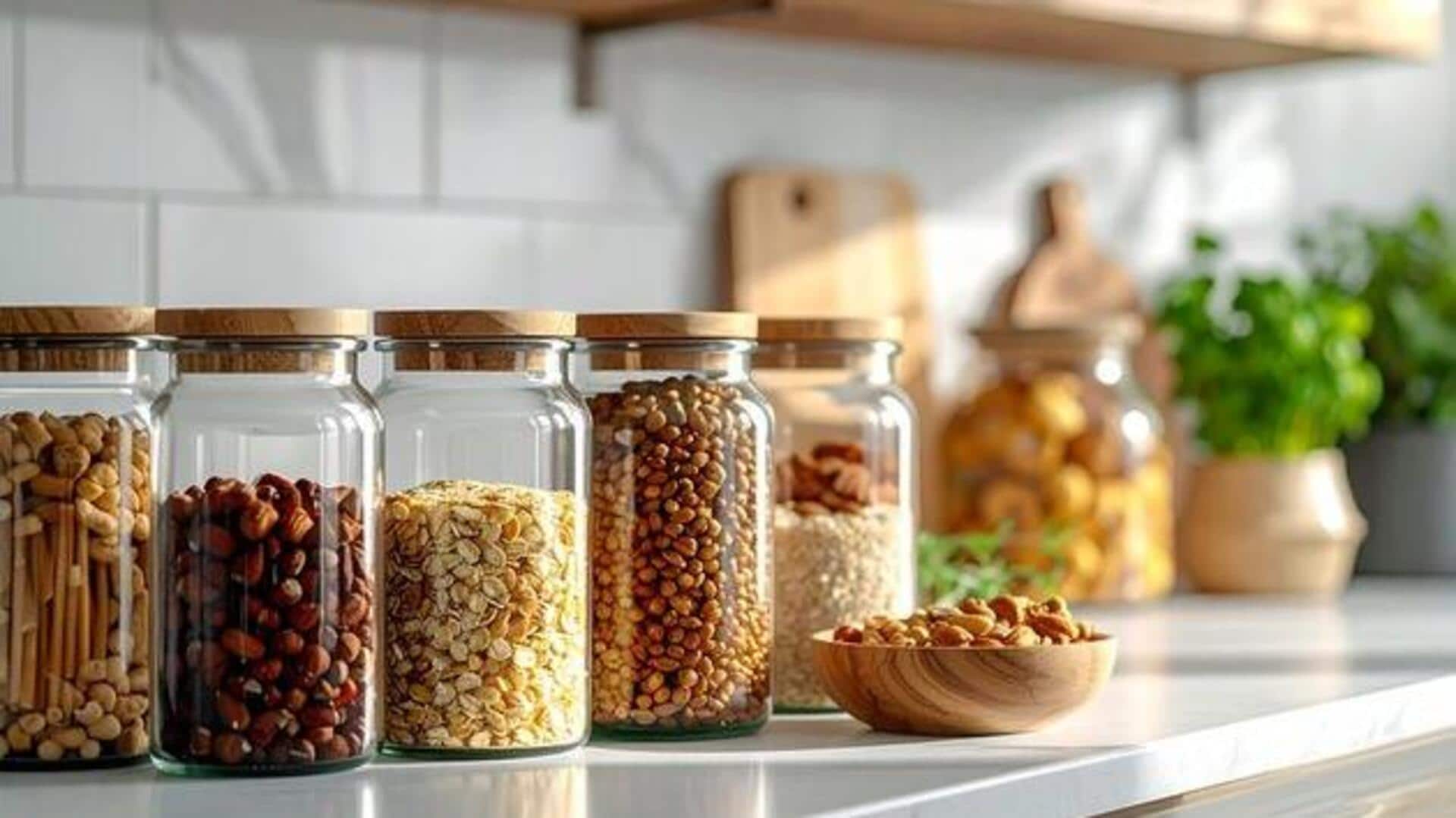
5 dry staples every kitchen should have
What's the story
African markets are filled with a variety of dry staples that are not only economical but also nutritious. These ingredients can be the base of a number of meals, making them a must-have in any kitchen. From legumes to grains, these staples provide essential nutrients and can be stored for long periods. Knowing these items can help you make smart shopping choices while also enjoying the flavors of African cuisine.
Sorghum
Versatile sorghum grains
Sorghum is a staple grain in several African countries.
It is gluten-free and rich in fiber, making it a healthy option for those looking for alternatives to wheat.
Sorghum can be used to prepare porridge or flatbreads, or even as a rice substitute.
Its mild flavor makes it versatile for both savory and sweet dishes.
Cowpeas
Nutrient-rich cowpeas
Cowpeas are another nutrient-dense legume that is widely cultivated across Africa.
They are a good source of protein, iron, and folate.
Cowpeas can be cooked in stews or salads or ground into flour for baking purposes.
Their ability to grow in poor soil conditions makes them an important crop for food security.
Millet
Traditional millet varieties
Millet is one of the oldest cultivated grains and is still a staple in many African diets.
It is rich in magnesium and phosphorus, and is naturally gluten-free.
Millet can be used to prepare porridge or as a side dish like couscous.
Its drought-resistant nature makes it ideal for arid regions.
Bambara nuts
Protein-packed Bambara nuts
Bambara nuts are an excellent source of plant-based protein, along with essential fatty acids and vitamins.
These nuts can be boiled or roasted and eaten as snacks or added to soups for texture and flavor.
They grow well under dry conditions, making them an important crop for farmers facing climate challenges.
Cassava flour
Economical cassava flour
Cassava flour is made from the root vegetable cassava, which grows well in tropical climates across Africa.
It is a gluten-free alternative to regular flour and is used in baking bread and pastries, or thickening soups and stews.
Cassava flour is economical, making it accessible to many households looking for affordable meal options.