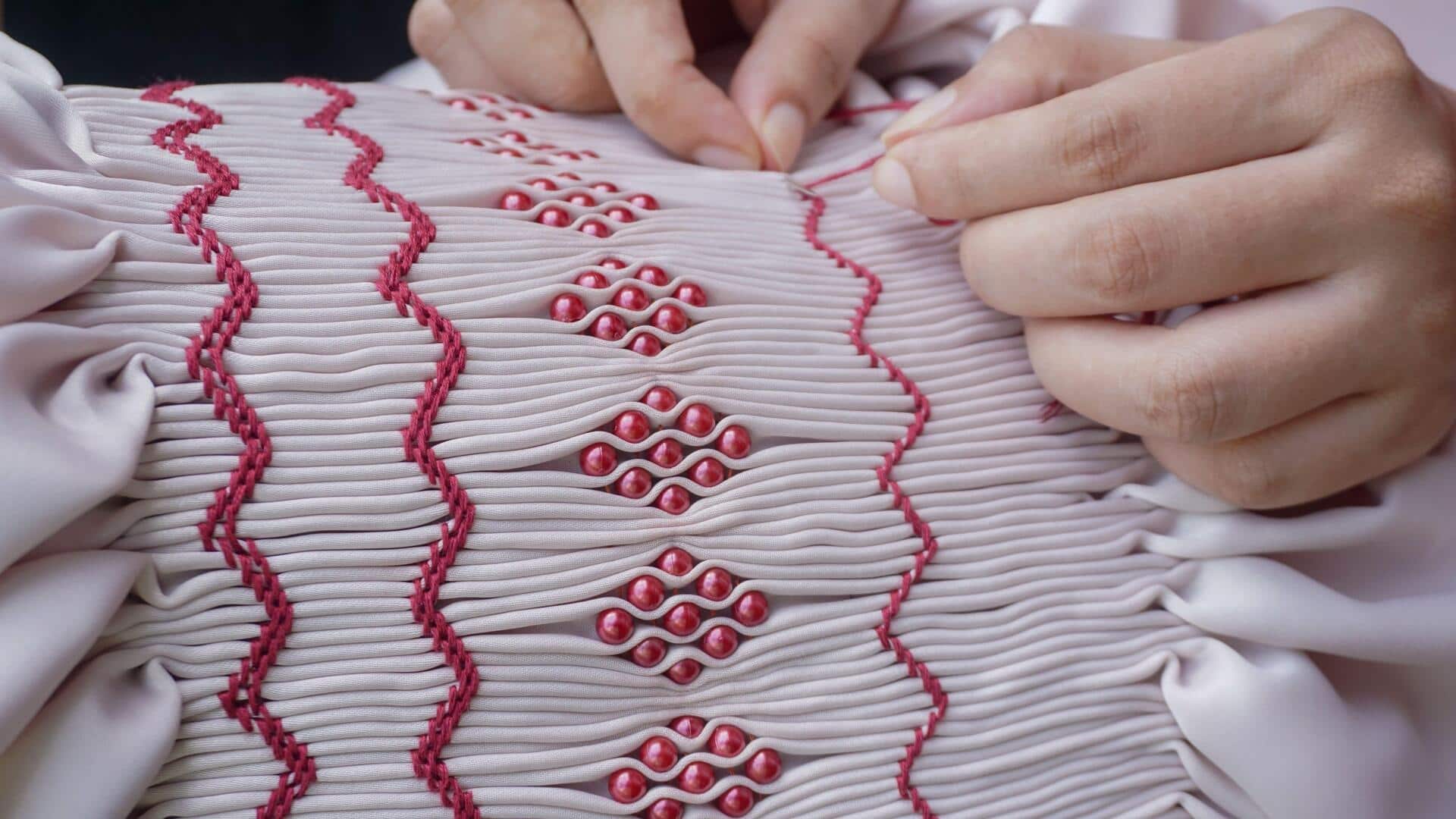
Smocking: The embroidery trick that makes fabric stretch
What's the story
Smocking is an age-old embroidery technique that gives fabric a unique stretch and decorative flair. It has been used for centuries to add both function and beauty to garments. Traditionally, smocking was used to gather fabric at the shoulders of children's clothing, but today, it is used in a variety of garments. The technique involves stitching patterns on the fabric with elastic thread, allowing it to gather and stretch.
#1
Historical roots of smocking
Smocking dates back to the 12th century when it was first used in Europe. It was originally used to reinforce the fabric and keep it from fraying.
Over time, it became a decorative element in clothing.
The name "smocking" comes from the word "smock," which refers to a loose-fitting garment worn by laborers and children.
#2
Techniques involved in smocking
The basic smocking technique involves using embroidery floss or thread to stitch small, decorative patterns on the fabric.
These stitches are usually done in rows, creating a gathered effect when pulled tight.
Different patterns can be created, from simple straight lines to complex floral designs, depending on the desired look.
#3
Modern applications of smocking
Today, smocking is used in various ways beyond traditional children's wear.
It is commonly seen on women's blouses, dresses, and even home textiles like curtains or pillowcases.
The technique adds texture and visual interest without adding bulk or weight to the garment.
Tip 1
Benefits of using smocking techniques
One of the main benefits of using smocking techniques is their flexibility; they allow for movement without compromising style or elegance.
Smocked garments are usually more comfortable than those made with stiffer fabrics because they allow for more freedom of movement while maintaining shape retention over time.