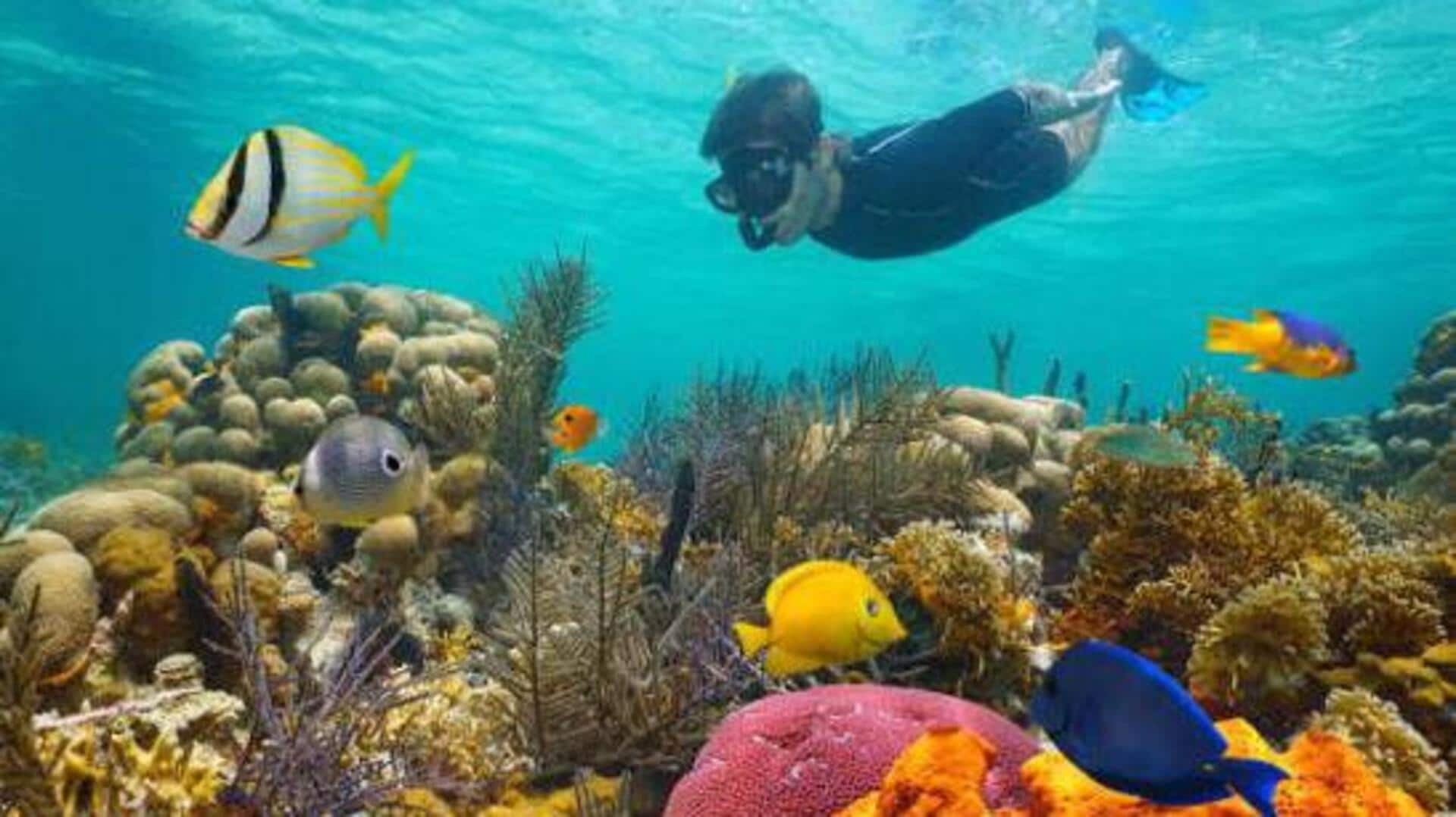
Snorkelers, head to the Galapagos for incredible marine life
What's the story
The Galapagos Islands are a snorkeler's paradise, with their rich marine life and pristine waters. The islands offer a unique opportunity to swim with a variety of sea creatures, making it an unforgettable experience for ocean lovers. From colorful fish to playful sea lions, the underwater world around these islands is teeming with life. Here are some of the best snorkeling spots in the Galapagos for an unforgettable adventure.
#1
Devil's Crown: A marine wonderland
Devil's Crown is a volcanic formation off Floreana Island, famous for its rich marine biodiversity.
The circular reef is home to a plethora of fish species, including parrotfish and angelfish. You can also spot sea turtles gliding through the clear waters.
The site is also frequented by sea lions, who love to play with snorkelers.
The best time to visit is during high tide, when visibility is at its best.
#2
Kicker Rock: A snorkeler's dream
Kicker Rock, aka Leon Dormido, is a must-visit for snorkelers visiting San Cristobal Island.
The towering rock formations provide a habitat for numerous marine species.
Snorkelers can expect to see white-tipped reef sharks, rays, and other marine life swimming gracefully around them.
The waters here are usually calm, making it easier for beginners to enjoy this spectacular underwater scene.
#3
Gordon Rocks: An underwater adventure
Gordon Rocks, situated near Santa Cruz Island, is famous for its strong currents and rich marine life.
This site is famous among experienced snorkelers and divers who want to see hammerhead sharks up close.
Along with sharks, you can also spot other pelagic species, like barracudas and jacks, in this vibrant ecosystem.
#4
North Seymour Island: A wildlife hotspot
North Seymour Island is famous for its rich wildlife, both above and below the waterline.
Snorkelers can see large schools of tropical fish near the rocky shores, along with sea lions who often join in on the fun by swimming alongside visitors.
This area also provides opportunities to see blue-footed boobies nesting on land, making it a perfect combination of land and sea adventures.