If Iceland is on your mind, keep reading
What's the story
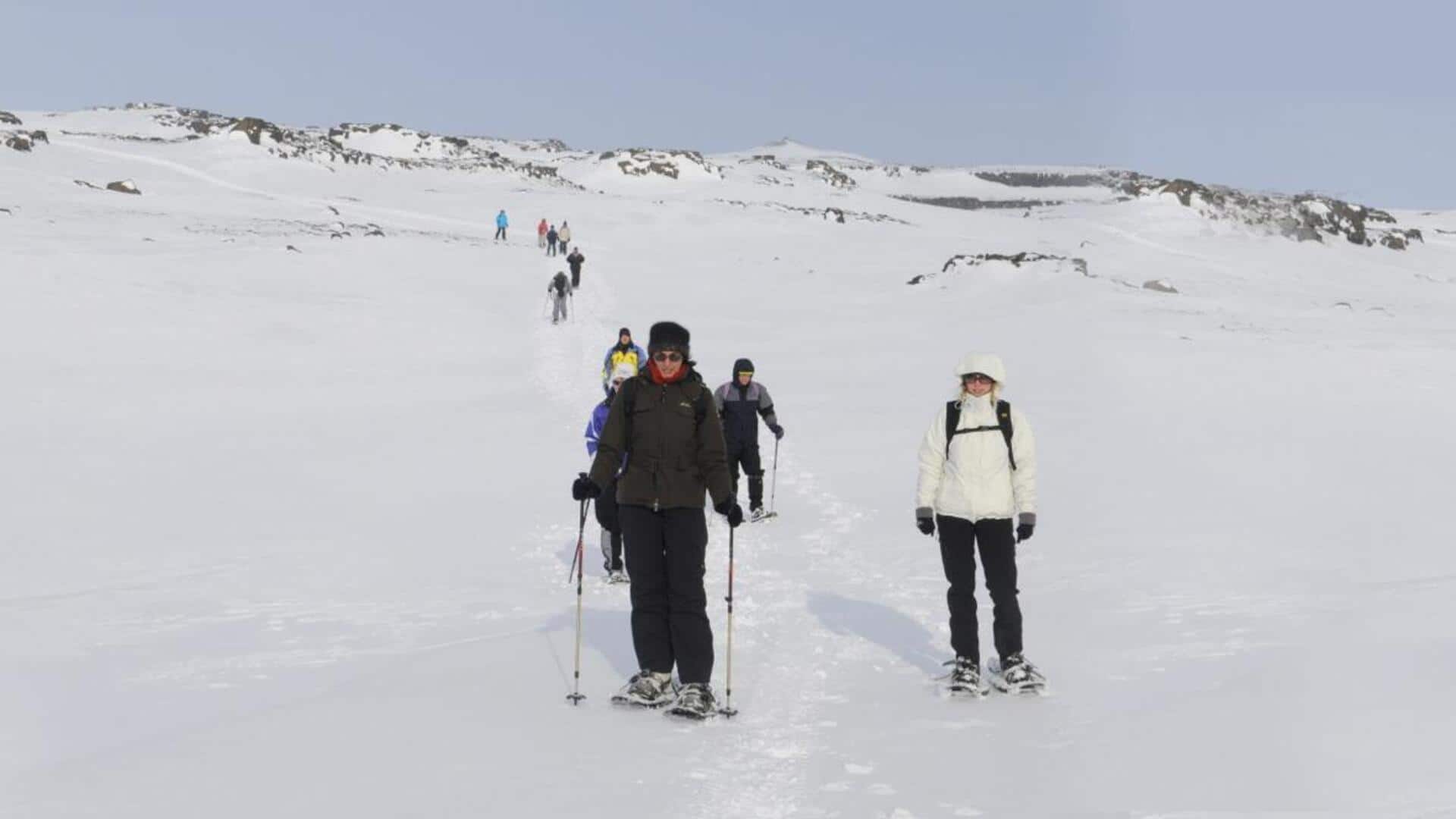
Exploring Iceland's remote trails via snowshoeing is an experience like no other. The unique landscape, covered in a blanket of snow, reveals hidden paths and breathtaking views. This activity allows adventurers to delve into Iceland's natural beauty, away from the crowded tourist spots. With snowshoes, you can traverse areas that are otherwise inaccessible in winter, making it an ideal choice for those seeking solitude and adventure.
Gear essentials
Essential gear for snowshoeing
To make your snowshoeing trip comfortable and safe, having the right gear is essential.
First, wear warm, waterproof clothing to protect yourself from cold and wet conditions.
Layering is key; start with a moisture-wicking base layer, followed by insulating layers, and finish with a waterproof outer layer.
Don't forget gloves, hats, and scarves to protect extremities from the biting cold.
Top trails
Best trails for snowshoeing
Iceland has a number of trails for snowshoeing enthusiasts.
One of the most popular is the Laugavegur Trail, which offers stunning views of glaciers and volcanic landscapes.
Another great option is the Snaefellsnes Peninsula, where you can explore diverse terrains ranging from lava fields to coastal cliffs.
Each trail has its own unique features, making them ideal for different skill levels.
Safety tips
Safety tips for snowshoeing adventures
Safety should always be your priority while snowshoeing in remote areas.
Always check weather conditions before heading out, as they can change quickly in Iceland's unpredictable climate.
Carry a map or GPS device to avoid getting lost on unfamiliar trails.
It's also advisable to travel with a partner or group, as this increases safety in case of emergencies.
Landscape navigation
Navigating Iceland's winter landscapes
Navigating Iceland's winter landscapes requires awareness of potential hazards like crevasses or unstable ice formations near glaciers.
Always stick to marked trails where possible, as these are usually safer than off-trail routes.
If you're unfamiliar with an area, consider hiring a local guide who knows the terrain well and can provide valuable insights into navigating safely through these stunning, but challenging, environments.