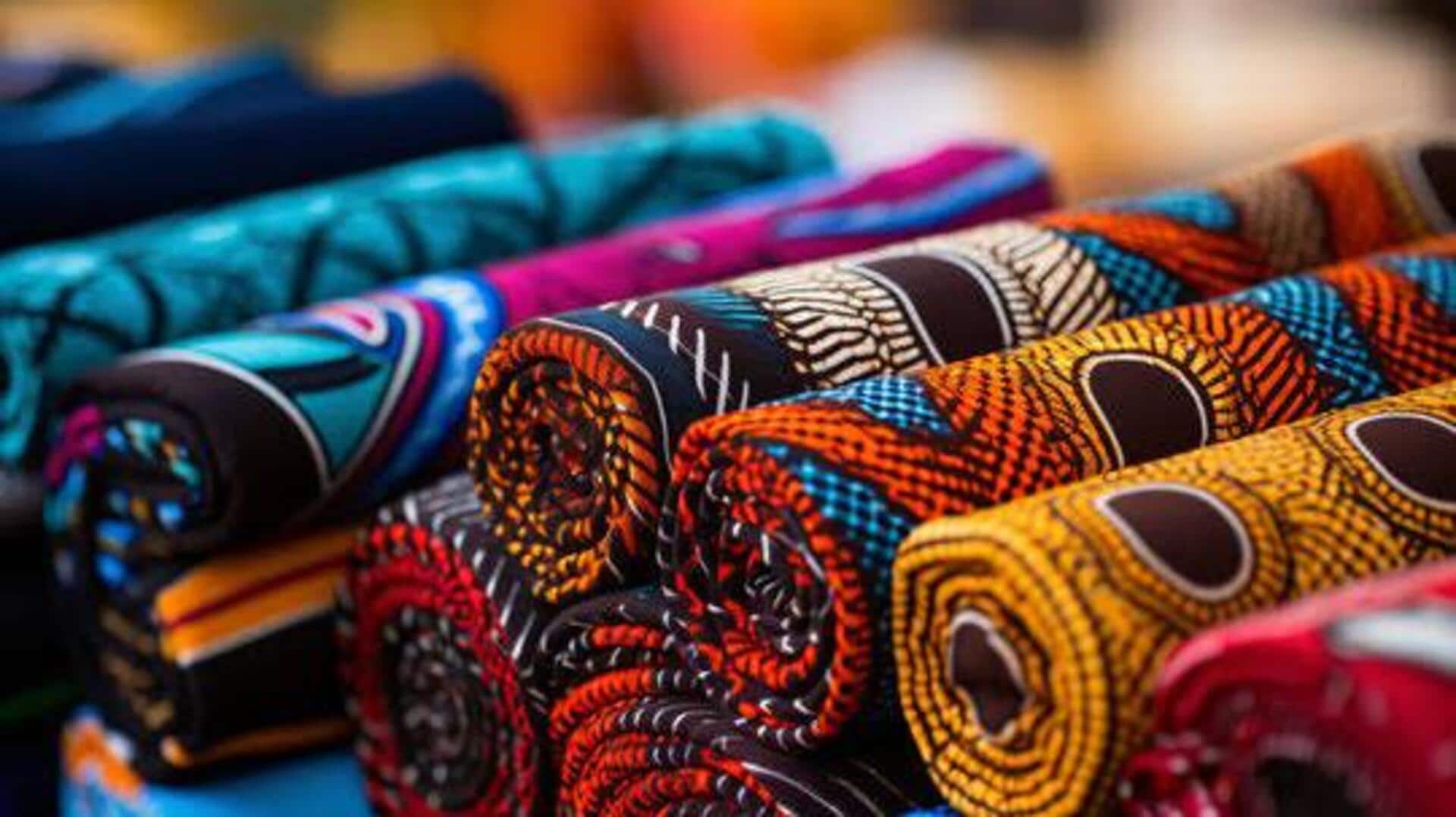
South Africa's most colorful textiles: A list
What's the story
South Africa's textile traditions are a colorful mix of cultures and histories. These textiles are not just a reflection of the country's rich heritage, but also a part of its modern fashion scene. From the intricate patterns of Xhosa beadwork to the bold colors of Shweshwe fabric, these textiles tell stories and traditions passed down through generations. Here is a guide to these vibrant textiles and how they shape South African fashion today.
#1
Shweshwe fabric: Bold patterns and colors
Shweshwe fabric is famous for its bold patterns and vibrant colors.
Originally brought by European settlers in the 17th century, it has evolved into a staple in South African fashion.
The fabric is often used to make traditional dresses and modern outfits alike. Its versatility makes it a favorite among designers looking to incorporate traditional elements into contemporary styles.
#2
Xhosa beadwork: A cultural symbol
Xhosa beadwork is another fascinating aspect of South African textile tradition.
Each color and pattern has a meaning, often associated with social status or personal achievements.
Beads are used in jewelry, clothing, and accessories, making them an essential part of cultural identity.
The intricate designs are not just beautiful, but also serve as a medium of communication among the Xhosa people.
#3
Ndebele art: Geometric designs on textiles
Ndebele art is famous for its geometric designs, often painted on houses or worn as clothing patterns.
This art form has also been translated onto textiles, making it accessible to a wider audience.
The bright colors and sharp lines make Ndebele-inspired fabrics stand out in any wardrobe, while keeping cultural significance intact.
#4
Traditional v/s modern interpretations
While traditional textile techniques remain popular, modern interpretations have also emerged in South African fashion.
Designers are blending traditional fabrics with contemporary cuts and styles, creating unique pieces that appeal to both local and international markets.
This fusion allows for cultural preservation while embracing innovation within the industry.