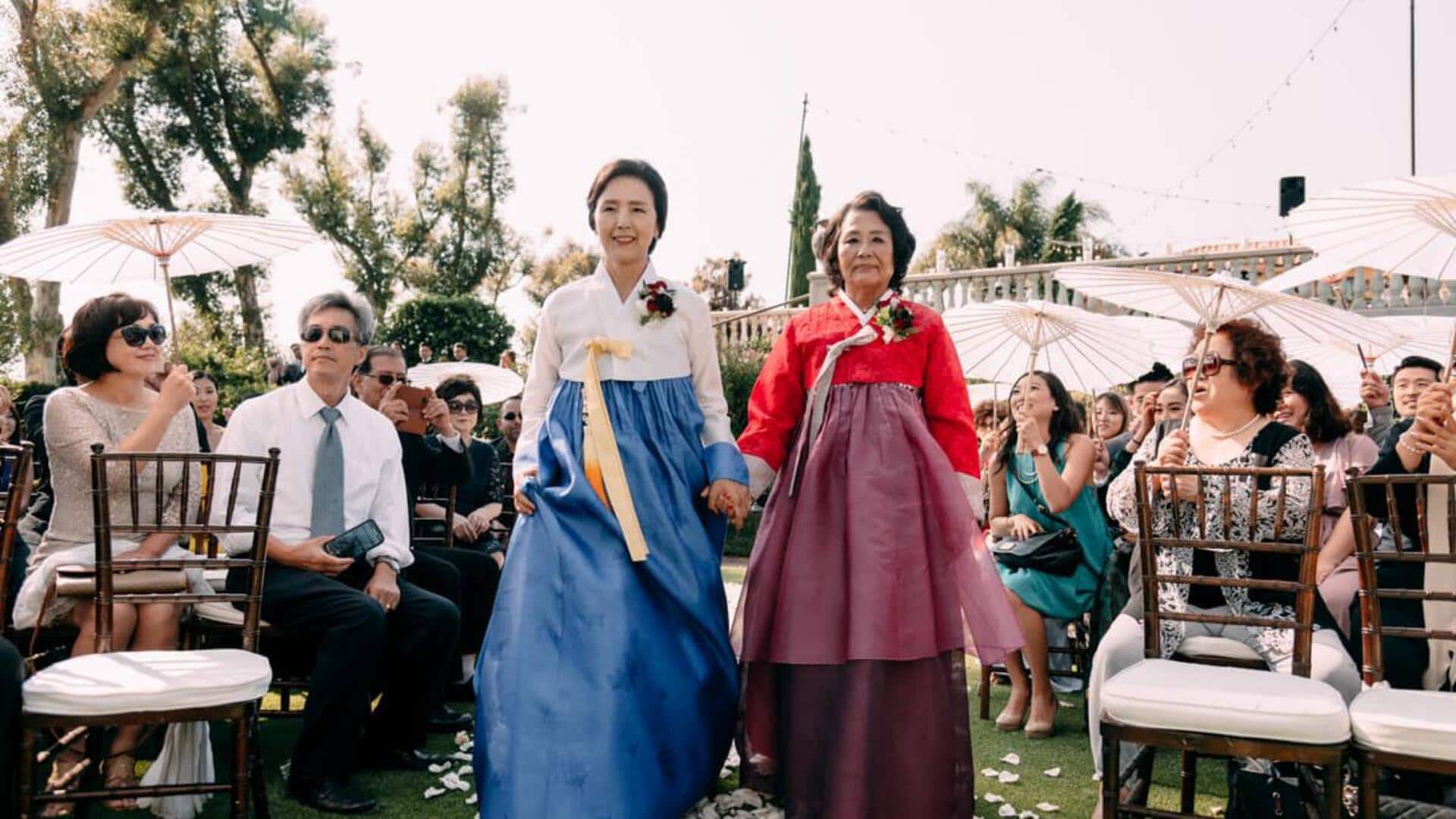
These South Korean wedding rituals will leave you surprised!
What's the story
South Korean weddings are a beautiful blend of tradition and modernity, with some rituals leaving brides surprised. These customs, which have been passed down generations, give a peek into the cultural heritage of the country. From symbolic gestures to unique attire, these wedding traditions are a crucial part of the ceremony. Here are some surprising rituals that make South Korean weddings special for brides.
#1
The role of the 'Sangyeon'
In a traditional South Korean wedding, the sangyeon or ceremonial veil holds immense importance.
It is placed over the bride's head by the groom's parents as a sign of acceptance and blessing.
This custom symbolizes the union of two families, and is often a moment of emotional significance for the bride.
The sangyeon is usually made from silk and embroidered with intricate designs, adding to its beauty and importance.
#2
'Pyebaek' ceremony explained
The pyebaek ceremony is an integral part of Korean weddings where the bride throws chestnuts and dates at her groom, who catches them in his robe.
This ritual symbolizes fertility and prosperity in their married life. The number of nuts caught is believed to determine how many children the couple will have.
This playful yet meaningful tradition brings lightheartedness to the ceremony while honoring cultural values.
#3
Unique bridal attire choices
Brides in South Korea often wear a traditional hanbok during their wedding ceremony, which is colorful and symbolic attire.
The hanbok consists of a jeogori (jacket) and chima (skirt) for women, signifying purity and virtue.
Some brides even opt for modern twists on this classic outfit, blending contemporary styles with traditional elements to express their individuality while honoring cultural heritage.
#4
'Honsu' ritual significance
The "honsu" ritual involves presenting gifts such as rice cakes or fruits from one family to another as part of marriage negotiations or agreements between families before tying the knot officially.
This practice emphasizes mutual respect between families involved in arranging marriages traditionally within Korean culture over centuries past.