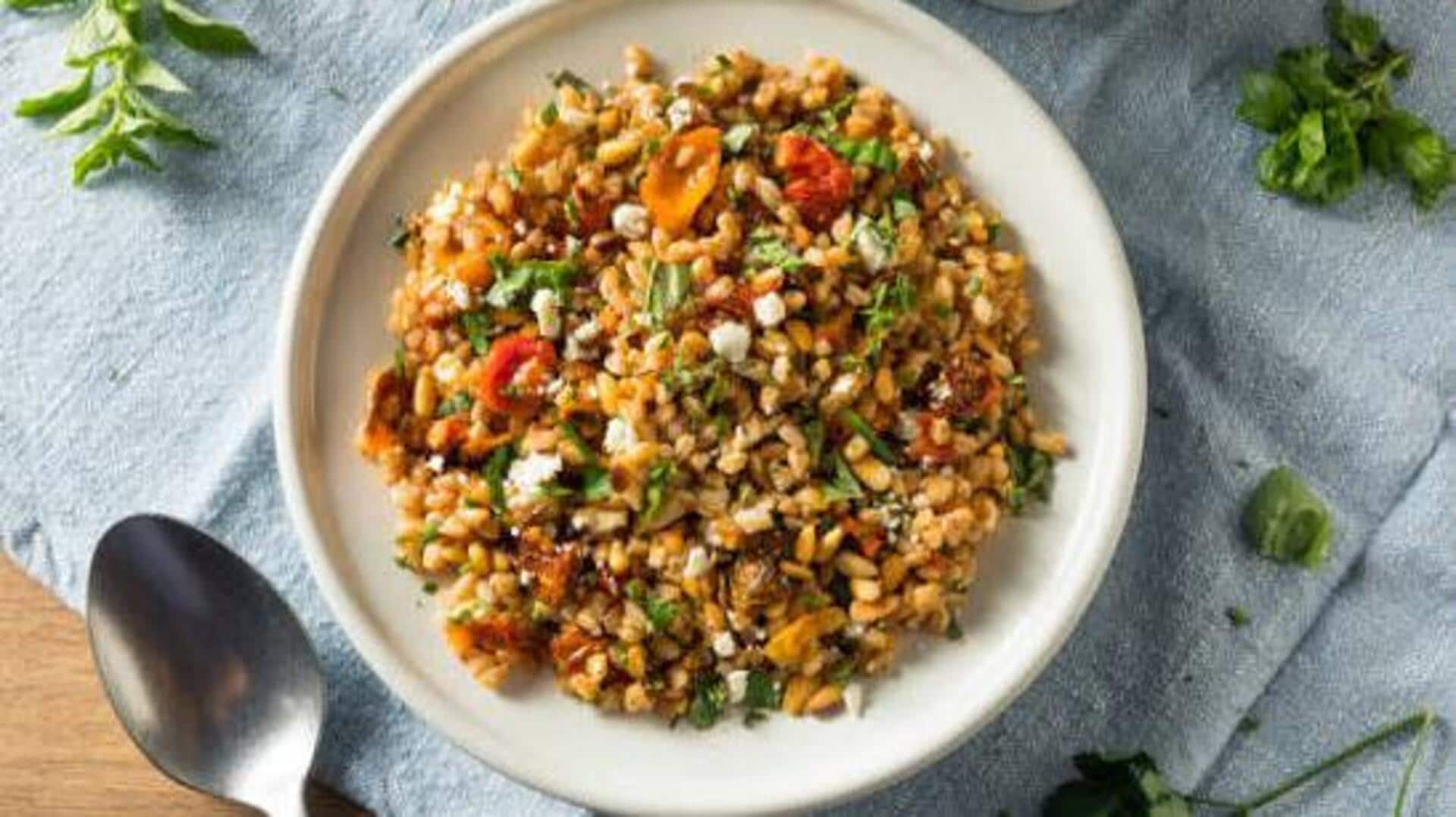
How spelt grain is used in African dishes
What's the story
Ancient grains have been a staple in African diets for centuries, providing both nutrition and cultural significance. One such grain is spelt, an ancient wheat variety known for its nutty flavor and high nutritional value. In this article, we explore five traditional African dishes that incorporate spelt, highlighting the grain's versatility and enduring presence in various culinary traditions across the continent.
Ethiopian delight
Spelt injera: A staple of Ethiopian cuisine
Injera is a traditional Ethiopian flatbread, usually made with teff flour. However, spelt injera is becoming increasingly popular for its unique taste and health benefits.
The spelt variety offers a slightly nuttier flavor than traditional injera. It pairs well with various Ethiopian stews and salads, making it a versatile addition to any meal.
Spelt injera is gluten-friendly, making it popular among those with gluten sensitivities.
Moroccan fusion
Moroccan spelt couscous: A flavorful twist
Couscous is a staple in Moroccan cuisine, usually prepared with semolina wheat. However, spelt couscous is becoming increasingly popular for its nutritional benefits and distinct flavor profile.
This dish mixes spelt grains with traditional Moroccan spices, such as cumin and coriander, giving a hearty twist to the classic recipe.
Spelt couscous can be served with vegetables or legumes for a filling meal.
Breakfast boost
West African spelt porridge: A nutritious breakfast
In West Africa, porridge made from grains such as millet or sorghum is a common breakfast option.
Spelt porridge is becoming increasingly popular for its rich nutrient profile, including fiber and protein.
Prepared by simmering spelt grains in water or milk until thickened, this porridge can be sweetened with honey or fruits for added flavor.
It provides an energizing start to the day.
South African loaf
South African spelt bread: A wholesome choice
Spelt bread has gained popularity in South Africa as a healthier alternative to regular wheat bread.
It has a lower gluten content and higher nutritional value. This makes it a great option for those looking for healthier options without compromising on taste or texture.
South African bakers use spelt flour, along with traditional ingredients like yeast and salt, to make loaves that are both delicious and nutritious.
Kenyan classic
Kenyan spelt ugali: A traditional staple
Ugali is a staple food in many East African countries, including Kenya, where it is usually made from maize flour.
However, spelt ugali provides an interesting twist on this classic dish by using spelt instead of maize flour.
It retains the same dense texture while adding more nutrients such as iron and magnesium into the diet.
Spelt ugali pairs well with vegetable stews or can be enjoyed on its own as a filling side dish.