
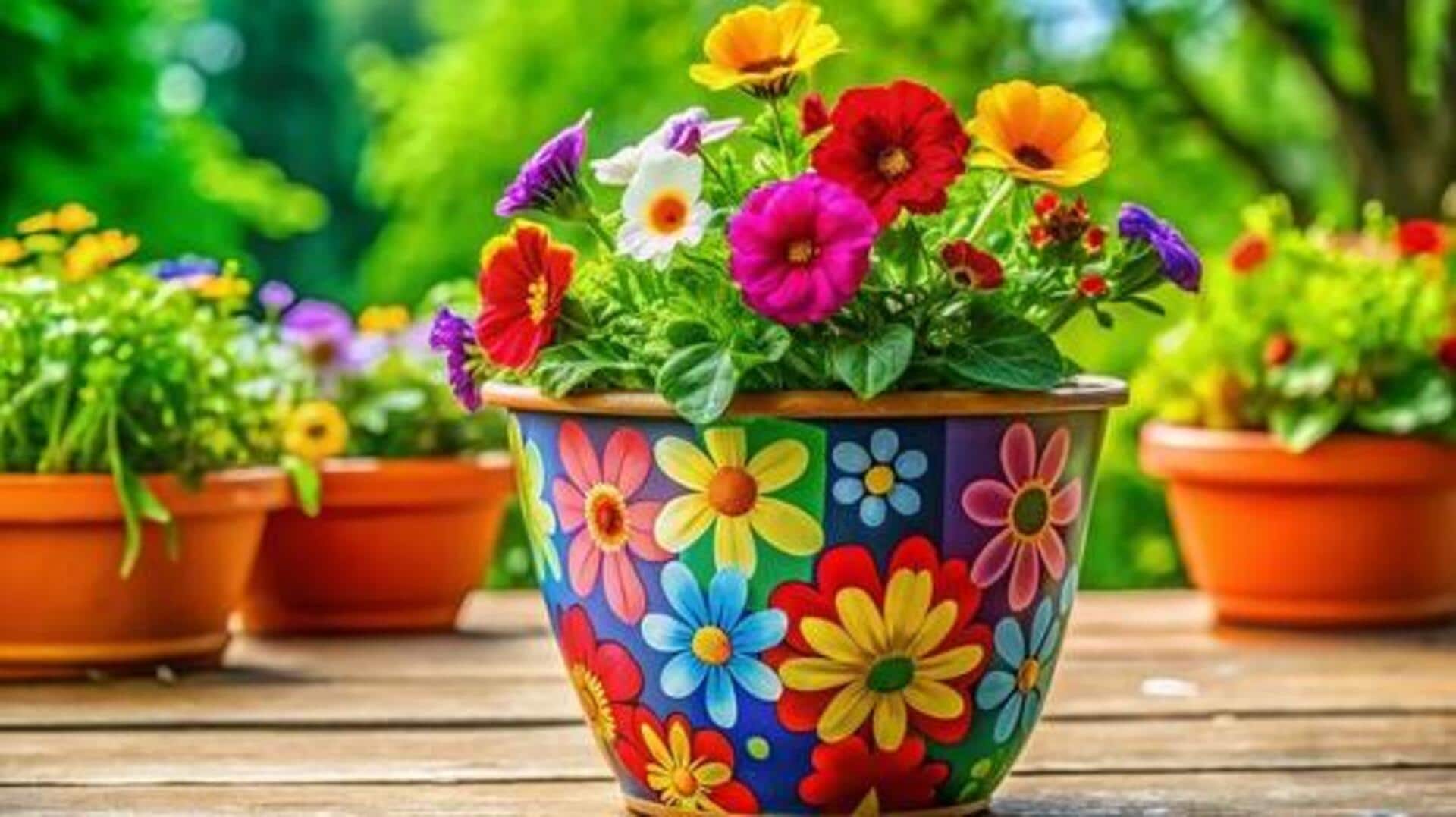
How to stencil geometric patterns on planters
What's the story
African geometric motifs are famous for their intricate patterns and cultural significance. Stenciling these designs on planters can make your garden or home space more vibrant and unique. The technique is simple, cost-effective, and allows for creativity. By using stencils, you can achieve precise patterns without much hassle. This article provides practical tips for stenciling African geometric motifs on planters, making the process accessible to all.
Tip 1
Choosing the right stencil material
Selecting the right stencil material is crucial for achieving clean lines and durable designs. Mylar sheets are a popular choice as they are flexible, reusable, and resistant to paint bleed. Alternatively, you can use cardboard or plastic sheets if you're looking for a more affordable option. Ensure that the material is sturdy enough to hold its shape while applying paint.
Tip 2
Preparing your planter surface
Before you start stenciling, it's important to prepare the planter surface well. Clean it thoroughly to remove dust or dirt that could affect paint adhesion. If possible, sand down rough areas to create a smooth base. Applying a primer can help paint stick better and make colors pop more vibrantly.
Tip 3
Selecting appropriate paints
Choosing the right paint is essential for longevity and appearance of your design. Acrylic paints are commonly used as they dry quickly and offer good coverage on various surfaces. For outdoor planters, consider using weather-resistant paints that can withstand moisture without fading or chipping over time.
Tip 4
Securing your stencil properly
Properly securing your stencil is key to avoiding paint bleeding under the edges of the design. Use painter's tape or adhesive spray to keep it in place firmly against the planter surface. Make sure there are no gaps between the stencil and planter where paint could seep through.
Tip 5
Applying paint with precision
When applying paint, use a sponge brush or dauber for more control over the amount of paint applied at a time. Dab lightly over each section of the stencil instead of brushing back and forth, which could cause smudging under the edges of the design. Let each layer dry before removing the stencil carefully to reveal your completed pattern.