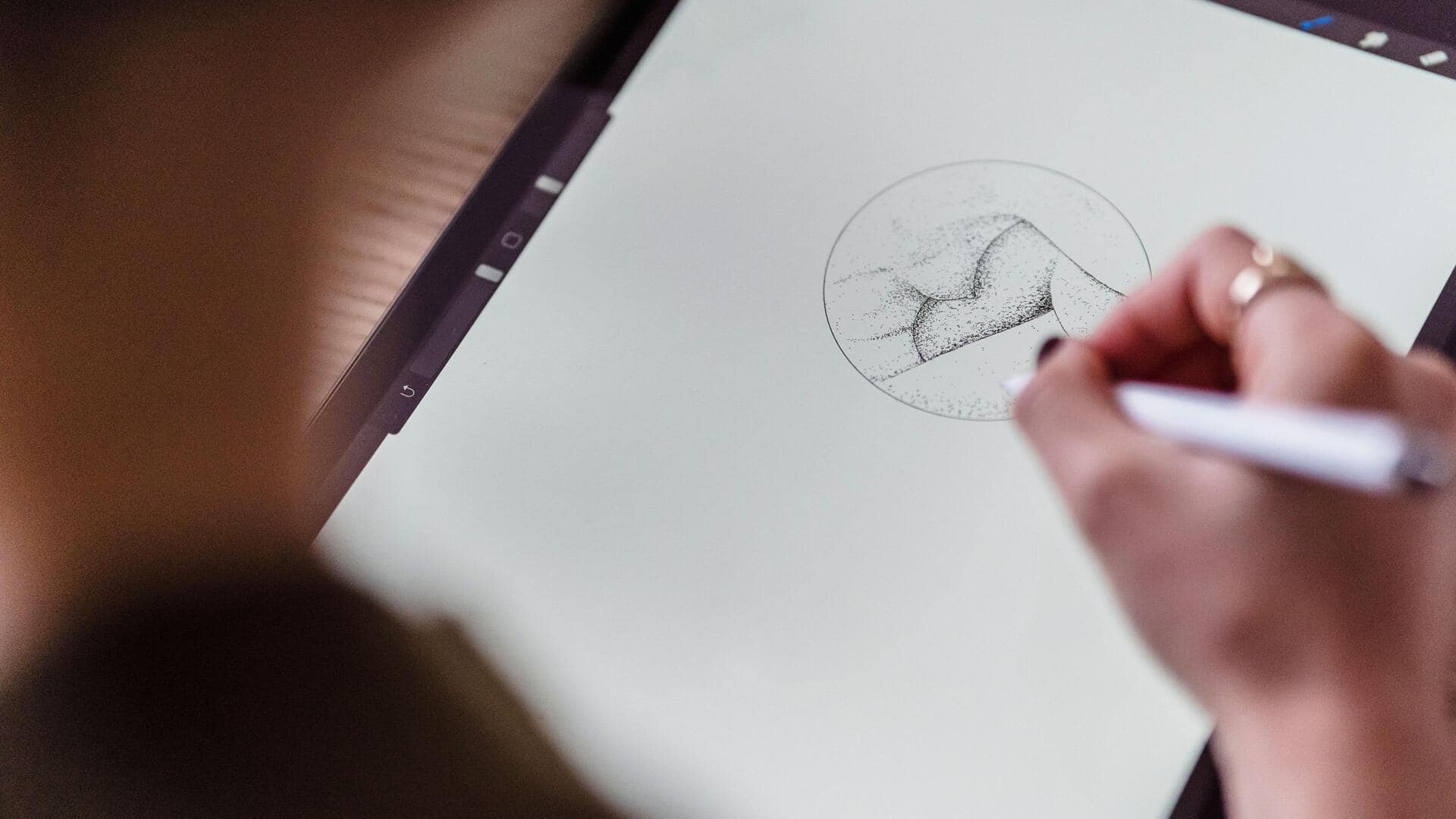
Stippling 101: The art of creating images with tiny dots
What's the story
Stippling is a unique art form that uses tiny dots to create detailed and textured images. This technique, often employed in drawing and engraving, allows artists to create depth and shading without the use of lines or solid fills. Stippling requires patience and precision, making it a meditative process for many artists. With just a pen or pencil, one can create intricate designs that captivate the eye.
#1
Understanding the basics of stippling
Stippling is all about creating images with small dots instead of continuous lines.
The closer the dots, the darker the area appears; the farther apart, the lighter.
This technique is all about patience and precision, as every dot contributes to the overall image.
Artists often use stippling to create texture and depth in their work, making it a versatile tool for both beginners and professionals.
#2
Tools needed for stippling
To start stippling, you need basic tools like pens or pencils with different nib sizes for varying dot sizes.
Fine-tipped pens are great for detailed work, while broader tips can be used for shading larger areas.
Paper quality also matters; thicker paper can handle more ink without bleeding through.
Experimenting with different tools helps artists find their preferred method.
#3
Techniques to master stippling
Mastering stippling involves practicing various techniques such as varying dot density and spacing to create different effects.
Cross-hatching with dots can add complexity to your designs.
Consistency in dot placement is key to achieving realistic textures.
Artists should also experiment with different patterns and styles to develop their unique approach while honing their skills through regular practice.
#4
Tips for creating stunning stipple art
Start with simple shapes before moving on to complex designs; this builds confidence over time.
Use reference images when starting; they provide guidance on how light interacts within subjects like portraits or landscapes.
Take breaks during long sessions; this prevents fatigue from setting in too soon, allowing you to maintain focus throughout each piece's completion process without compromising quality standards overall.