
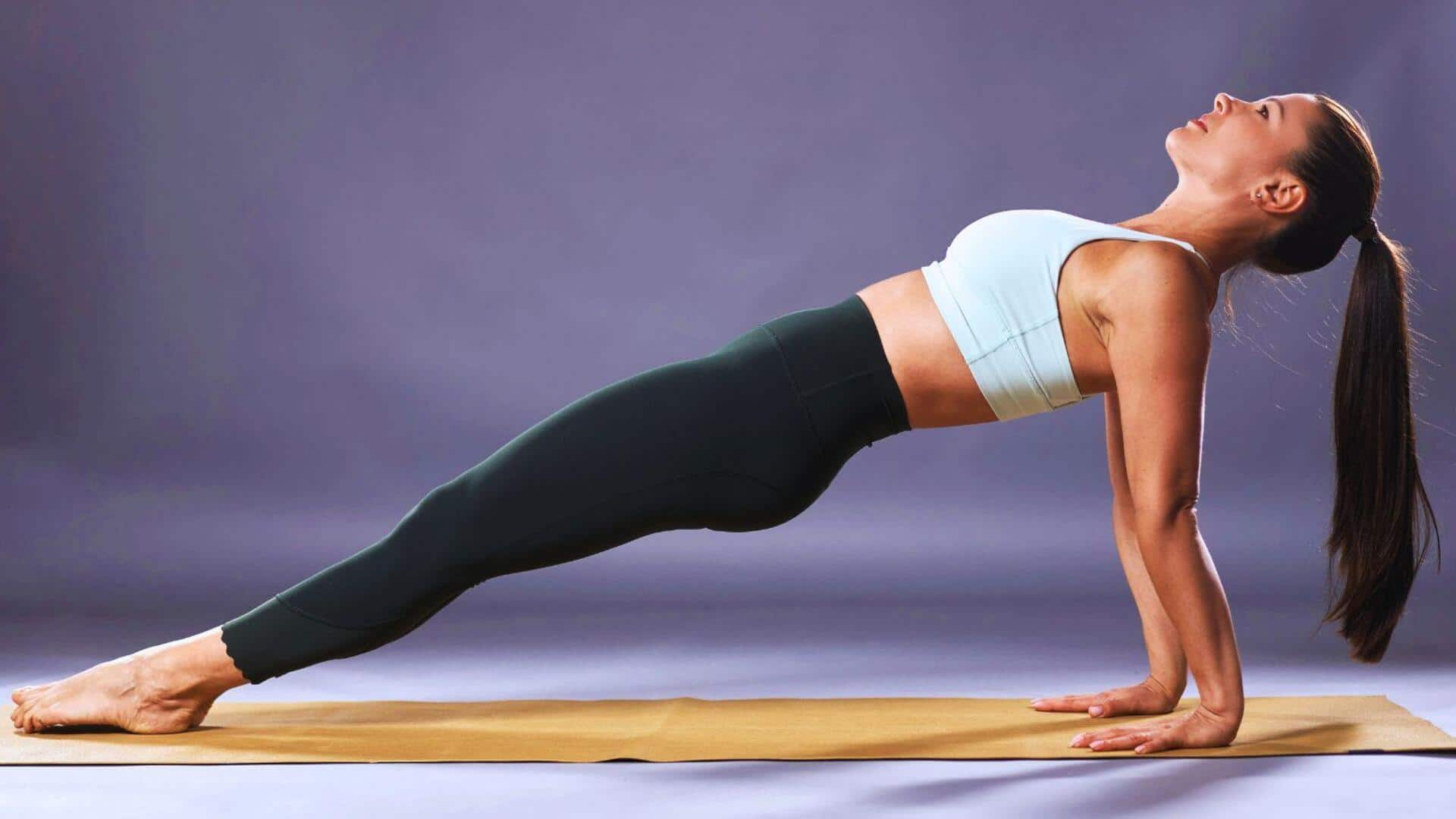
Want a strong core? Try these reverse plank variations
What's the story
The reverse plank is a great exercise for building core strength, especially for beginners. It works on the back, glutes, and shoulders while improving posture and stability. Adding variations to the reverse plank can make your workout more effective by targeting different muscles and increasing the challenge. Here are five beginner-friendly variations that can help you build a stronger core.
Basic hold
Standard reverse plank hold
The standard reverse plank hold is where you lie face-up with your hands and feet on the ground, lifting your body into a straight line. This basic version focuses on maintaining form and balance. It strengthens the entire core while also working on the arms and legs. Hold the position for 20-30 seconds to start, gradually increasing as you gain strength.
Elevated position
Elevated reverse plank
In the elevated reverse plank, you place your feet on a bench or step while keeping your hands on the ground. This variation increases the intensity by adding elevation, which challenges your balance more. It also engages your hip flexors more than the basic version. Aim to hold this position for 15-25 seconds initially.
Leg lift addition
Reverse plank with leg lift
Adding leg lifts to the reverse plank makes it more dynamic by engaging more muscle groups at once. While holding a standard reverse plank position, lift one leg at a time without losing form or balance. This variation improves coordination and strengthens both lower back muscles and glutes simultaneously.
One leg focus
Single-leg reverse plank
The single-leg reverse plank is an advanced version of its basic counterpart where only one leg is kept on the ground at any given point in time. This increases stability requirements significantly as it forces you to engage more stabilizing muscles throughout your body. Practicing this regularly will help improve overall balance and coordination skills over time.
Shoulder tap challenge
Reverse plank shoulder tap
Incorporating shoulder taps into your routine adds an upper body challenge to traditional core training exercises like planks or bridges. Start off slowly by tapping opposite shoulders while maintaining a stable midsection. This prevents excessive rocking back and forth across the torso area. This ensures maximum effectiveness from each repetition performed during the session itself.