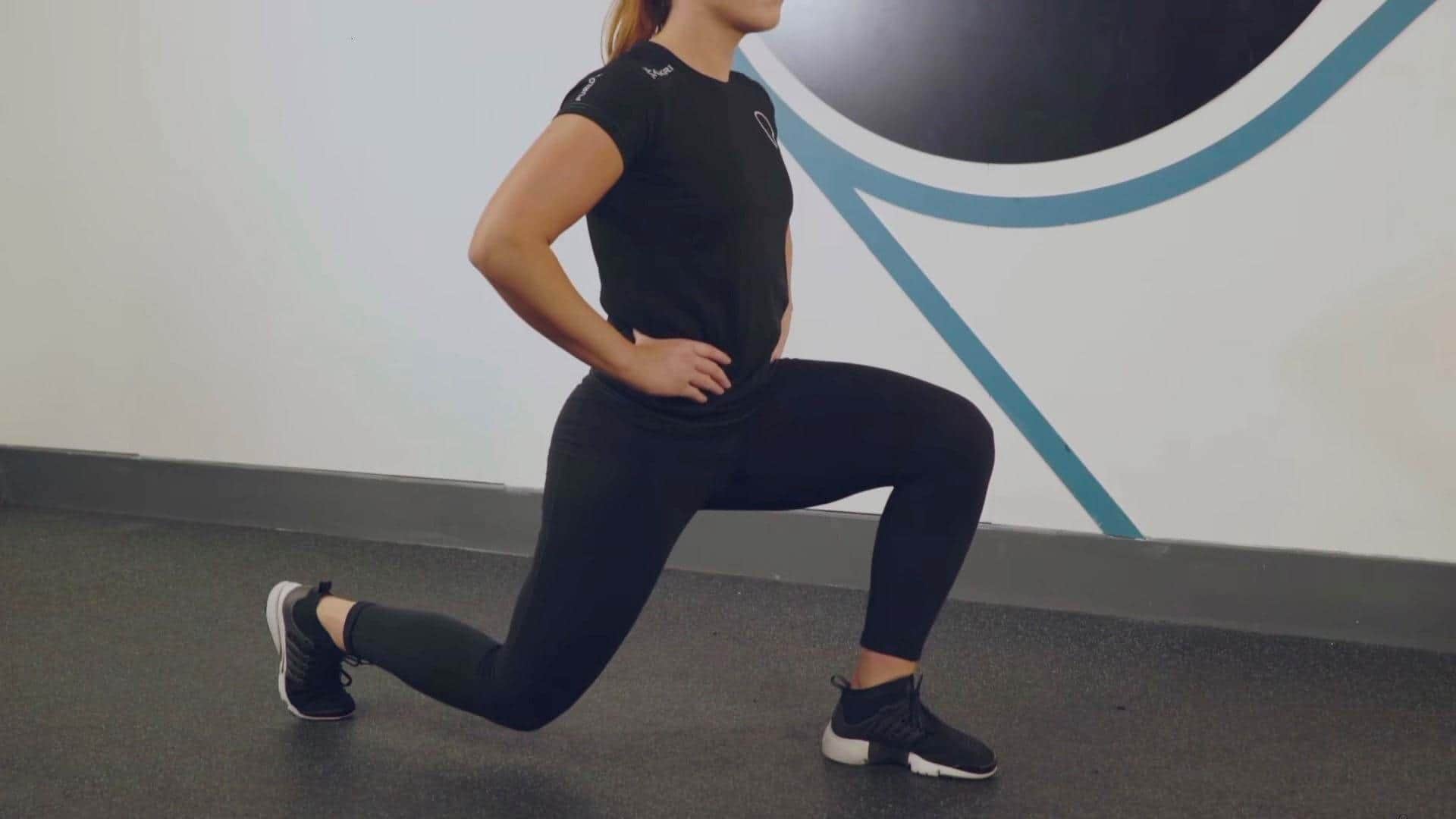
Do reverse lunges to strengthen your legs
What's the story
Reverse lunges are a great exercise to strengthen your legs, focusing on the glutes, quadriceps, and hamstrings. This movement is also beneficial for improving balance and coordination. Unlike forward lunges, reverse lunges put less stress on the knees, making them a safer option for many. Including reverse lunges in your workout can help you develop better lower body strength and stability.
Tip 1
Proper form is key
Maintaining proper form while performing reverse lunges is crucial to avoid injuries.
Start by standing with feet hip-width apart.
Step back with one leg while lowering your hips until both knees are bent at about a 90-degree angle.
Keep your torso upright and ensure that your front knee does not extend past your toes.
This alignment helps in targeting the right muscles effectively.
Tip 2
Incorporate variations for better results
To keep your workouts interesting and challenging, you can try different variations of reverse lunges.
Adding weights like dumbbells or kettlebells can increase resistance and build more muscle strength.
Another variation is the curtsy lunge, where you step back diagonally instead of straight back, targeting different muscle groups in the legs.
Tip 3
Focus on balance and coordination
Reverse lunges also require a lot of balance and coordination, which are important for overall fitness.
To improve these skills, try doing the exercise on an unstable surface like a balance pad or BOSU ball.
This not only challenges your stability but also engages more core muscles, making it an all-rounder exercise.
Tip 4
Consistency is essential
Like any other exercise, consistency is key to seeing results from reverse lunges.
Aim to include them in your routine at least three times a week for the best results.
Gradually increase the number of repetitions or sets as you get stronger, but make sure you maintain good form throughout each session.