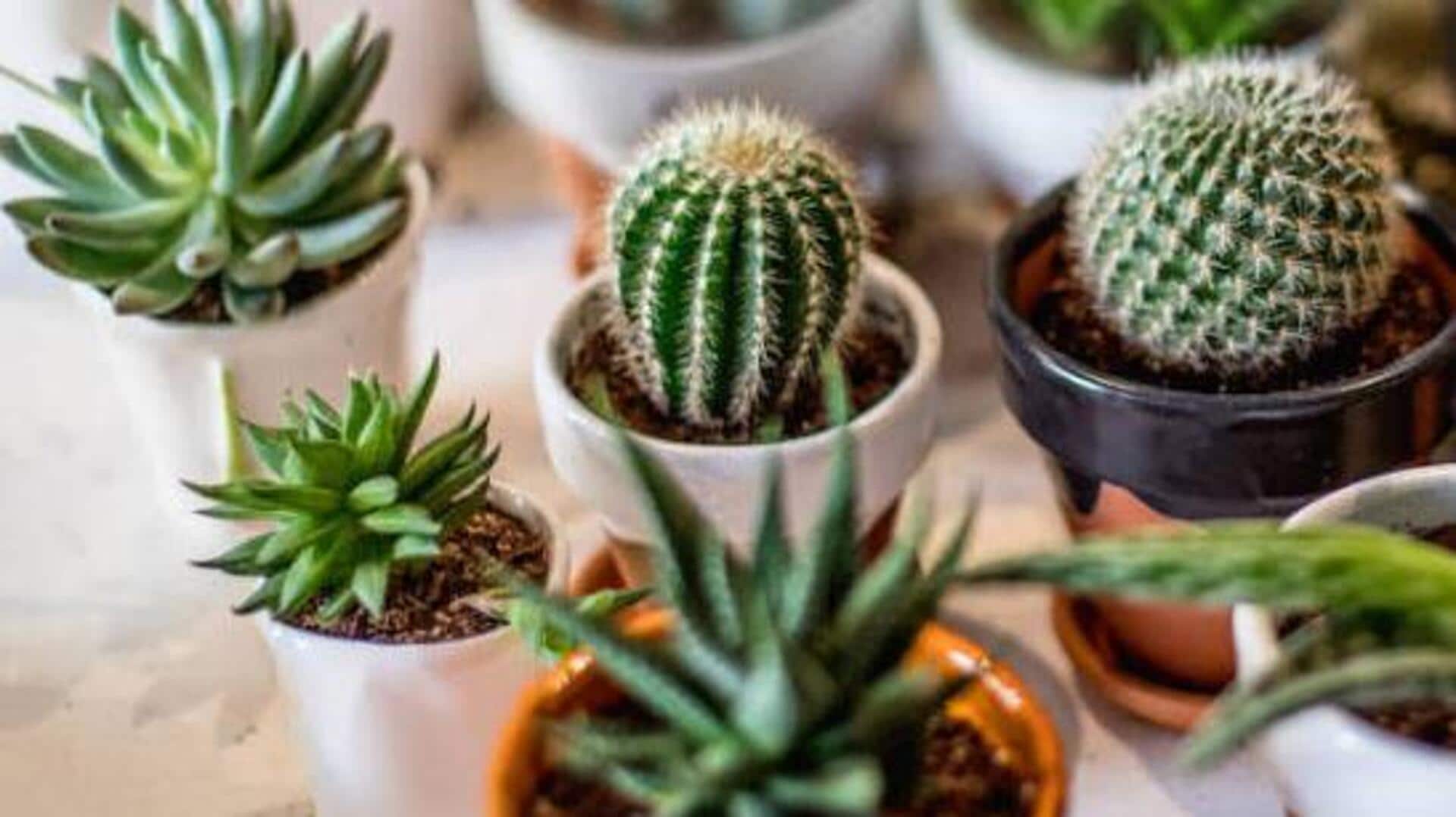
How to grow succulents like a pro
What's the story
Succulents are all the rage for their low-maintenance and beautiful look. Propagating them is an easy way to expand your collection without spending a dime. Be it a seasoned gardener or a newbie, knowing the basics of succulent propagation can help you grow healthy plants. Here are five essential tips to help you propagate succulents like a pro.
Timing
Choose the right time
The best time to propagate succulents is during their active growing season, which is usually spring and summer.
During these months, the plants are more likely to root quickly and efficiently.
Avoid propagating during the colder months, when succulents tend to go dormant, as this can slow down or even halt the rooting process.
Hygiene
Use clean tools
Using clean tools is essential to prevent infections in succulent cuttings.
Always use sterilized scissors or a knife to make clean cuts on leaves or stems.
This practice minimizes the risk of bacterial and fungal infections that can harm new plants.
Keeping your tools clean ensures a healthier propagation process, leading to more successful root development and plant growth.
Callousing
Allow cuttings to callous
After cutting succulent leaves or stems for propagation, let them sit for a few days in a dry place with indirect sunlight.
This allows the cut ends to form a protective layer called callous.
This step is important, as it prevents rot when you place them on soil later.
Skipping this step may lead to failure in rooting.
Soil mix
Use well-draining soil
Succulents need well-draining soil to thrive.
A mix of potting soil with sand or perlite works wonders for drainage.
This prevents water from sitting around roots, which can cause rot.
Make sure the soil is dry before watering again after planting cuttings.
Watering tips
Water sparingly at first
When propagating succulents, it is important to be cautious with watering at first.
Water only when necessary until new growth appears at the base of cuttings. This indicates successful rooting has occurred.
Overwatering too soon can lead directly to rot issues within these delicate stages.
Propagation efforts should focus on achieving healthy roots first and foremost, before resuming regular watering schedules thereafter.