Smart ways to improve plant drainage
What's the story
If you are a plant lover, you know how important proper drainage is for your plants' health. While sponges are often used to line the bottoms of pots to prevent soil loss, they are not the best option. They can break down over time, affecting their effectiveness. Here are five alternatives that can help with plant pot drainage more effectively than sponges.
#1
Gravel for optimal drainage
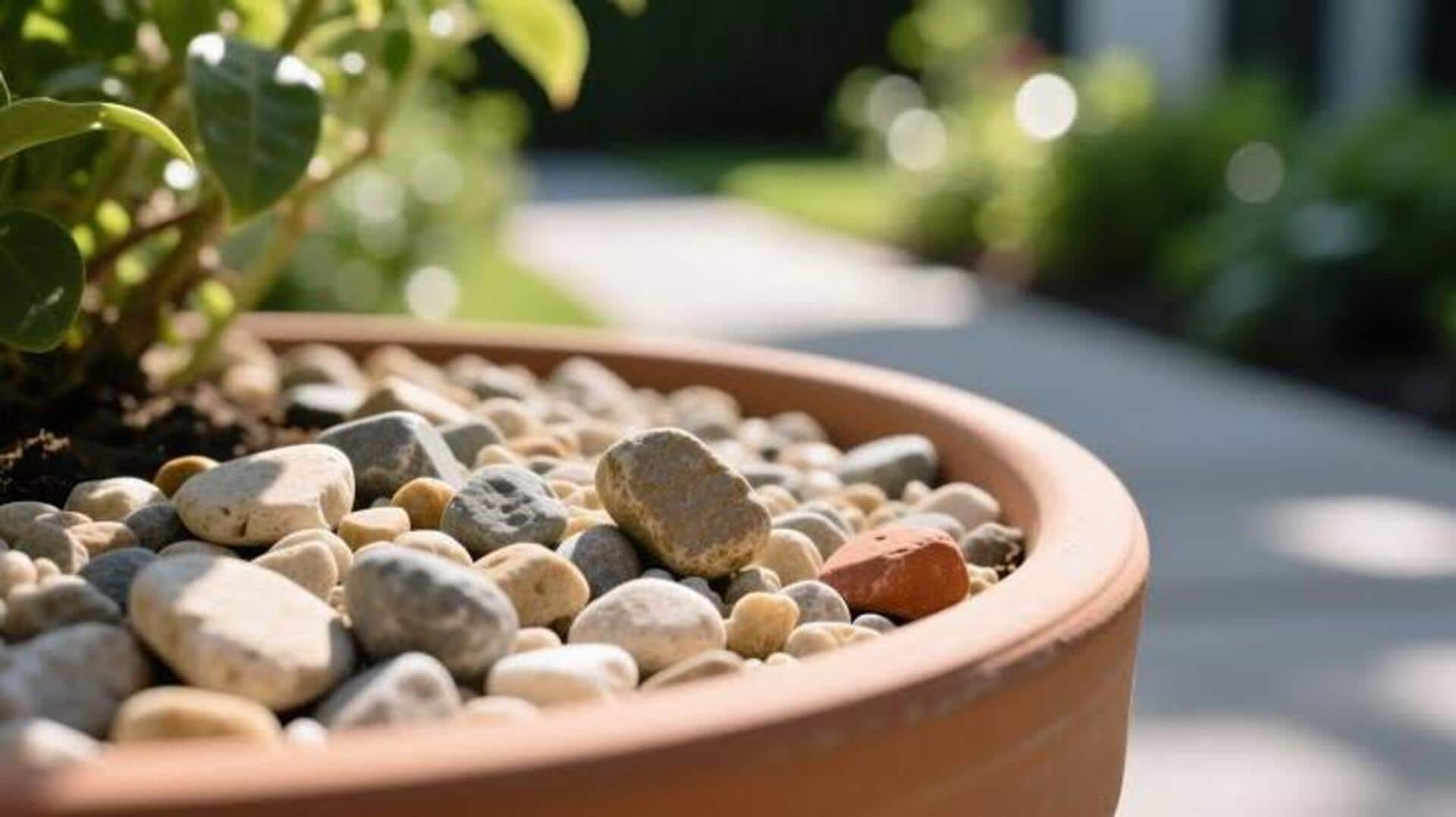
Gravel is a popular choice for improving drainage in plant pots.
It is a natural material that allows water to flow freely through the soil, preventing root rot.
Gravel does not decompose like organic materials, making it a long-lasting option.
Using gravel at the bottom of your pot can create an efficient drainage layer, ensuring excess water does not sit around the roots of your plants.
#2
Clay pot shards as a solution
If you have broken clay pots lying around, do not throw them away just yet. They make for an excellent alternative to sponges for plant pot drainage.
The shards create space at the bottom of your pot, allowing water to escape easily while preventing soil from washing out.
This method is also eco-friendly, as it recycles old pots.
#3
Charcoal for odor control and drainage
Charcoal serves a dual purpose when used in plant pots: it controls odors and improves drainage.
Activated charcoal absorbs excess moisture and odors that may build up in the soil over time.
It also provides an excellent drainage layer, just like gravel or clay shards, while keeping your plant's environment fresh.
#4
Perlite for lightweight drainage aid
Perlite is a lightweight volcanic glass used to improve soil aeration and drainage.
When used at the bottom of plant pots, perlite allows water to flow freely while keeping soil from washing away.
Its lightweight nature makes it perfect for indoor plants, where heavy materials may not be ideal.
#5
Landscape fabric as a barrier
Landscape fabric is another practical option for lining plant pots instead of sponges.
This breathable material allows water to pass through easily, while keeping soil contained within the pot.
Landscape fabric is especially useful in larger containers, where other materials may not provide adequate coverage or support.