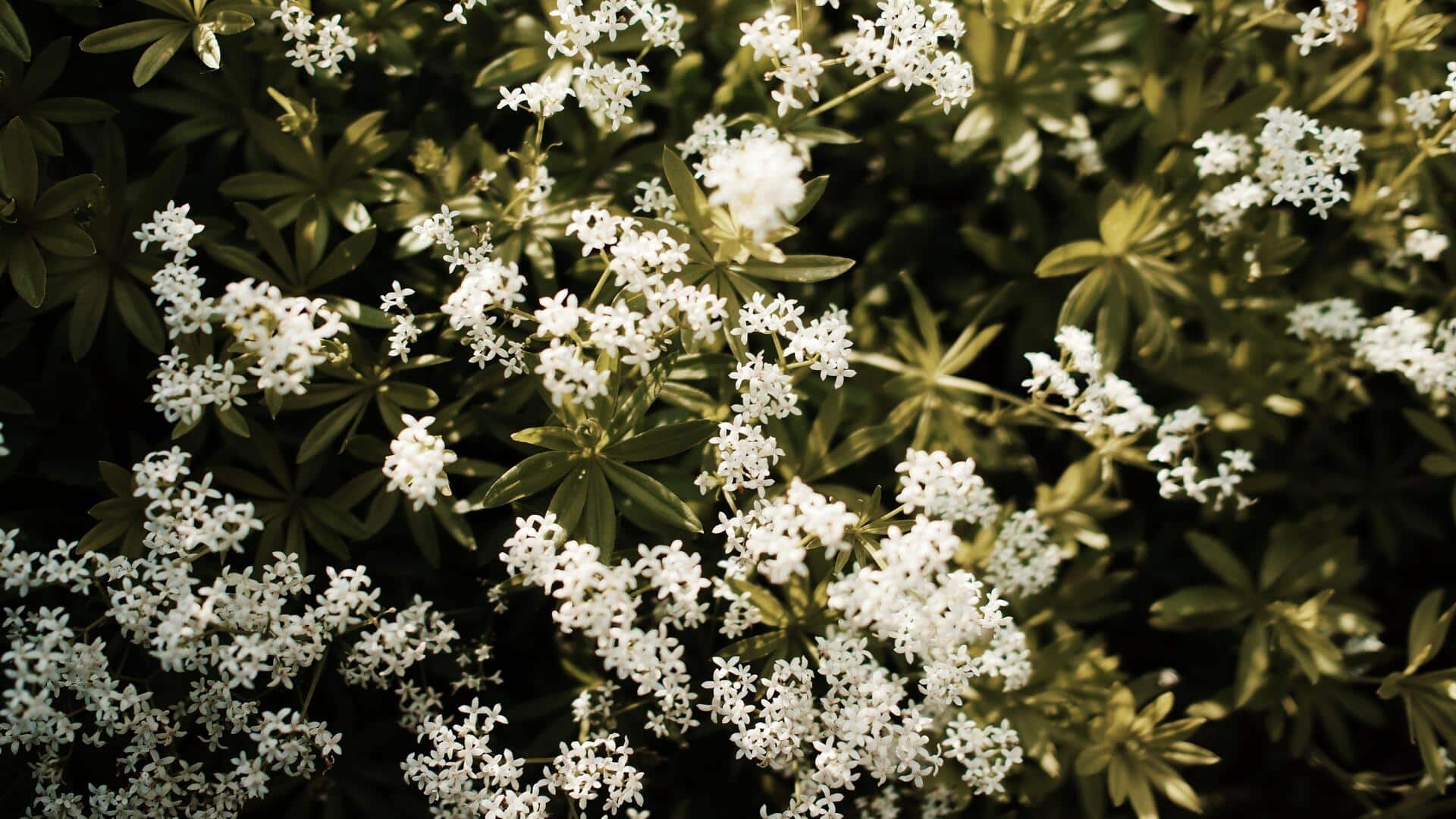
Want a thriving sweet woodruff plant? Read this
What's the story
Sweet woodruff, a perennial herb, is famous for its sweet fragrance and medicinal properties. It grows well in shade and is an excellent addition to any garden. Growing sweet woodruff at home is easy, provided you know its requirements. Here's a guide to growing this herb successfully, covering soil, light, and watering needs.
Tip 1
Choosing the right soil
Sweet woodruff flourishes in moist, well-drained soil with a slightly acidic to neutral pH.
It is best to mix organic matter like compost or peat moss into the soil to improve its texture and nutrient content.
This not only provides the required nutrients but also improves water retention, making it ideal for sweet woodruff's growth.
Tip 2
Light requirements for sweet woodruff
Sweet woodruff does best in partial shade.
While it can tolerate full shade, too much sunlight can scorch its leaves.
Ideally, place it in an area where it gets dappled sunlight or filtered light for a few hours every day.
This will ensure healthy growth and retain its characteristic fragrance.
Tip 3
Watering needs explained
Regular watering is essential for sweet woodruff, as it prefers moist conditions but not waterlogged ones.
Water the plant regularly, particularly during dry spells, but allow the top inch of soil to dry out between waterings to avoid root rot.
Mulching around the plant can help retain moisture and keep weeds at bay.
Tip 4
Propagation methods for sweet woodruff
Sweet woodruff can be propagated easily by division or seed sowing.
For division, dig up established clumps in spring or fall and replant them at desired locations with adequate spacing.
If sowing seeds, start eight weeks indoors before the last frost date or sow directly outdoors after frost has passed.