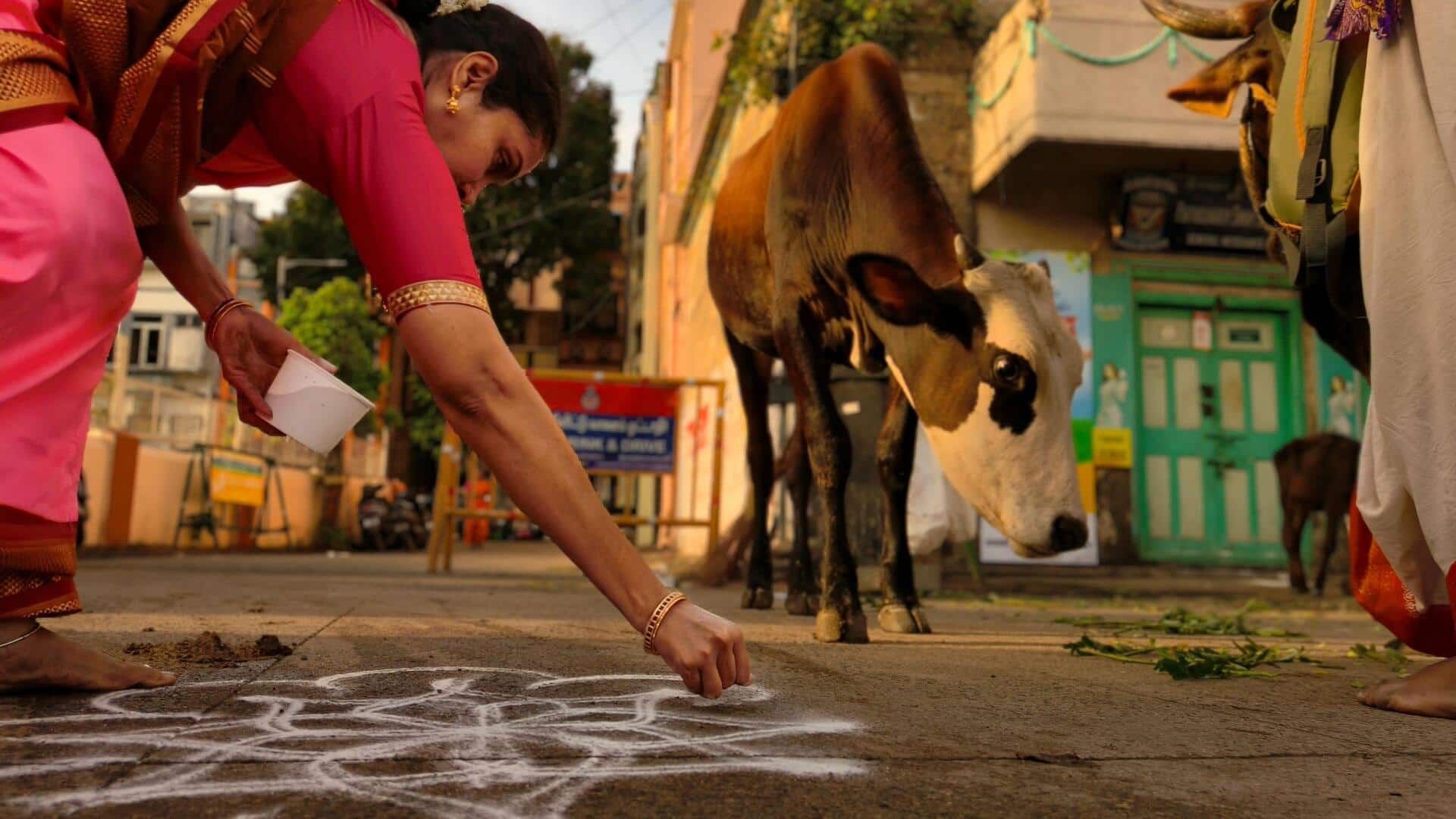
Kolam patterns: A harvest festival tradition in India
What's the story
Kolam patterns are an integral part of harvest festivals in India, particularly in Tamil Nadu. These intricate designs are drawn on the ground using rice flour and other natural materials. They are believed to bring prosperity and good fortune to homes. During harvest festivals, kolams take on special significance as they symbolize abundance and gratitude for the bountiful crops. The tradition is not just an art form but also a cultural expression that binds communities together.
#1
Historical significance of Kolam
Kolam has been a part of Indian tradition for centuries, dating back to ancient times. It is said that the practice originated as a way to attract ants to the grains scattered on the ground. Over time, it evolved into a decorative art form with spiritual connotations. In harvest festivals, kolams act as a reminder of the agrarian roots of many Indian communities and their connection with nature.
#2
Materials used in kolam making
Traditionally, kolams are made using rice flour, which is biodegradable and eco-friendly. Other natural ingredients, such as turmeric powder or colored powders, may also be used for added vibrancy. These materials are easily available in rural areas, making kolam an accessible tradition for all. The use of natural materials also reflects the sustainable practices that are deeply rooted in Indian culture.
#3
Techniques for creating kolams
Creating kolams requires skill and patience, as they are made using a series of dots and lines to form intricate patterns. Traditionally, kolams are drawn freehand without any tools other than fingers or simple sticks. During harvest festivals, larger and more elaborate designs are often created to celebrate the occasion. The techniques vary from region to region, with each having its own unique style.
#4
Community involvement in Kolam festivals
Kolam festivals are often community events where people come together to create large-scale designs or compete in friendly competitions. These gatherings foster social bonds and allow for cultural exchange between different regions. Participation is open to all ages, ensuring that the tradition is passed down through generations while adapting to modern influences.