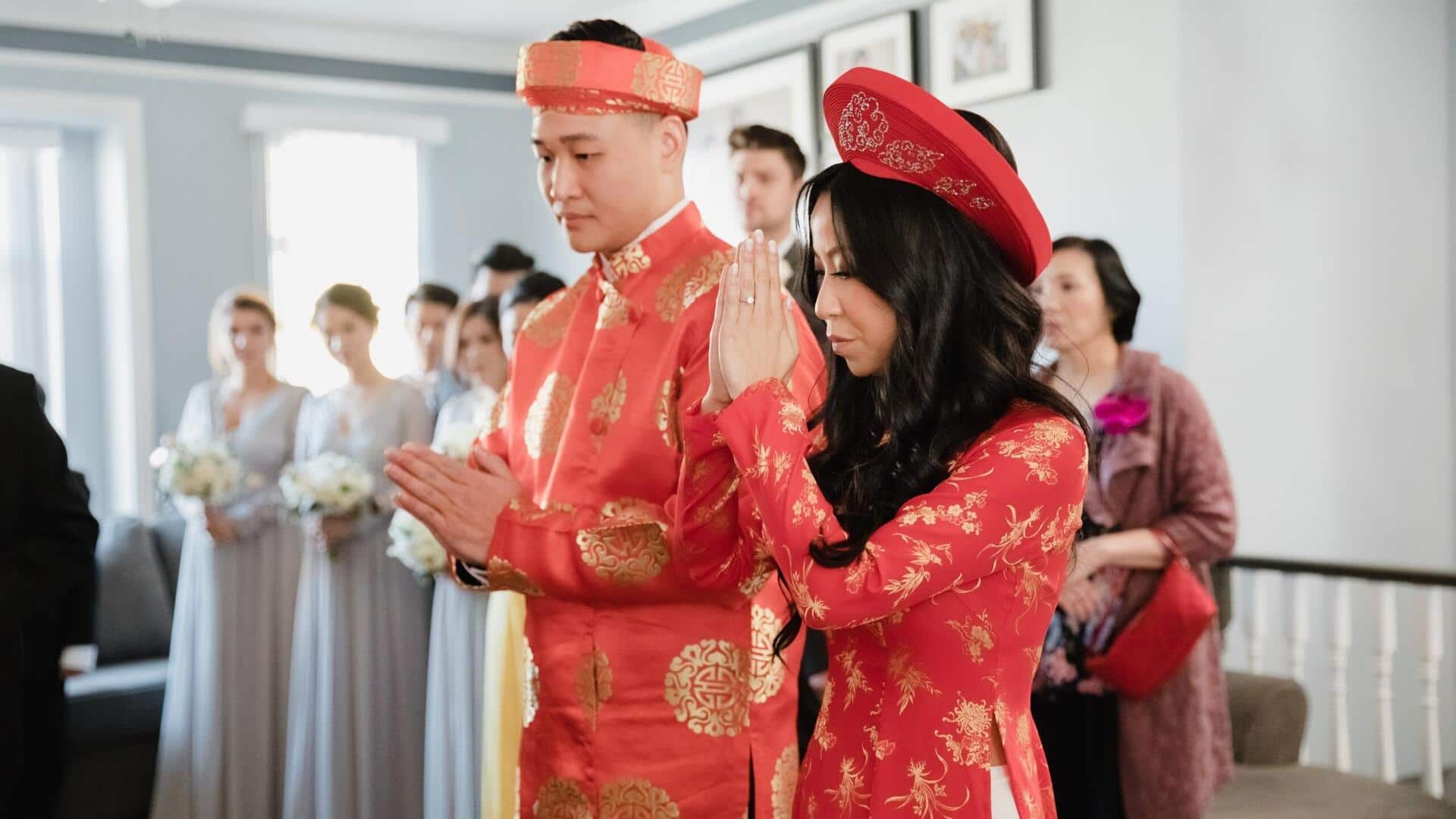
These Vietnamese wedding traditions are pretty significant!
What's the story
Vietnamese weddings are a beautiful blend of tradition and culture. They are not just a union of two individuals but also of two families. The ceremonies are steeped in customs that have been passed down generations, each with its own significance. From the engagement ceremony to the wedding day rituals, every step is taken with care and respect to honor the couple's heritage.
#1
The engagement ceremony
The engagement ceremony, or "le an hoi," is an important pre-wedding ritual in Vietnam. It usually takes place weeks before the wedding day.
During this ceremony, the groom's family presents gifts to the bride's family as a sign of respect and commitment.
The gifts usually include betel leaves, tea, and jewelry. This ritual sets the tone for both families to come together in harmony.
#2
The wedding day rituals
On the wedding day, Vietnamese couples often wear traditional ao dai outfits.
The bride usually wears red or pink, as these colors symbolize good luck and prosperity in Vietnamese culture.
The groom may wear a blue or black ao dai.
These outfits are not just beautiful but also symbolize cultural pride and identity.
#3
Tea ceremony traditions
The tea ceremony is another important part of Vietnamese weddings. It is usually held at both families' homes before heading to the wedding venue.
During this ritual, the couple serves tea to their elders as a sign of respect and gratitude.
In return, elders offer blessings and gifts such as money in red envelopes called "li xi."
#4
Family involvement in planning
Family involvement is key in planning a Vietnamese wedding.
Families discuss details like guest lists, venues, and budgets together to ensure that everything aligns with traditional expectations.
This collaborative approach strengthens family bonds and ensures that both sides feel valued throughout the planning process.
#5
Symbolic gifts exchanged between families
Symbolic gifts are exchanged between families during Vietnamese weddings as tokens of goodwill and appreciation.
These may include fruits like lychees or longans, which symbolize fertility; lotus seeds representing purity; or even small handmade items symbolizing craftsmanship skills passed down through generations.