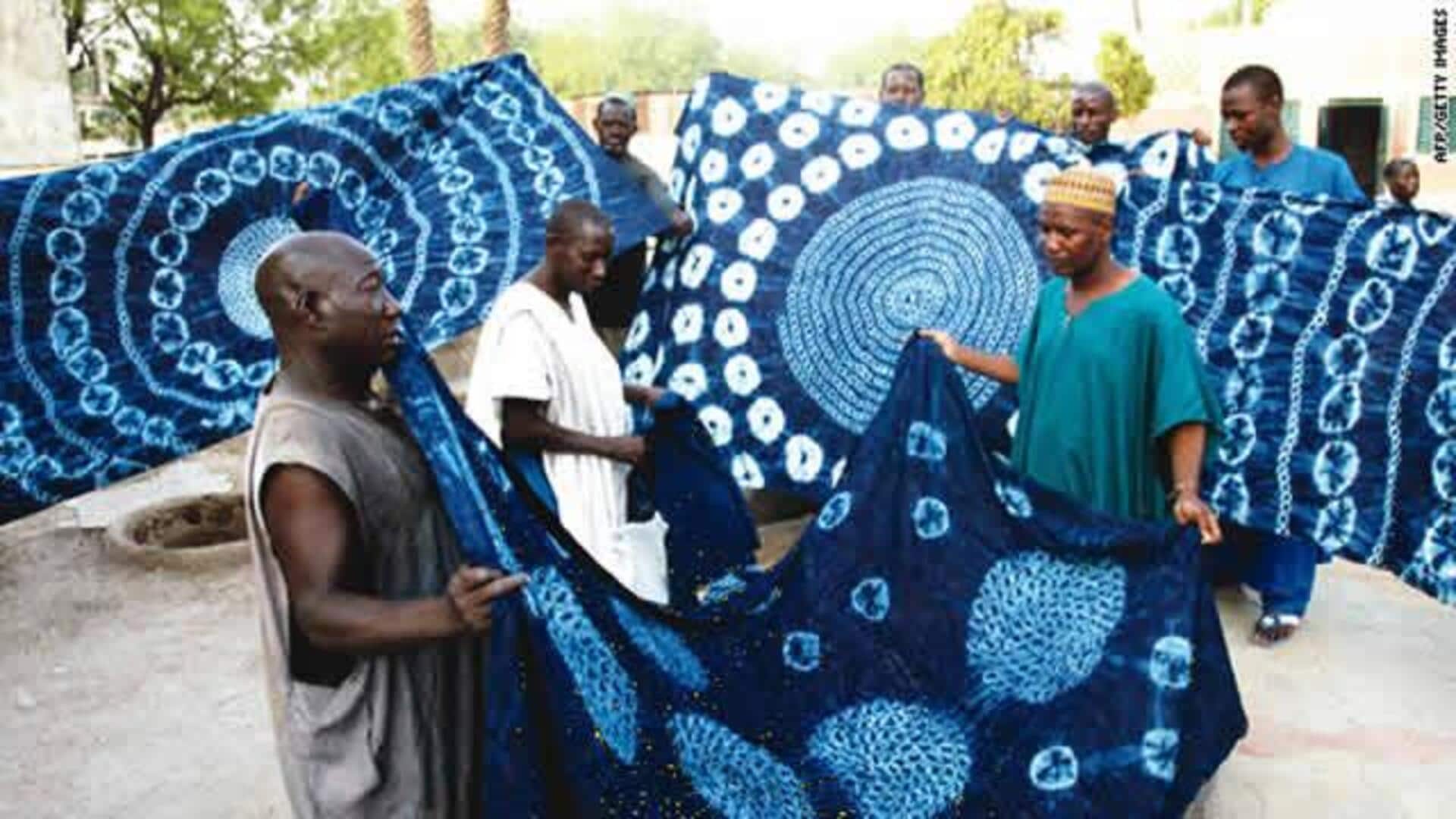
What makes Africa's tie-dye art so special
What's the story
African tie-dye art is a colorful and rich cultural heritage that has been practiced for centuries. The technique, which involves folding, twisting, or crumpling fabric and binding it with string or rubber bands, creates unique patterns. It is often used to make vibrant textiles for clothing and home decor. The art form not only showcases the creativity of African artisans but also reflects the diverse traditions across the continent.
#1
Exploring traditional techniques
Traditional African tie-dye techniques vary from region to region, each with its own unique patterns and methods.
In some areas, artisans use natural dyes from plants and minerals to achieve vibrant colors.
The process usually involves multiple stages of dyeing and resist techniques to create intricate designs.
These traditional methods are often passed down through generations, preserving cultural heritage.
#2
The role of community in art
Community plays a vital role in the practice of tie-dye art in Africa.
Many artisans work in groups or cooperatives where they share resources, skills, and knowledge.
This collaborative approach not only strengthens community bonds but also ensures that traditional techniques are preserved for future generations.
It also provides economic opportunities for many families who rely on this craft for their livelihoods.
#3
Modern adaptations and innovations
In recent years, there has been a surge in interest in African tie-dye art globally.
Artists have started experimenting with modern adaptations by incorporating new materials and techniques into their work.
Some have even begun using digital platforms to showcase their creations internationally, expanding the reach of this vibrant art form beyond its traditional roots.
#4
Economic impact on local communities
The production of tie-dye textiles has a significant economic impact on local communities across Africa.
By creating jobs for artisans and generating income through sales at local markets or international exports, this craft supports many families financially.
The growth of demand for these products has led to increased investment in training programs that enhance skills while promoting sustainable practices within communities engaged in this craftwork.