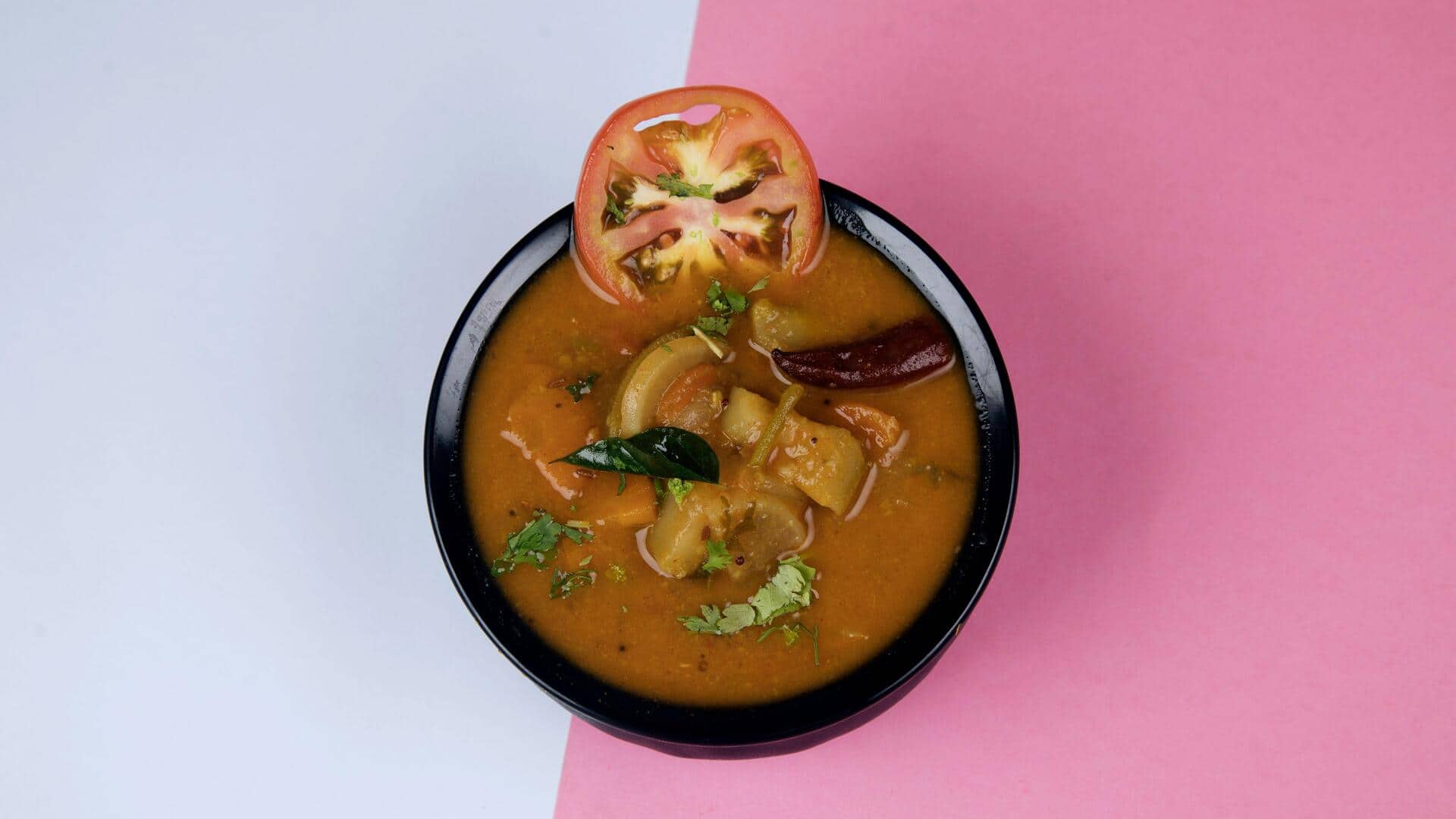
Dalma: An beloved dish from Odisha
What's the story
Dalma, a traditional dish from Odisha, has a rich history that dates back centuries. A simple yet nutritious preparation, dalma is made with lentils and vegetables, and is a staple in Odia households. Its evolution reflects the cultural and culinary changes in the region over time. From being a humble meal for the common folk to becoming a celebrated dish at festivals and special occasions, dalma's journey is fascinating.
#1
Ancient roots of Dalma
Dalma's origins can be traced back to ancient Odia cuisine, where it was primarily prepared using locally available ingredients like lentils and seasonal vegetables.
The dish was not only economical but also served as an excellent source of protein for the people of that era.
Ancient texts indicate that dalma was often cooked with minimal spices to retain the natural flavors of its components.
#2
Influence of royal kitchens
The royal kitchens of Odisha also had a hand in shaping dalma's evolution.
As trade routes expanded and cultural exchanges flourished, new ingredients and cooking techniques made their way into the dish.
The royals added a variety of spices and herbs, enhancing its flavor without overpowering its essence.
This period saw dalma transforming into a more sophisticated dish while still retaining its humble roots.
#3
Dalma in modern times
In modern times, dalma has become more than just a home-cooked meal; it is now an integral part of festive feasts and celebrations across India.
Its versatility allows it to be paired with rice or enjoyed on its own as a hearty stew-like dish.
The modern-day versions often include variations like adding coconut or tamarind for added depth of flavor.
Tip 1
Nutritional value & cultural significance
Beyond taste, dalma holds immense nutritional value owing to its rich lentil content, which provides essential proteins, fibers, vitamins, and minerals.
Culturally, it is symbolic of hospitality, generosity, and community bonding, often served during gatherings, festivals, and rituals, making it a beloved staple among Odias worldwide.