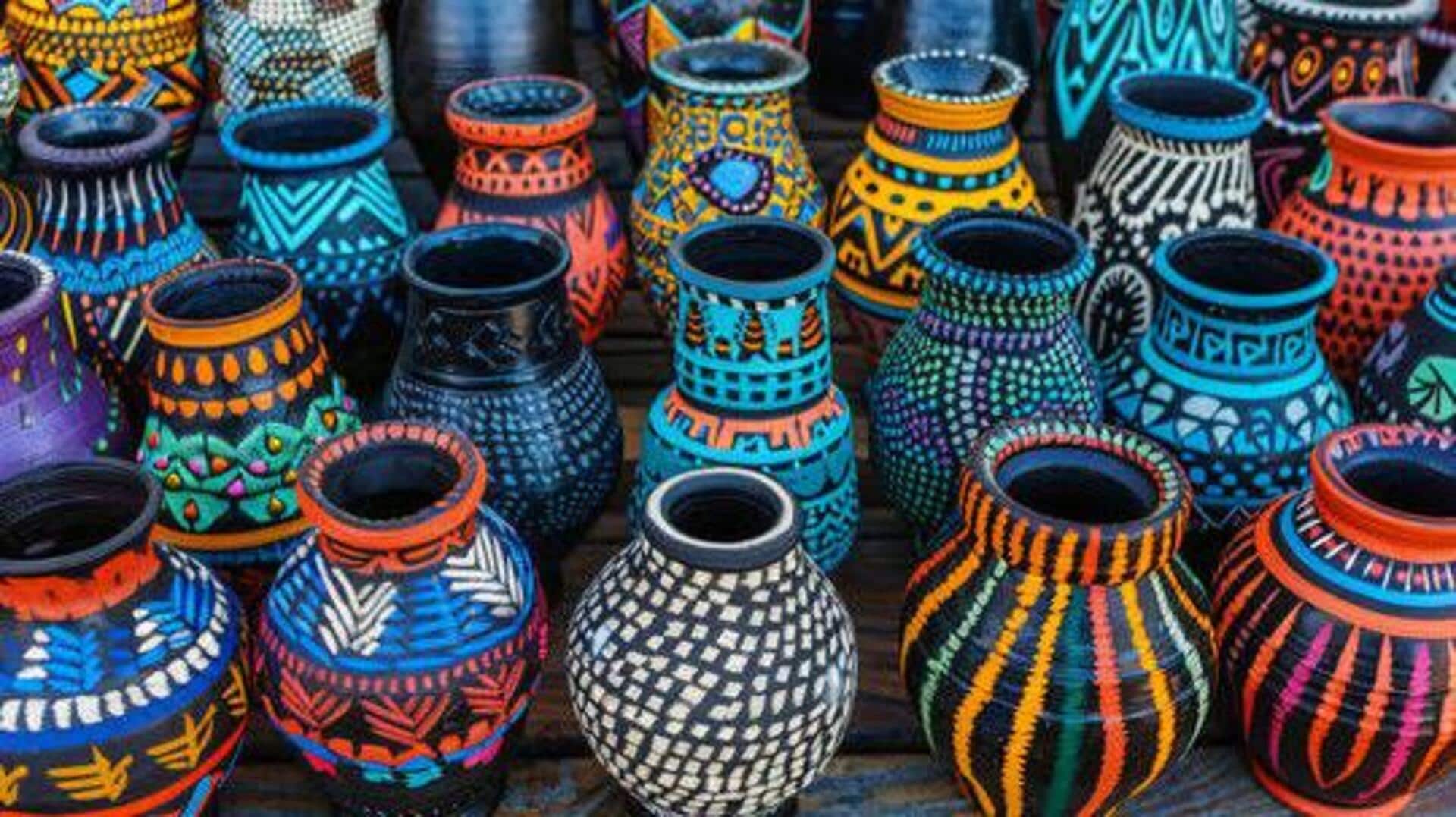
All about clay pot painting
What's the story
African clay pot painting is a beautiful tradition that has been passed down through generations. The art form is not just about aesthetics, but also about cultural significance and storytelling. Each design and color used in the paintings carries a meaning, reflecting the community's history, beliefs, and values. This article delves into the techniques of African clay pot painting, exploring its cultural roots, and how it can be appreciated today.
#1
Understanding the cultural significance
African clay pot painting is deeply rooted in cultural traditions.
Each design tells a story or symbolizes a particular aspect of life or nature.
The patterns often represent tribal identities or historical events.
Understanding these symbols gives insight into the rich tapestry of African heritage and how art serves as a medium for preserving history.
#2
Techniques used in painting
The techniques employed in African clay pot painting are both simple and intricate.
Artists usually use natural pigments derived from plants and minerals to create vibrant colors.
Brushes are often made from animal hair or plant fibers, allowing for precision in detail work.
The application process requires skillful hands to ensure each line and pattern is executed perfectly.
#3
Materials used in traditional pots
Traditionally, African clay pots are made from locally sourced clay, which is molded by hand into various shapes and sizes.
The clay is then left to dry under the sun before being painted with natural dyes.
These materials not only make the pots durable but also eco-friendly, in line with sustainable practices.
#4
Modern adaptations of traditional techniques
While traditional techniques remain popular, modern adaptations have emerged as artists blend old methods with contemporary styles.
Some incorporate new materials or experiment with different forms while maintaining cultural integrity through their designs.
This evolution allows for the preservation of heritage while adapting to changing artistic landscapes.