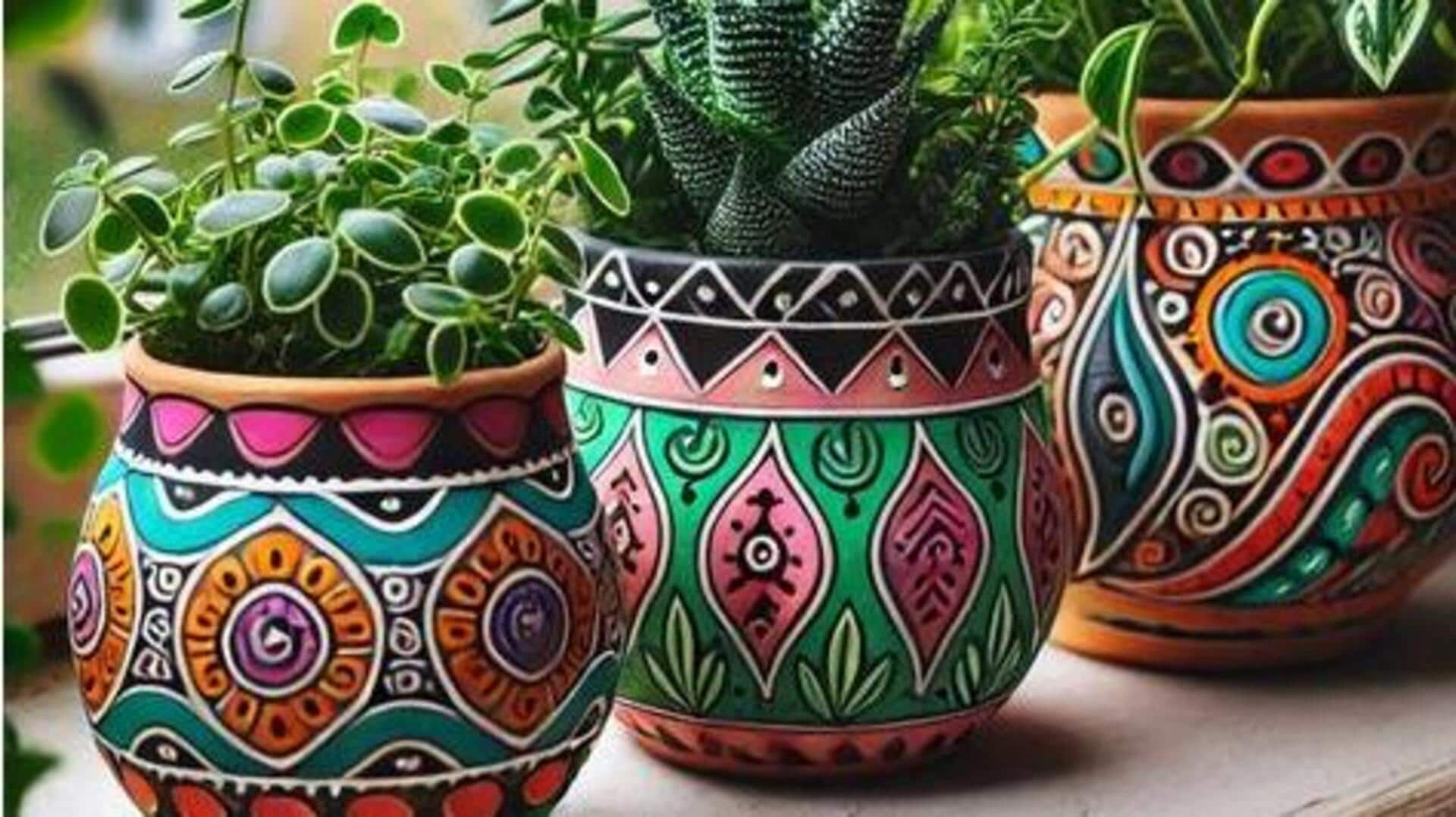
How to paint terracotta pots with geometric designs
What's the story
African geometric patterns are famous for their beauty and cultural significance. By painting these designs on terracotta pots, you can create stunning pieces that celebrate African heritage. The process involves selecting the right patterns, preparing the pots, and using appropriate paints to ensure durability and vibrancy. This guide will take you through the steps to transform terracotta pots with these intricate designs.
Pattern selection
Choosing the right patterns
Selecting the right pattern is key to achieving an authentic look.
Research various African cultures to find geometric patterns that resonate with you.
Common motifs include zigzags, triangles, and circles, which often symbolize different aspects of life and nature.
Consider how each design will complement the shape of your pot.
Pot preparation
Preparing the terracotta pots
Before painting, ensure your terracotta pots are clean and dry.
Wash them with soap and water to remove any dust or residue, and then let them dry completely.
If you want, you can also apply a primer designed for terracotta surfaces, which helps paint adhere better and enhances color vibrancy.
Paint choice
Selecting appropriate paints
Choosing the right paint is essential for durability and appearance.
Acrylic paints are popular because they dry quickly and resist fading over time.
However, if you want weather-resistant finishes, you can use outdoor-rated acrylics, or sealants after painting, to protect against moisture damage.
Technique tips
Painting techniques for precision
Use fine brushes or paint pens for detailed work on smaller areas of your design.
For larger sections, flat brushes can cover more surface area quickly while maintaining even coverage.
Practice on paper or scrap material first if you are new to painting with these tools.
Final steps
Finishing touches for durability
Once your design is complete, let it dry thoroughly before handling the pot extensively.
If desired, apply a clear sealant over the entire surface after the paint has dried, to add an extra layer of protection against wear from outdoor elements, like rain or sunlight exposure, over time.