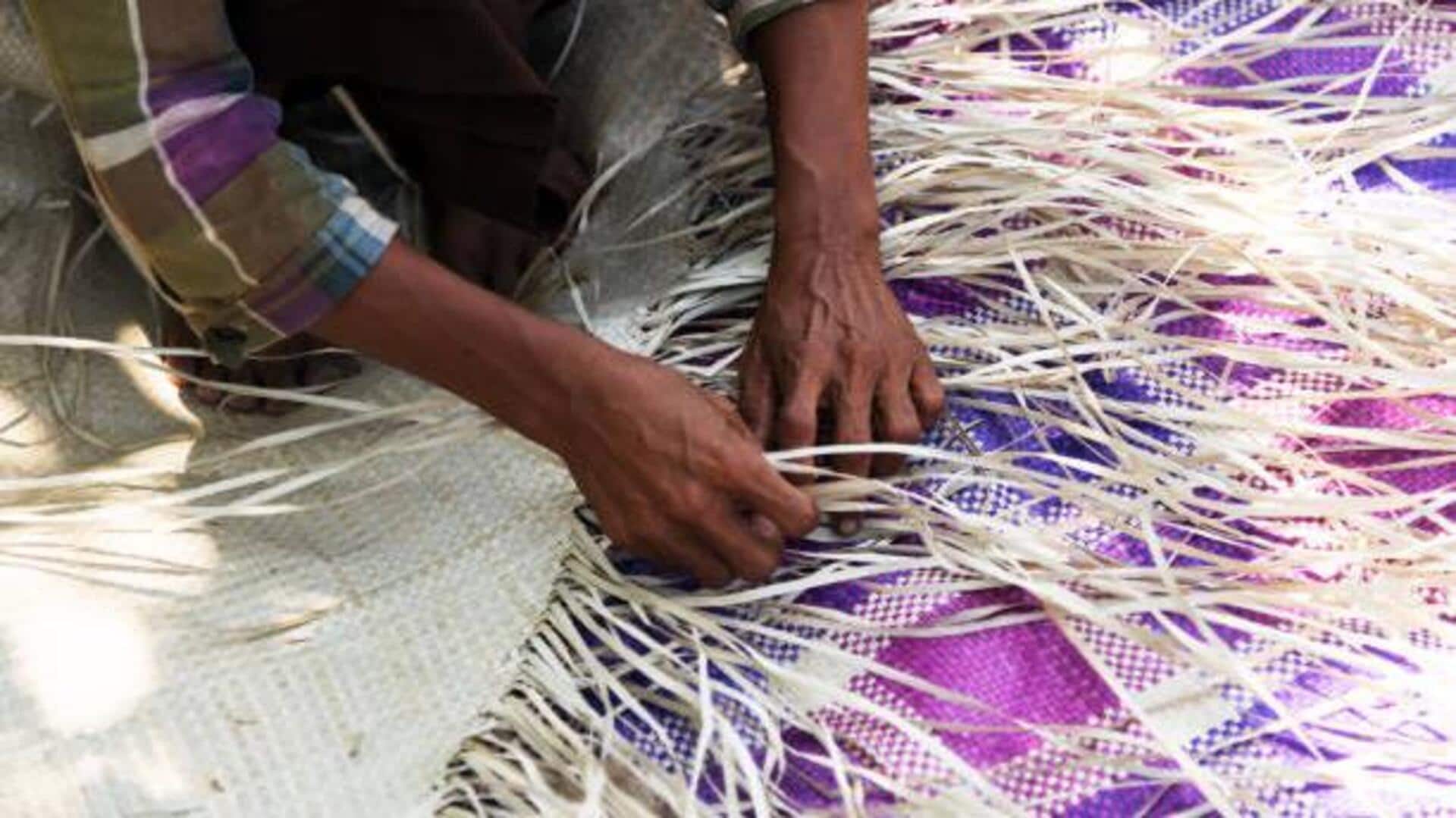
How mat weaving is getting a sustainable makeover
What's the story
African mat weaving is a centuries-old craft, which has been passed down generations. It is not just an art form, but also a cultural heritage that reflects the diversity of African communities. By incorporating recycled materials into this craft, artisans can innovate and sustain their traditional practices. This not only preserves the cultural significance of mat weaving but also promotes environmental sustainability and economic growth.
#1
Benefits of using recycled materials
Using recycled materials in mat weaving has multiple benefits.
It reduces waste, contributes to environmental conservation, and provides a cost-effective alternative to new raw materials.
By using plastic bags, old clothes, or other discarded items, artisans can create durable and unique mats.
This practice also raises awareness about recycling in the community.
#2
Techniques for incorporating recycled materials
Artisans can use various techniques to incorporate recycled materials into their mats.
For example, plastic bags can be cut into strips and woven with traditional fibers to create colorful patterns.
Old clothes can be shredded and dyed before being woven into intricate designs.
These techniques not only add texture and color but also allow for creative expression within the confines of traditional methods.
#3
Economic impact on local communities
Integrating recycled materials into mat weaving has a positive economic impact on local communities. It opens up new markets for selling these innovative products, both locally and internationally.
Artisans who adopt this practice often see an increase in demand for their work as consumers become more interested in sustainable products.
This increased demand can lead to higher incomes for artisans and their families.
#4
Preserving cultural heritage through innovation
By integrating recycled materials into mat weaving, artisans are preserving cultural heritage while embracing innovation.
The traditional techniques remain intact even as new materials are introduced into the process.
This way, the cultural significance of the craft is maintained while adapting to modern challenges such as waste management and economic development.