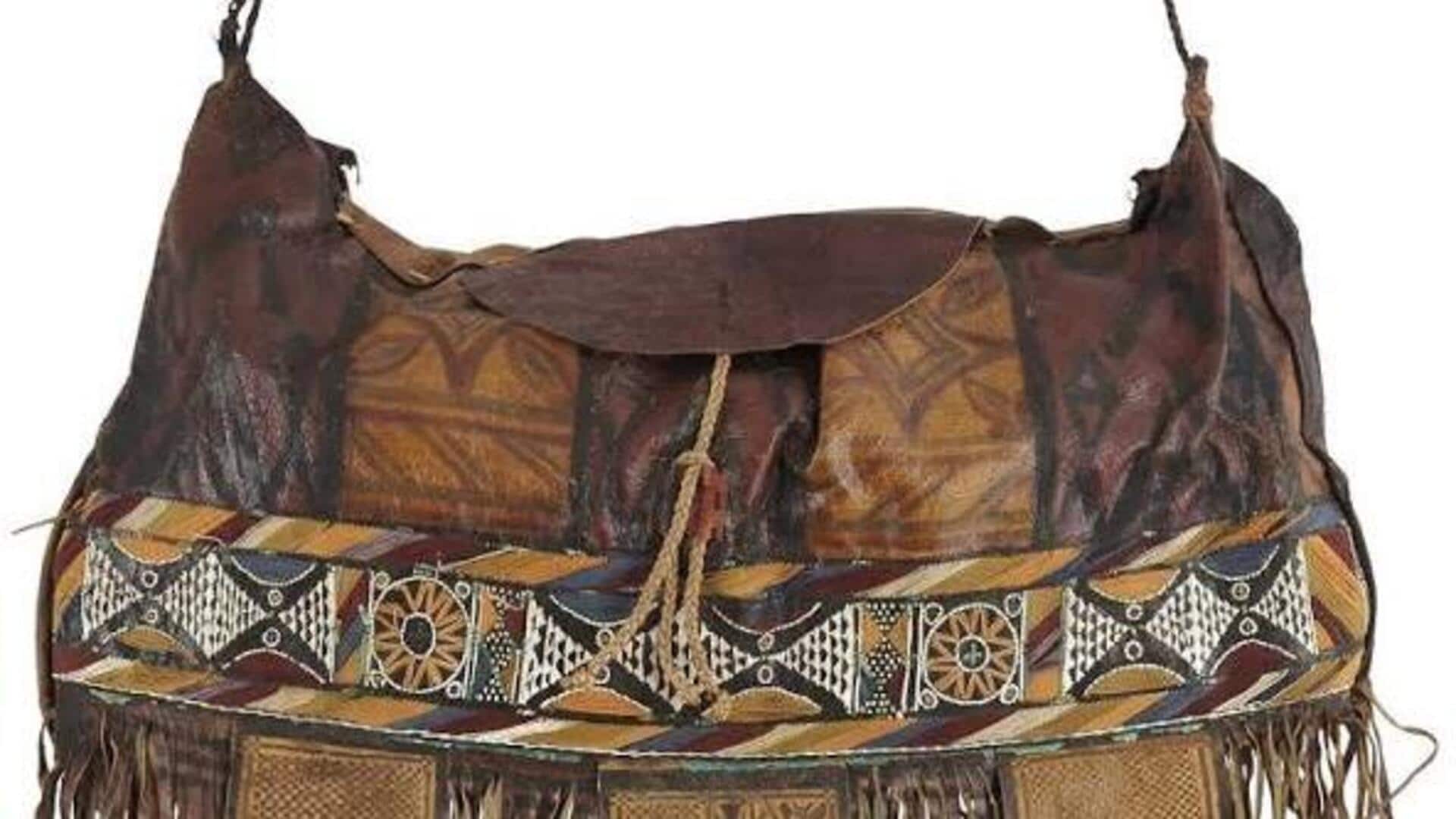
What is Tuareg leather art?
What's the story
Tuareg leather art is a fascinating aspect of African culture that has been around for centuries. The art form, which is famous for its intricate designs and sturdy craftsmanship, is now being reinterpreted through a minimalist lens. By focusing on simplicity and functionality, artisans are creating modern pieces that retain the essence of traditional Tuareg art. This article explores the journey of Tuareg leather art through minimalism.
#1
The essence of Tuareg leather art
Tuareg leather art is characterized by geometric patterns and symbolic motifs. Traditionally, these designs were used to tell stories or represent cultural beliefs.
The leather is often dyed with natural colors and treated with traditional methods to ensure durability.
The craftsmanship involved in creating these pieces is meticulous, requiring skill and patience.
#2
Minimalism meets tradition
The minimalist approach to Tuareg leather art focuses on clean lines and simple forms.
By stripping away unnecessary details, artisans highlight the beauty of the material itself.
This modern interpretation appeals to those who appreciate understated elegance, while still valuing cultural heritage.
The result is a fusion of old and new that resonates with contemporary audiences.
#3
Functional yet artistic designs
Modern Tuareg leather pieces are not just aesthetically pleasing but also practical.
Items like bags, wallets, and belts are designed, keeping utility in mind, without compromising on artistic expression.
The minimalist designs often feature subtle embossing or engraving that reflects traditional motifs but in a more streamlined way.
#4
Sustainable practices in leather production
Sustainability has become an integral aspect of modern Tuareg leather art production. Artisans are increasingly using eco-friendly methods to source materials and produce their goods.
Natural dyes are preferred over synthetic ones, reducing environmental impact.
This commitment to sustainability not only helps preserve the environment but also ensures that traditional techniques continue to be passed down through generations.